 Save
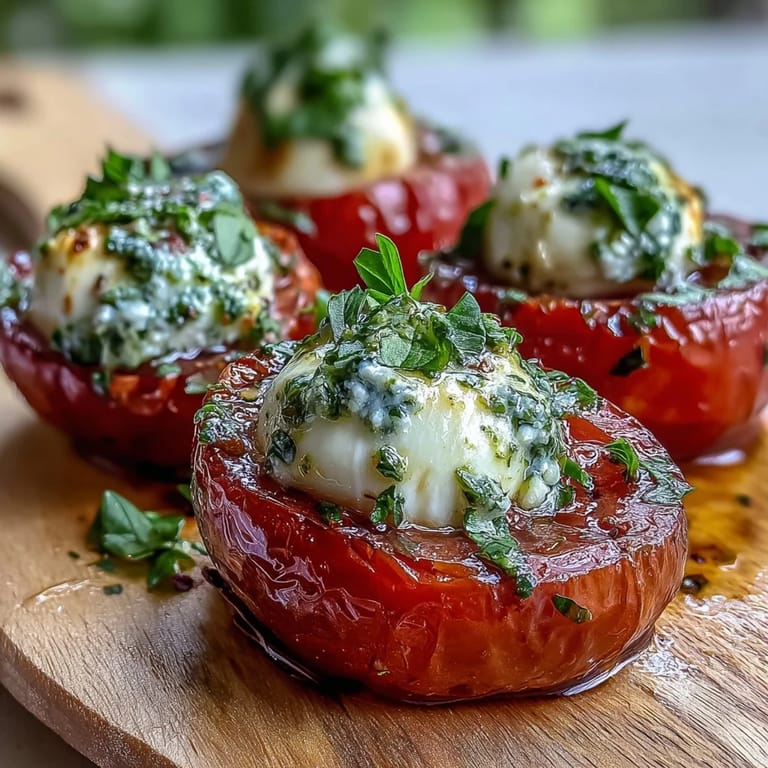
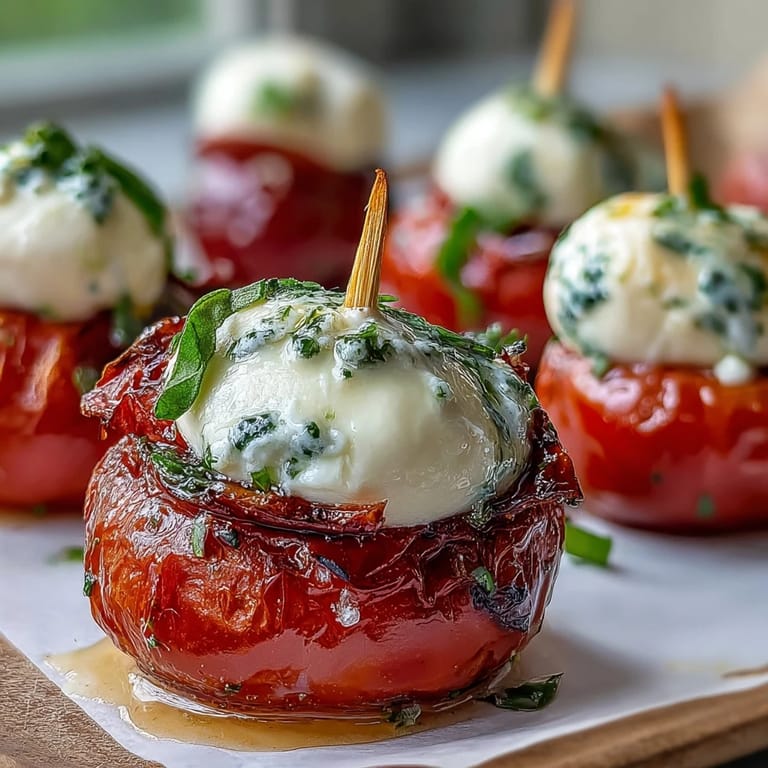
Save There's this moment every summer when my neighbor drops off a basket of tomatoes from her garden, and I suddenly have this beautiful problem of what to do with them all. One sweltering afternoon, I was staring at those perfect red orbs when it hit me—just thread them onto skewers with some creamy mozzarella, toss in a basil leaf, and drizzle with pesto. It was so simple I almost laughed. Turns out, the best appetizers are the ones that don't pretend to be complicated.
I made these for a rooftop dinner party last summer, and something unexpected happened—people didn't treat them like just appetizers to grab before the main course. They kept coming back to the platter, and conversations kept happening right there by the food. There's something about the bright green of fresh pesto against those red tomatoes that makes people linger.
Ingredients
- Cherry tomatoes: Pick ones that still feel slightly warm from the sun if you can, as they have more flavor than refrigerated ones that've lost their sweetness.
- Mini mozzarella balls (bocconcini): Keep these in their brine until the moment you assemble the skewers, otherwise they'll dry out and lose that tender texture.
- Fresh basil leaves: Tear them by hand instead of cutting with a knife, which bruises the delicate leaves and turns them dark and bitter.
- Wooden or bamboo skewers: Soak them in water for thirty minutes beforehand if you're worried about them splintering, though for a no-cook recipe this is really more about presentation peace of mind.
- Fresh basil leaves for pesto: Use the tender top leaves of the basil plant where the flavor is brightest and most volatile.
- Pine nuts: Toast them lightly in a dry pan first if you have a moment—it wakes up their nutty sweetness and makes the whole pesto sing.
- Garlic clove: Use just one small one, as raw garlic can overpower the delicate herbal notes you're building.
- Grated Parmesan cheese: Grate it fresh if possible, as pre-grated versions have anti-caking agents that make the pesto grainy.
- Extra virgin olive oil: The quality matters here since it's tasted directly, so choose one you'd actually enjoy drinking a spoonful of.
Tired of Takeout? 🥡
Get 10 meals you can make faster than delivery arrives. Seriously.
One email. No spam. Unsubscribe anytime.
Instructions
- Thread the skewers with care:
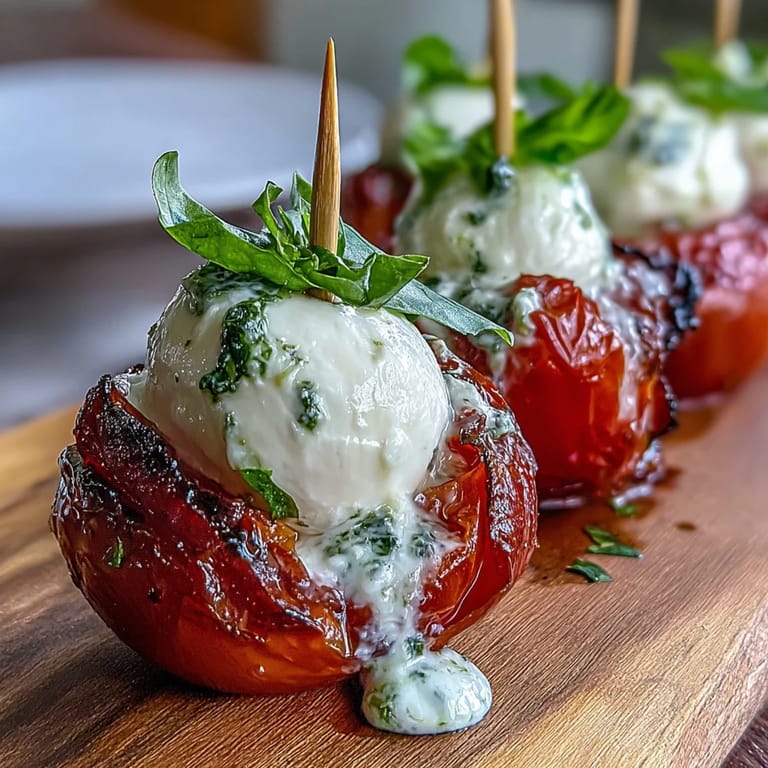
- Start with a cherry tomato, then slide on a bocconcini, then tuck in a fresh basil leaf so it sits nestled between the cheese and tomato. The basil protects the delicate mozzarella from bruising as you handle the skewer.
- Build your pesto base:
- In a food processor, pulse together your basil, toasted pine nuts, garlic, and Parmesan until everything is finely chopped and looks like coarse sand. You want texture here, not a smooth purée.
- Emulsify with olive oil:
- Turn the processor on and drizzle the olive oil in slowly while it runs, watching the mixture transform into something glossy and cohesive. This gradual approach prevents the pesto from breaking apart or becoming bitter from over-processing.
- Season and taste:
- Add salt and freshly ground black pepper, then taste a tiny bit on your finger—adjust until it makes you want to lick the spoon. This is the moment where pesto goes from good to memorable.
- Finish just before serving:
- Arrange your skewers on a serving platter and drizzle the pesto across them in thin lines just minutes before guests arrive. Pesto oxidizes quickly and turns dark, so timing is everything.
 Save
Save My daughter once asked why we couldn't just use store-bought pesto, and I almost said yes until I made a small batch fresh while she watched the transformation from separate ingredients to something vibrant and alive. She tasted it and understood immediately—it wasn't about being fancy, it was about tasting the difference between convenience and care.
The Science of Summer Appetizers
There's a reason Caprese combinations show up at every summer gathering in Mediterranean regions—the tomato's acidity balances the richness of mozzarella, while basil contains oils that activate taste receptors in a way that makes your mouth feel refreshed. When you add pesto, you're essentially amplifying those herbal notes and using fat to carry flavor across your palate.
Timing and Temperature Matters
I learned the hard way that these skewers are best served at room temperature, not chilled straight from the fridge. Cold mozzarella becomes dense and flavorless, while room temperature lets the creaminess bloom and the tomato's natural sugars register on your tongue. Assemble them no more than two hours before serving so the tomato juice doesn't make the skewer soggy.
Variations That Keep Things Interesting
While the classic combination is nearly perfect, sometimes the best kitchen moments happen when you tinker with what you have on hand. A drizzle of aged balsamic adds complexity, or a whisper of lemon zest in the pesto brightens everything up. I've even swapped in arugula when basil ran out, and it gave a peppery kick that shouldn't have worked but absolutely did.
- If pine nuts aren't available or cause allergies, sunflower seeds provide a similar crunch without the cost or concern.
- Make the pesto ahead and store it in the fridge for up to three days, though it's always better fresh.
- You can assemble the entire platter up to four hours ahead, then add the pesto drizzle just before guests arrive to keep everything looking vibrant.
 Save
Save These skewers have become my go-to when I want to feel like I'm hosting something special without stressing myself out. They're proof that sometimes the most elegant dishes are just really good ingredients treated with respect.
Recipe Questions & Answers
- → What ingredients are used in the skewers?
Cherry tomatoes, mini mozzarella balls, fresh basil leaves, and small wooden skewers make up the core components.
- → How is the pesto drizzle prepared?
The pesto is made by blending fresh basil, pine nuts, garlic, Parmesan cheese, and olive oil until smooth, then seasoning with salt and pepper.
- → Can the skewers be assembled ahead of time?
Yes, you can prepare skewers up to four hours in advance and refrigerate them, adding the pesto just before serving.
- → Is there a nut-free alternative for the pesto?
To avoid pine nuts, substitute sunflower seeds in the pesto for a nut-free version.
- → What optional ingredient enhances the flavor before serving?
A drizzle of aged balsamic vinegar can be added for extra depth and a touch of sweetness.