 Save
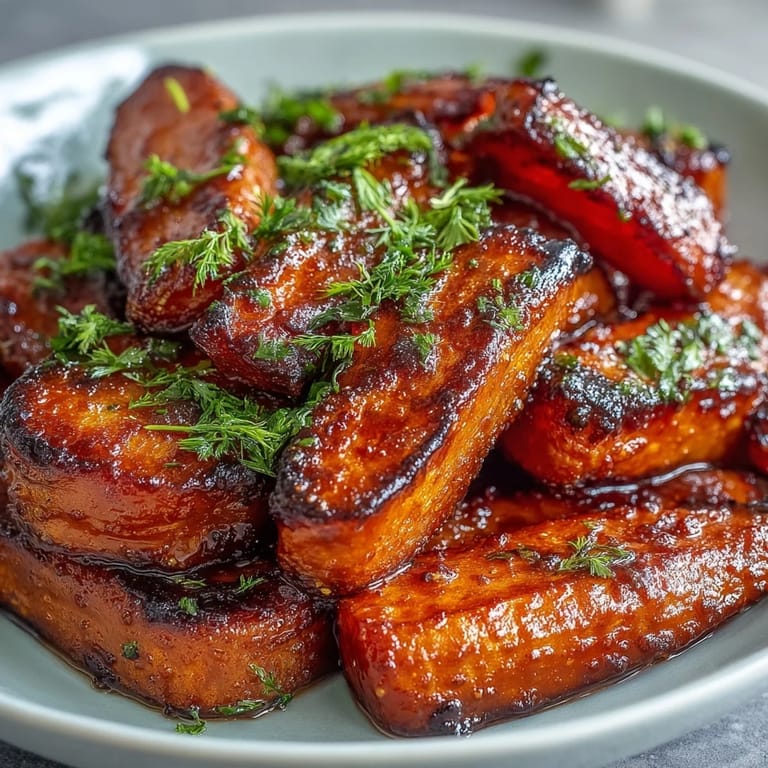
Save My aunt swears by these honey roasted carrots and parsnips every Easter, and I finally understood why when I watched the kitchen fill with caramel-sweet smoke during the roasting. There's something about how the natural sugars in root vegetables intensify in heat that turns a simple side dish into the dish people actually remember. I made them on a whim one December evening when I had nothing else to bring to dinner, and they disappeared before the main course even hit the table. The honey-thyme glaze does something magical in a hot oven that you can't replicate on the stovetop. Now I make them whenever I need to impress without fussing.
I remember bringing these to a potluck where I knew nobody, feeling nervous about whether my contribution would fit in. Watching people come back for more after tasting them gave me this quiet confidence that's stuck with me. Turns out when something tastes this good and feels this effortless, it becomes a conversation starter.
Ingredients
- Carrots: Use medium ones so they cook evenly without falling apart or staying crunchy in the middle; the peeling matters because it keeps the caramel glaze from clinging to bitter outer skin.
- Parsnips: Their earthiness balances the honey perfectly, but make sure they're roughly the same size as your carrots so everything finishes together.
- Honey: This is the entire flavor story here, so use something you'd actually eat by the spoonful rather than the processed kind that tastes like nothing.
- Olive oil: Helps the glaze coat every surface evenly and keeps the vegetables from sticking, plus it adds body to the caramel.
- Fresh thyme: If you can find it, fresh thyme adds this subtle herbal note that dried thyme can't match, though dried works in a pinch.
- Sea salt and black pepper: These aren't afterthoughts; they cut through the sweetness and make the whole dish taste more sophisticated.
- Fresh parsley: A garnish that feels optional until you taste how it adds a bright, fresh finish to something so sweet and rich.
Tired of Takeout? 🥡
Get 10 meals you can make faster than delivery arrives. Seriously.
One email. No spam. Unsubscribe anytime.
Instructions
- Heat your oven and prep your space:
- Get the oven to 400°F and line your baking sheet with parchment paper so nothing sticks or burns on the edges. This takes two minutes but saves you cleanup heartbreak later.
- Cut and combine your vegetables:
- Peel your carrots and parsnips, then cut them into even sticks about the width of a pencil. Uneven pieces mean some will burn while others stay soft, so take the thirty seconds to keep them consistent.
- Build your glaze:
- Whisk honey, olive oil, thyme, salt, and pepper in a small bowl until it looks like loose syrup. You'll know it's right when the honey has loosened up and everything smells warm and herbal.
- Coat everything thoroughly:
- Toss your vegetables with the glaze in a large bowl, making sure every stick gets coated. If some spots look bare, the honey won't caramelize there, so don't skip this step.
- Arrange in a single layer:
- Spread the vegetables on your baking sheet so they're not crowded or touching much. Crowding steams them instead of roasting them, so give them room to breathe.
- Roast with intention:
- Roast for 30 to 35 minutes, stirring everything around halfway through so the honey caramelizes evenly on all sides. You'll smell when they're getting close, and you're looking for browned, slightly crispy edges.
- Finish with freshness:
- Transfer to a serving dish and sprinkle parsley over top if you have it. Serve warm while the glaze is still slightly sticky.
 Save
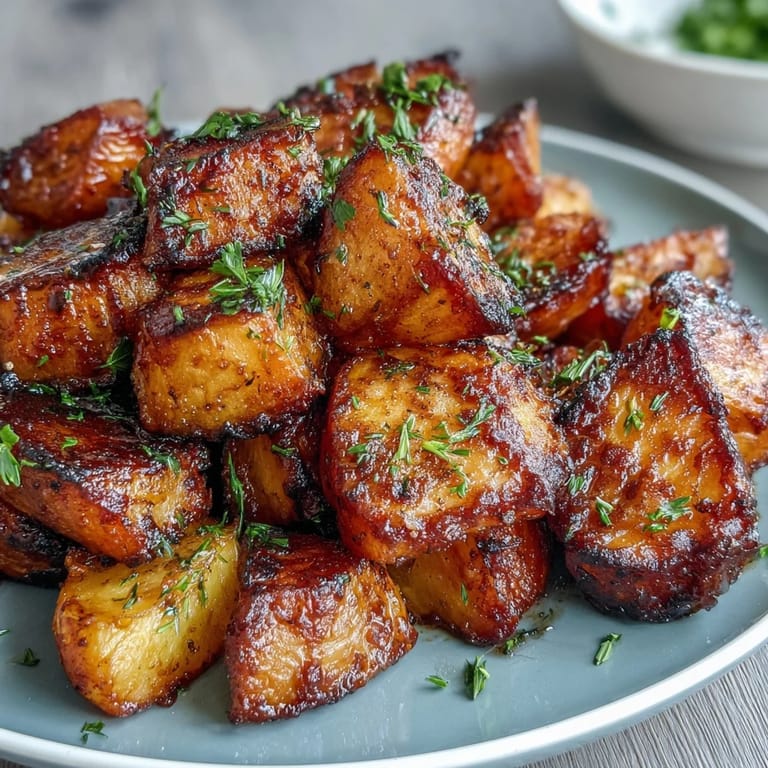
Save My neighbor once asked why I made these for a casual family dinner instead of saving them for something fancy, and I realized that was the whole point. Food doesn't have to be complicated to feel special, and these vegetables remind me that the smallest dishes often mean the most.
The Secret of the Stir
I learned the hard way that vegetables roast unevenly unless you give them attention midway through cooking. The first time I made these, I set them in the oven and walked away, only to find the edges closest to the back wall had already darkened while the front stayed pale. Now I set a timer for exactly fifteen minutes and do a quick toss, which takes less than a minute and transforms the result completely. It's one of those small habits that separates mediocre roasted vegetables from the kind people ask about.
Why Root Vegetables and Honey Were Meant Together
There's something almost mathematical about how the natural sweetness in carrots and parsnips gets amplified by roast heat and coated honey. The vegetables soften from the inside while the outside caramelizes, creating this contrast that keeps your mouth interested. Most side dishes fade into the background, but these ones hold their own against any main course and actually make ham taste better by contrast.
Variations Worth Trying
Once you master the basic version, the glaze becomes your playground for small adjustments that shift the whole mood. A pinch of chili flakes adds a gentle heat that makes people pause and ask what they're tasting. Balsamic vinegar brings earthiness, maple syrup makes it more autumn-leaning, and a splash of orange juice adds brightness that's subtle but noticeable.
- Chili flakes create a sweet-spicy balance that keeps your palate engaged rather than overwhelmed.
- A squeeze of fresh lemon juice cuts through the sweetness and adds shine to the finished dish.
- Don't be afraid to experiment because the base recipe is forgiving enough to handle small flavor tweaks.
 Save
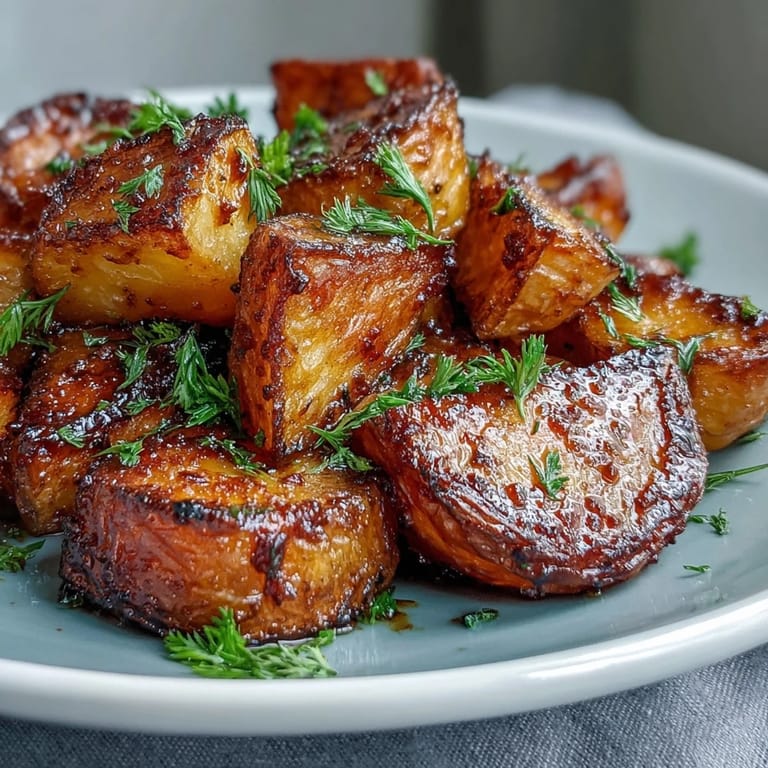
Save These roasted carrots and parsnips have become my answer to the question of what to bring when I'm not sure what people are serving. They're the kind of side dish that feels simple until you taste it and realize someone actually cared about making them delicious.
Recipe Questions & Answers
- → What vegetables are used in this dish?
Carrots and parsnips peeled and cut into sticks form the base of this dish.
- → How does the honey glaze affect the flavor?
The honey adds a sweet, caramelized coating that balances the earthiness of the vegetables with a subtle savory hint from thyme.
- → Can I substitute the honey in the glaze?
Yes, maple syrup can be used as a vegan alternative to honey without affecting the glaze texture.
- → What is the recommended cooking temperature and time?
Roast the vegetables at 400°F (200°C) for 30 to 35 minutes, stirring halfway through to ensure even caramelization.
- → Are there optional additions to enhance the flavor?
Chili flakes or a splash of balsamic vinegar can be added to the glaze for a more complex flavor profile.