 Save
Save My first poke bowl came together on a lazy Saturday afternoon when I had some pristine sushi-grade tuna sitting in my fridge and absolutely no plan for dinner. I started playing around with what I had—a drizzle of sesame oil here, some Sriracha there—and before I knew it, I'd created something so vibrant and satisfying that it became my go-to weeknight meal. There's something magical about how simple, quality ingredients can transform into something that feels both restaurant-worthy and entirely doable in your own kitchen.
I remember serving this to my friends during a dinner party, and watching them dig in with genuine excitement was the moment I realized this wasn't just another bowl—it was something special. One friend asked for the recipe immediately, and now whenever she texts asking what I'm making for dinner, I know exactly what she's hoping for.
Ingredients
- Sushi rice: This is the foundation, and rinsing it thoroughly until the water runs clear makes all the difference in achieving that fluffy, separate grain texture.
- Rice vinegar, sugar, and salt: These three seasonings create the subtle sweetness and tang that defines proper sushi rice—don't skip this step even if it feels unnecessary.
- Sushi-grade tuna: Invest in the best quality you can find from a reputable fishmonger, as you're eating it raw and freshness is non-negotiable.
- Japanese Kewpie mayonnaise: It's richer and creamier than regular mayo, and the slight umami notes complement the tuna beautifully.
- Sriracha: Adjust this based on your heat tolerance—I've learned through trial and error that starting conservative means you can always add more.
- Sesame oil: A little goes a long way; this stuff is intensely flavored and adds real depth to the marinade.
- Fresh lime juice: Bottled will work, but fresh squeezed makes a noticeable difference in brightness.
- Cucumber and avocado: Choose ripe avocados and crisp cucumbers; these fresh elements provide essential texture contrast.
- Edamame: Pre-shelled frozen ones save time and work just as well as fresh.
- Seaweed salad or nori strips: Either option adds umami depth and that authentic oceanic quality to every bite.
Tired of Takeout? 🥡
Get 10 meals you can make faster than delivery arrives. Seriously.
One email. No spam. Unsubscribe anytime.
Instructions
- Rinse and cook your rice:
- Run the sushi rice under cold water, stirring gently with your fingers until the water transitions from milky white to crystal clear—this removes excess starch and prevents mushiness. The rice will sound different too, almost like you're rinsing pebbles, and that's exactly what you want.
- Season the warm rice:
- While the rice is still warm but not hot, gently fold in the vinegar mixture using a rice paddle or wooden spoon, fluffing as you go to separate the grains. Let it cool completely at room temperature; warm rice will cause the toppings to wilt.
- Build your marinade:
- Whisk together the mayo and Sriracha first so they're fully combined, then add the other seasonings and taste as you go. I always do a tiny taste test with a small piece of tuna before committing the whole batch to the marinade.
- Prepare toppings with care:
- Slice your cucumber on a slight bias for elegance, and don't cut your avocado until just before serving or it'll oxidize and turn brown. Everything should feel fresh and vibrant when it hits the bowl.
- Assemble with intention:
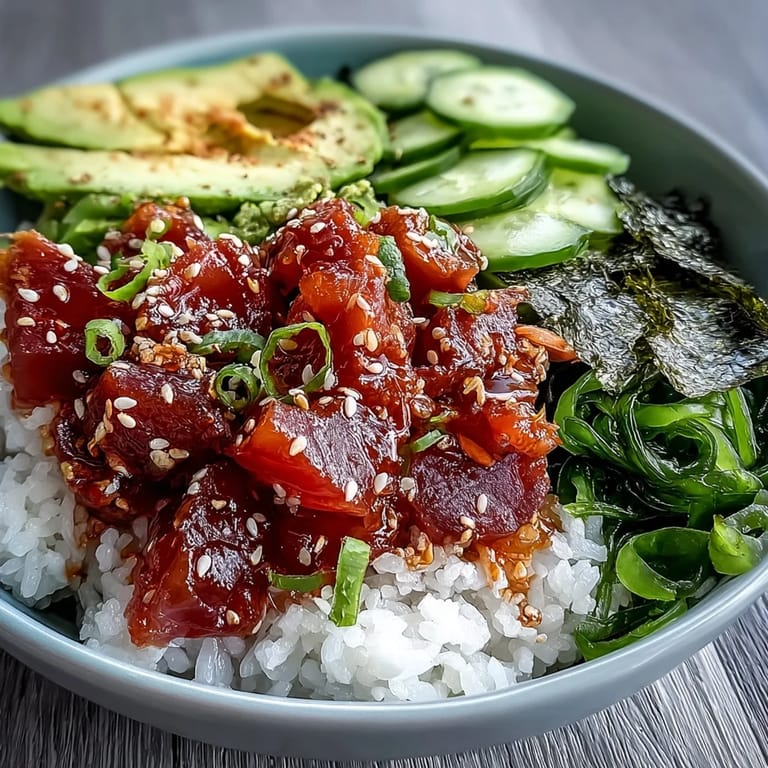
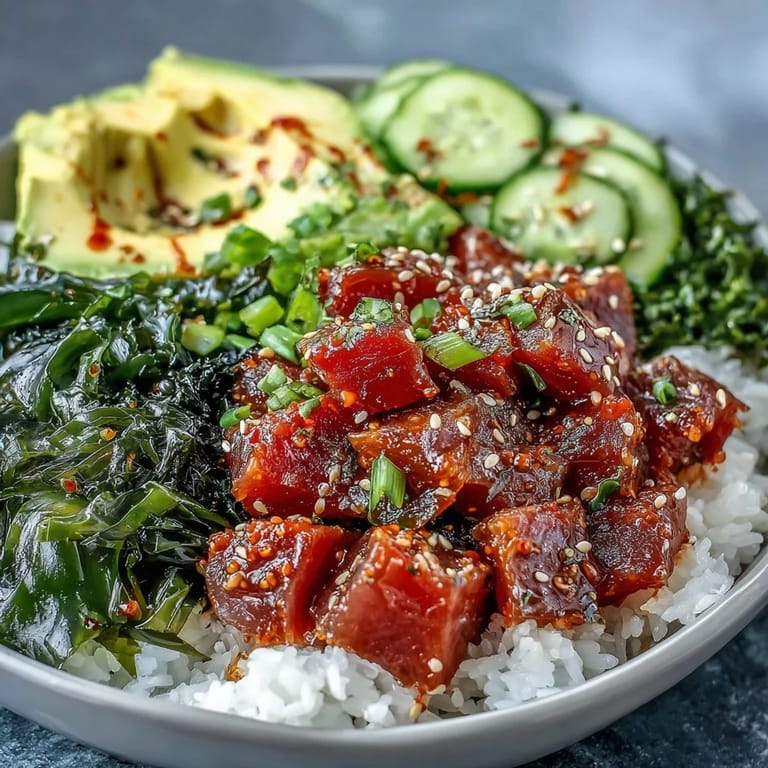
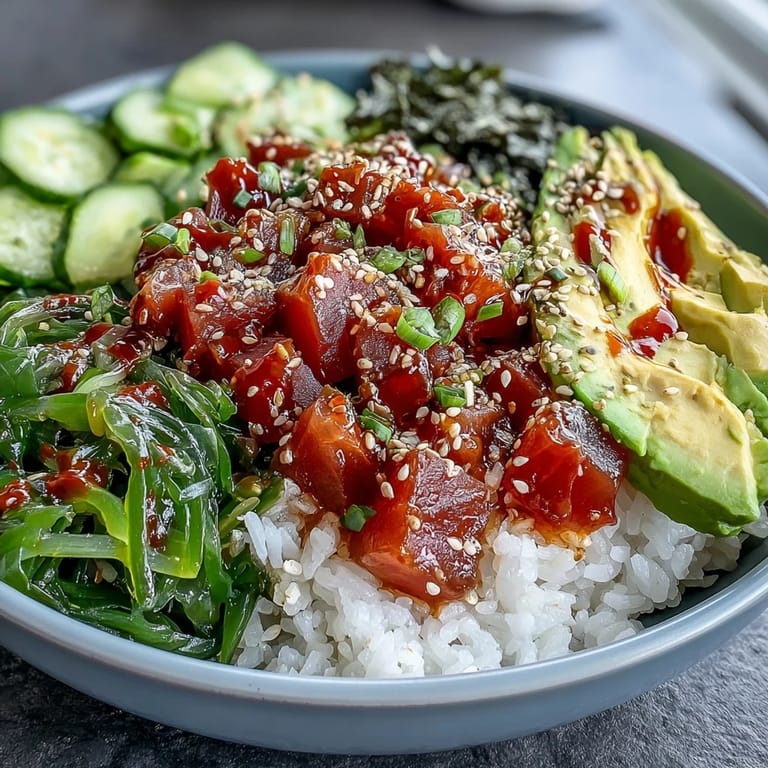
- Start with rice as your base, then crown it with the spicy tuna right in the center so it's the star of the show. Arrange your toppings around it in little sections—it's as much about the visual as the taste.
- Finish and serve immediately:
- A sprinkle of sesame seeds and furikake adds final crunch and flavor, but serve right away so everything maintains its texture and temperature.
 Save
Save There's a moment when you take that first bite of a properly made poke bowl where everything clicks into place—the cool, creamy avocado against the soft rice, the heat from the Sriracha hitting your palate, the umami depth of the seaweed. That's when you realize this bowl is about so much more than just combining ingredients; it's about creating an experience.
The Secret to Perfect Spicy Tuna
The magic happens in the marinade, not the tuna itself, so don't overthink it. I used to think I needed some exotic ingredient to elevate the dish, but honestly, the balance of creamy mayo, spicy heat, salty-savory soy, and bright lime juice is the entire equation. The sesame oil is what ties it all together though—it adds this nutty, toasty undertone that makes people ask what your secret ingredient is.
Why This Bowl Works Year-Round
Summer calls for it because it's light and refreshing, but I've made it countless times in winter too when I need something that feels like a vacation on a plate. The beauty is that while the rice takes a few minutes to prepare, the actual hands-on time is minimal, so you can make this even on nights when you're tired or uninspired about cooking.
Variations and Personal Touches
Once you master the base recipe, this bowl becomes your canvas for creativity and self-expression. I've experimented with different proteins—salmon is buttery and luxurious, while yellowtail has a more delicate flavor—and each one shifts the entire personality of the dish. The toppings are equally flexible; sometimes I skip the edamame and add crispy wonton strips for texture, or I'll toss in some marinated shiitake mushrooms when I'm feeling vegetable-forward.
- Sriracha can be swapped for other hot sauces like gochujang, Korean chili paste, or even just fresh jalapeños if you prefer fresh heat.
- Brown rice or cauliflower rice work beautifully if you're adjusting for dietary preferences, though they do change the traditional taste and texture slightly.
- Leftover rice can be used for fried rice the next day, so there's no waste in making a big batch.
 Save
Save This poke bowl has become my answer to so many dinner dilemmas, from last-minute entertaining to simple weeknight nourishment. Once you make it once, you'll understand why it deserves a permanent spot in your cooking rotation.