 Save
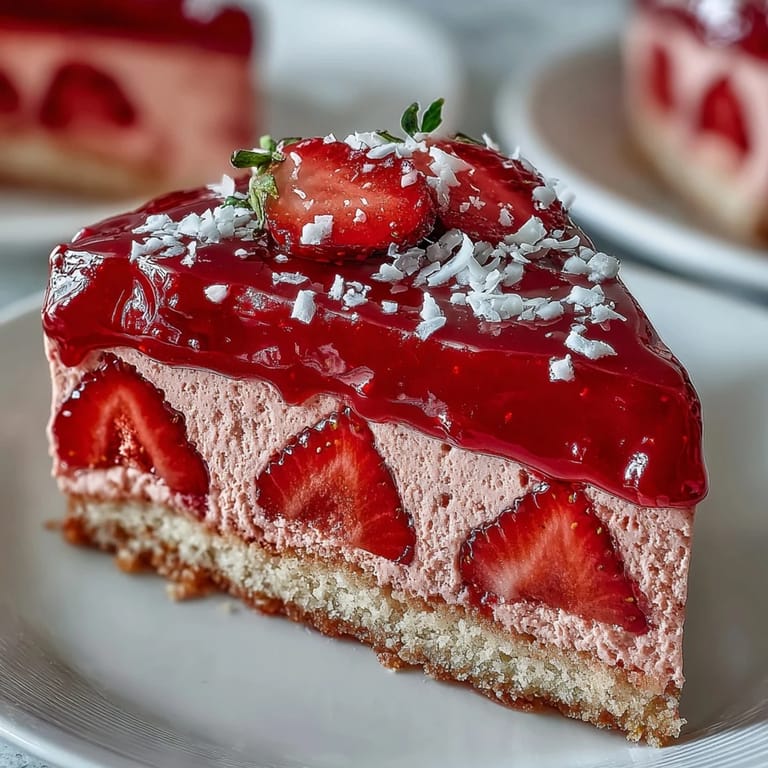
Save My roommate texted me at 2 PM on February 13th asking if I could make something special for her girlfriend, and my first instinct was to panic—then I remembered a French patisserie class I'd taken years ago where the instructor made a strawberry mousse cake that literally made people go quiet mid-bite. The delicate layers, the way the mousse melted on your tongue, the glossy berry glaze catching the light—it was the kind of dessert that felt effortless but tasted like you'd spent all day on it. I had just enough time, fresh strawberries at the market, and the kind of nervous energy that somehow translates into beautiful baking.
When I pulled that cake out of the springform pan and it held together perfectly—no cracking, no sliding—I actually felt my shoulders drop. There's something about a mousse cake that makes you hold your breath during release, and watching it transfer cleanly to the plate felt like a tiny victory. The glaze had set to this jewel-like finish, and I remember my roommate's face when she picked it up later that evening, how she opened the box in her car and just smiled.
Ingredients
- 3 large eggs, room temperature: Cold eggs won't whip properly, so pull them out about 30 minutes before you start—they'll incorporate air more easily and give you that crucial volume.
- 90 g granulated sugar (for sponge): This is where patience matters; beat the eggs and sugar until the mixture turns pale and triples, which takes about 5 minutes with an electric mixer and creates the airy structure your cake needs.
- 90 g all-purpose flour: Sift it before folding to avoid lumps, and be gentle—overworking at this stage will deflate all that lovely volume you just created.
- 300 g fresh strawberries (for mousse): Use berries that are ripe but still firm; if they're too soft, they'll lack the bright flavor and structure the mousse needs.
- 6 g powdered gelatin: Always bloom it in cold water first—this hydrates the gelatin so it dissolves smoothly and sets the mousse evenly without lumps or weeping.
- 250 ml heavy whipping cream, cold: Keep it chilled right until whipping, and watch carefully for soft peaks; once you hit that stage, stop immediately or you'll end up with butter.
- 1 tbsp lemon juice: This brightens the strawberry flavor and prevents the mousse from tasting cloying or one-dimensional.
Tired of Takeout? 🥡
Get 10 meals you can make faster than delivery arrives. Seriously.
One email. No spam. Unsubscribe anytime.
Instructions
- Bake your sponge foundation:
- Preheat your oven to 175°C (350°F) and line a 9-inch springform pan with parchment paper. Beat the room-temperature eggs and sugar together until the mixture is pale, fluffy, and has tripled in volume—you're looking for about 5 minutes of steady beating, and you'll know it's ready when the beaters leave a trail that takes a moment to disappear. Gently fold in the sifted flour, baking powder, and salt until just combined, then pour into your pan and bake for 20–25 minutes until golden and a toothpick comes out clean.
- Let it cool completely:
- This matters more than you'd think; a warm cake will cause the mousse layers to separate or slide. Let it cool right in the pan, which also gives it structural support while you prep the mousse.
- Puree and bloom for the mousse:
- Blend your fresh strawberries with sugar and lemon juice until completely smooth, then bloom the gelatin in cold water for exactly 5 minutes—this hydration step is what prevents lumpy, grainy gelatin. Warm about one-third of your strawberry puree gently (never boiling), whisk in the bloomed gelatin until dissolved, then stir everything back together and let it cool to room temperature.
- Whip and fold with precision:
- In a separate clean bowl, whip your cold heavy cream to soft peaks—it should look like soft waves that hold their shape but still have a slight droop. Fold this gently into the cooled strawberry mixture in two additions, using a rubber spatula and turning the bowl rather than stirring, which keeps the mousse airy.
- Assemble and first chill:
- Remove the cooled sponge from its pan, wipe the springform clean, place the cake base back in, and pour your mousse evenly over top. Smooth it gently with an offset spatula or the back of a spoon, then refrigerate for at least 2 hours until the mousse is completely set and no longer jiggles.
- Create the glossy glaze:
- Blend fresh strawberries with sugar and lemon juice until smooth, bloom gelatin in cold water, then warm just a few tablespoons of the puree and dissolve the gelatin into it before stirring back in. Pour this glossy layer gently over your set mousse—the slight warmth helps it settle evenly—and chill another hour until firm.
- Finish and release:
- Decorate with halved fresh strawberries, chocolate shavings, or edible rose petals if you're feeling it. Run a thin knife around the edge of the springform, release carefully, and transfer to your serving plate with a wide offset spatula or cake server to keep everything intact.
 Save
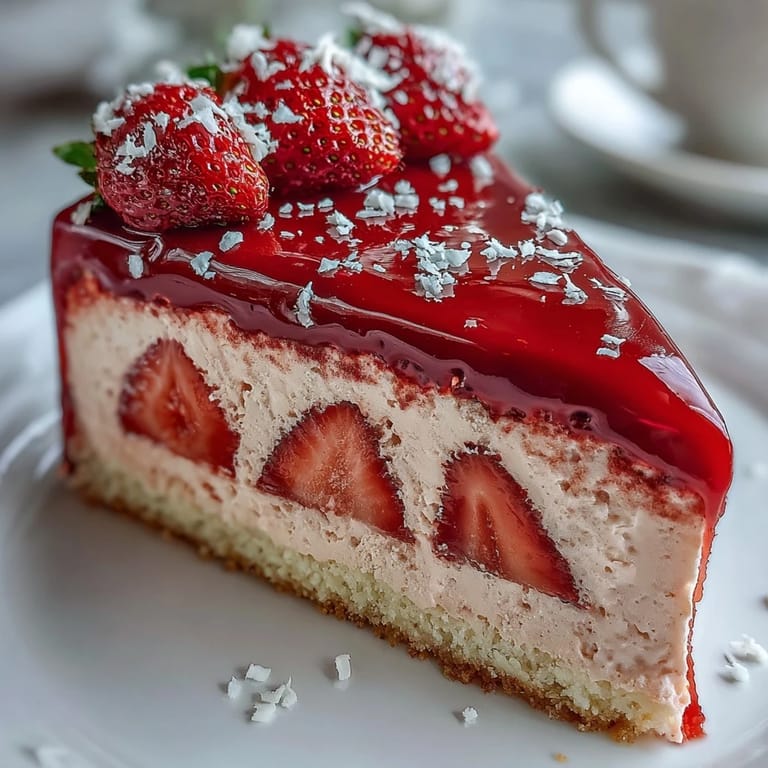
Save Later that night, my roommate sent me a photo of the two of them with the cake, and both were mid-laugh at something completely unrelated to dessert—but the cake was still there, catching light in the background. That's when I realized the best part of making something like this isn't the technique or even how it tastes; it's knowing you helped create the backdrop for a moment someone will remember.
Why Strawberries Are the Star Here
Strawberries have this unique quality where they're both delicate and flavorful enough to carry an entire dessert without needing much else—a little sugar to amplify their natural sweetness, lemon juice to keep them bright, and they're ready to shine. The berries show up three times in this cake: pureed into the mousse for body and flavor, as a glaze for visual drama and extra fruity richness, and fresh on top for that moment of tartness and texture. What I've learned is that the quality of your strawberries matters enormously; farmer's market berries will make this taste noticeably different from supermarket ones, so seek them out if you can.
The Secret of Mousse Architecture
A mousse's success lives in that moment when you fold the whipped cream into the fruit mixture—do it too roughly and you deflate all the air you just created; too gently and you get streaks of unmixed ingredients. I learned this the hard way by being overly cautious, which resulted in a mousse that was dense rather than fluffy and completely missed the whole point. Now I fold in two additions rather than one, which makes it easier to distribute the cream evenly without overworking the mixture.
Storage and Make-Ahead Magic
This cake actually improves if you make it a day ahead; the flavors meld, the layers set more firmly, and you get to skip the stress of assembly day. You can bake the sponge layer up to two days in advance and keep it wrapped at room temperature, then add the mousse and glaze the day before serving. The whole assembled cake keeps beautifully in the refrigerator for up to three days, which honestly makes it perfect for entertaining.
- Keep the cake in the springform pan until you're ready to serve if you're worried about transport or want maximum stability.
- If you're making it ahead, add fresh strawberry decorations just before serving so they don't weep or soften.
- Bring the cake out of the refrigerator about 15 minutes before serving to let the flavors warm up slightly and become more pronounced.
 Save
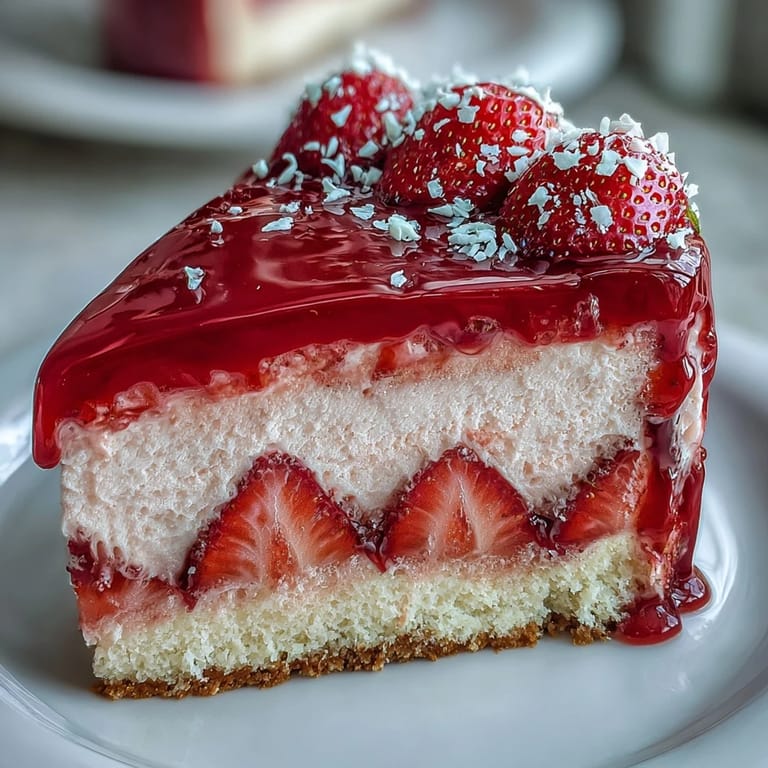
Save Making this cake is one of those cooking experiences that teaches you something every time—about patience, about how technique creates texture, about why people love food in the first place. Serve it with sparkling rosé or a light Moscato and watch what happens.
Recipe Questions & Answers
- → What texture should the mousse have?
The mousse should be light and airy, achieved by carefully folding whipped cream into the strawberry puree mixture to maintain volume and smoothness.
- → How long does chilling affect the final cake?
Chilling allows the mousse and glaze layers to set firmly, creating a stable cake with clean slices and enhancing flavor melding.
- → Can I substitute gelatin in this dessert?
Gelatin is essential for the mousse and glaze stability. Agar agar could be explored as a vegetarian alternative but requires adjustments to dissolve and set properly.
- → What is the purpose of folding ingredients gently?
Gentle folding preserves the air incorporated in whipped cream and beaten eggs, contributing to a light and tender texture in the final dish.
- → How is the sponge cake prepared for best results?
The sponge is made by beating eggs and sugar until tripled in volume, then folding dry ingredients carefully to keep it airy before baking until golden and springy.