 Save
Save The first time I understood what made a truly great schnitzel, I was standing in a cramped Vienna kitchen watching my neighbor's grandmother work. She moved with such ease, pounding the veal with practiced rhythm, then setting up her breading station like she was conducting an orchestra. What struck me most wasn't the technique—it was how she refused to rush the frying, insisting that the meat needed space to breathe in the hot fat. That lesson stuck with me, and now whenever I make this dish, I can almost hear her voice reminding me that crispness isn't about heat alone, it's about respect for the process.
My family taught me that schnitzel isn't just food—it's a small ceremony. Years ago, I made this for a dinner party, and a guest I barely knew closed their eyes on the first bite, then opened them with this quiet smile. We barely spoke during the meal, just the sound of forks and the occasional satisfied sigh. That night, schnitzel became my answer to the question of how to feed people something that matters.
Ingredients
- Veal cutlets (4, about 150 g each): Pounded to exactly 1/4 inch ensures they cook through while staying tender; thin cuts also mean less time in the pan, which keeps them juicy.
- All-purpose flour (100 g): Creates the first protective layer and helps the egg adhere; don't skip this step even though it seems redundant.
- Eggs (2 large) and milk (4 tbsp): The egg mixture acts as glue; the milk stretches it slightly so it coats evenly without clumping.
- Fine dry breadcrumbs (150 g): Fine breadcrumbs, not panko, are essential for that delicate, even crust Vienna demands.
- Clarified butter or neutral oil (250 ml): Clarified butter is worth seeking out—it browns beautifully without burning and tastes undeniably better.
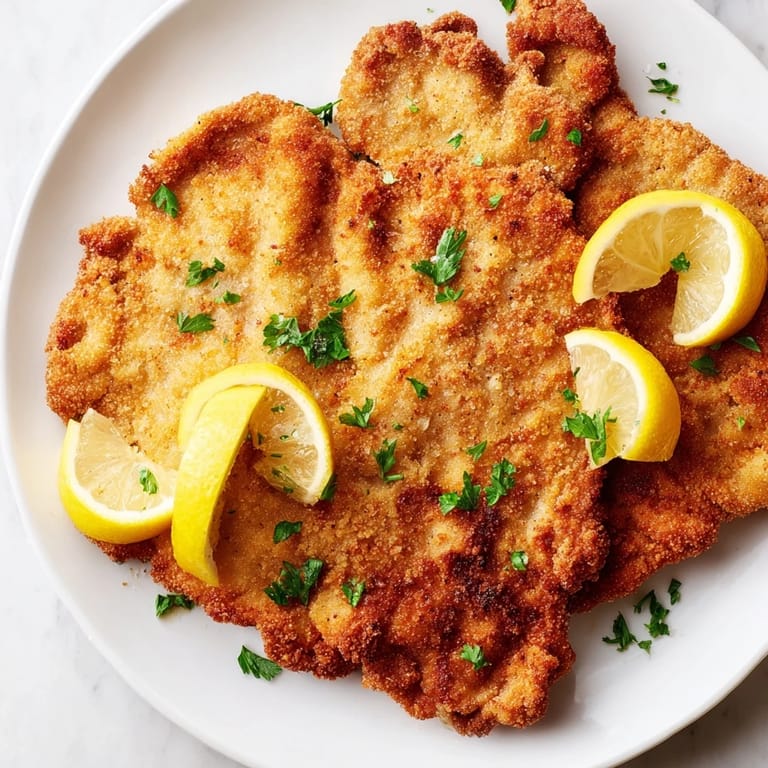
- Lemon wedges and fresh parsley: More than garnish; the acid and brightness lift the richness and complete the plate.
Tired of Takeout? 🥡
Get 10 meals you can make faster than delivery arrives. Seriously.
One email. No spam. Unsubscribe anytime.
Instructions
- Prepare your veal with intention:
- Place each cutlet between plastic wrap and pound gently but firmly until it reaches exactly 1/4 inch thick. Pat it dry thoroughly with paper towels, then season lightly with salt and pepper on both sides—your hands will tell you when it's right.
- Arrange your breading station:
- Shallow dishes work best: flour in the first, egg mixture in the second, breadcrumbs in the third. Having everything in order means you work faster and cleaner, which matters when you're coating four pieces.
- Bread with a light hand:
- Dredge the veal in flour first, shake off the excess, dip into egg, then coat with breadcrumbs. The secret is not pressing the breadcrumbs in—let them sit loose and delicate on the surface so they'll shatter when you bite.
- Heat your fat to the moment of shimmer:
- Watch the clarified butter carefully as it warms; when it shimmers across the surface and barely smokes at the edges, it's ready. This temperature is what transforms a thin cutlet into something golden and alive.
- Fry with confidence and patience:
- Place the schnitzel in the fat and let it alone for 2 to 3 minutes—no moving, no checking obsessively. You'll know it's time to flip when the underside sounds crisp when you tap the pan. Tilt the pan and spoon the hot fat over the top, which ensures even, burnished browning.
- Rest and serve immediately:
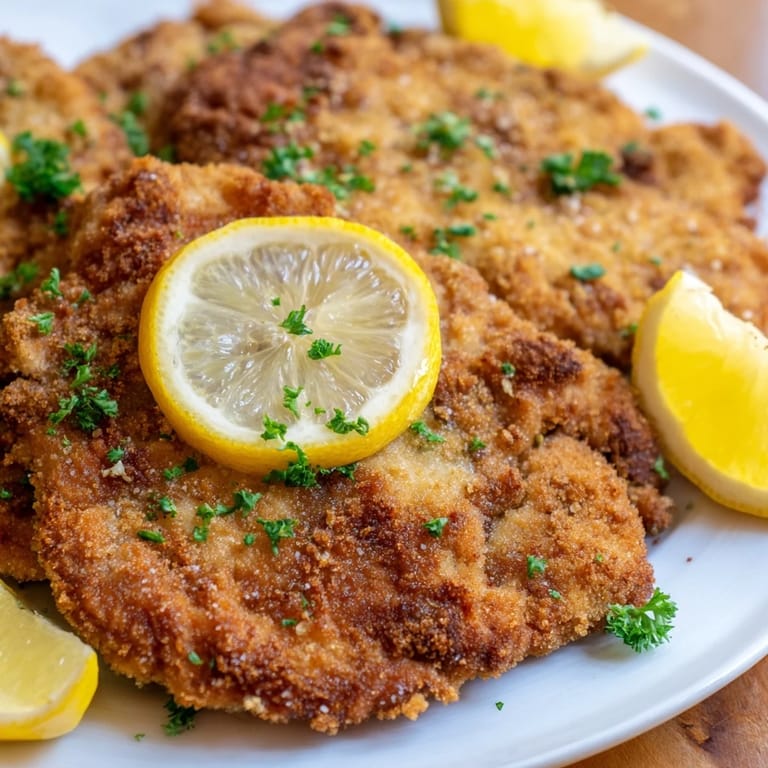
- Transfer with a slotted spatula to paper towels for just a breath of time, then serve at once with lemon wedges and a whisper of fresh parsley.
 Save
Save The moment you understand schnitzel is when you realize it's not about complicated technique—it's about understanding the conversation between thin meat, hot fat, and time. There's something almost meditative about standing at the stove, listening to that gentle sizzle, knowing that in minutes you'll have something beautiful to share.
The Art of Pounding Thin
Pounding the veal correctly changes everything about the final dish. Work gently but deliberately, letting the mallet do the work rather than forcing it; the fibers relax and flatten rather than tear. A properly pounded cutlet will be translucent at the edges and cook to a pale, tender interior. Patience here pays dividends—rush it, and you'll either have meat that's too thick to cook through or pieces that shred when you move them.
Why Clarified Butter Matters
Clarified butter isn't a fancy indulgence; it's the difference between schnitzel and something that tastes like an imitation. Regular butter contains milk solids that burn and leave a bitter taste, while clarified butter browns beautifully and adds a nutty richness that neutral oil simply cannot replicate. If you can't find prepared clarified butter, make your own by melting unsalted butter gently, letting the solids settle, and pouring the clear golden liquid into a clean container.
Serving and Pairing
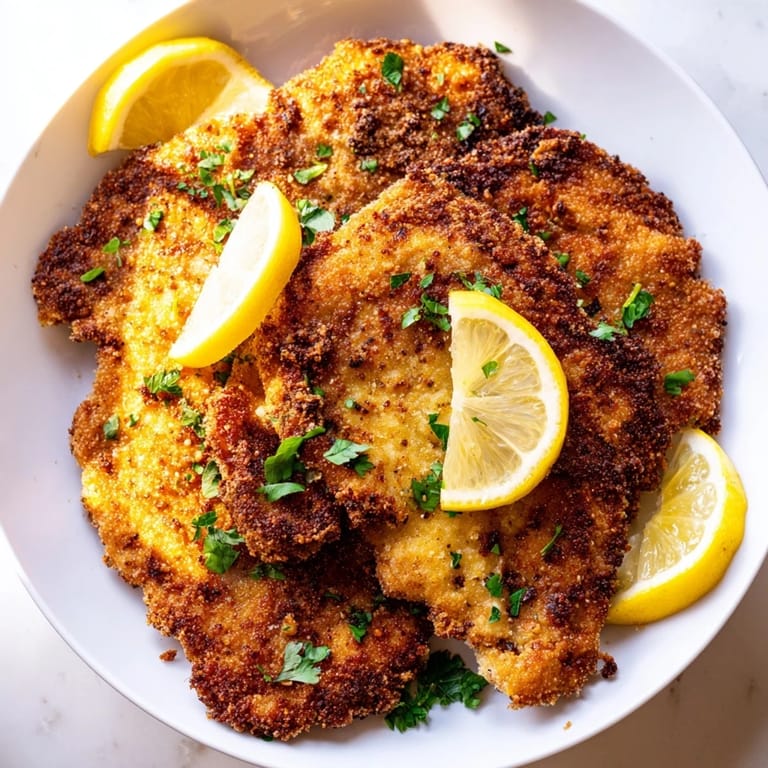
Schnitzel sings when served with bright, cool sides that cut through its richness—a crisp cucumber salad, creamy potato salad tossed with vinegar, or even lingonberry jam for a traditional Austrian touch. The lemon wedges aren't decoration; they're essential, their acid and perfume lifting every bite. Serve on warm plates, immediately after frying, so nothing loses its magic.
- Squeeze fresh lemon directly over the schnitzel just before eating to brighten the flavors.
- A simple green salad with a sharp vinaigrette makes an elegant counterpoint to the richness.
- This dish doesn't need sauce—let the crispness and the natural juices speak for themselves.
 Save
Save Make schnitzel when you want to feed people something that feels both simple and extraordinary. It's the kind of dish that reminds us why we cook.
Recipe Questions & Answers
- → What type of meat is best for Wiener Schnitzel?
Traditionally, veal cutlets pounded thin offer delicate tenderness ideal for this dish, ensuring even cooking and a soft interior.
- → How can I achieve a crispy coating on the cutlets?
Use a light, loose breadcrumb coating without pressing to maintain crispiness. Frying in clarified butter or neutral oil over medium-high heat helps develop a golden crust.
- → Why is pounding the meat important?
Pounding the cutlets to about 1/4 inch thickness ensures quick, even cooking and a tender texture that contrasts with the crispy breading.
- → What are good accompaniments for this dish?
Traditional sides include potato salad, cucumber salad, or lingonberry jam, which add complementary flavors and freshness.
- → Can I use other fats for frying besides clarified butter?
Yes, neutral oils with high smoke points like sunflower or canola oil work well to avoid burning and achieve the crisp finish.