 Save
Save The first time I truly understood bouillabaisse, I wasn't reading about it in a cookbook—I was standing in a fishmonger's stall in Marseille on a grey October morning, watching an older woman point at different bins of fish and say things like "this red mullet, perfect for bouillabaisse." She had this certainty in her voice, as if the fish itself was already half the story. That stall taught me that this isn't some fussy, complicated dish; it's really just the best fish you can find, swimming together in a fragrant broth with saffron and orange, finished with garlicky rouille on toasted bread.
I made this for friends on a winter evening when someone mentioned they'd never had real bouillabaisse, and I watched their faces change when they tasted that first spoonful—the kind of moment where a meal becomes a memory. The kitchen smelled like fennel and saffron for hours afterward, and nobody wanted to leave the table.
Ingredients
- Firm white fish fillets (monkfish or sea bass), 400g: These hold their shape during cooking and give the broth a delicate sweetness; ask your fishmonger for the freshest pieces.
- Oily fish fillets (red mullet), 300g: Red mullet is traditional and adds a subtle richness that makes the broth taste deeper and more complex than white fish alone.
- Mussels, 300g: Buy them the day you cook and keep them cold; they should close when tapped and open only during cooking.
- Small shrimp, 200g: Peeled shrimp are convenient, but if you find them with shells, peel them yourself and save the shells for extra broth flavor.
- Sea scallops, 6 large: Optional but luxurious; they cook in minutes and add a tender sweetness that guests always appreciate.
- Olive oil, 2 tbsp: Use good-quality oil; it's the foundation of the flavor, not just a cooking medium.
- Onion, leek, fennel, and carrot: Together they build the aromatic base, and fennel especially is what makes bouillabaisse unmistakably Provençal.
- Garlic, 3 cloves: Minced fine so it disappears into the broth and becomes flavor rather than texture.
- Ripe tomatoes, 4: Peeling and seeding them takes an extra minute but gives a cleaner broth without bitterness or stray seeds.
- Orange zest: Just a light touch; it brightens everything without making the broth taste citrusy.
- Saffron threads, 1/2 tsp: The signature spice; it costs more than you'd expect but a little goes far, and it's what makes this taste like the Mediterranean.
- Fennel seeds, 1 tsp: Toast them in a dry pan for a few seconds before adding so they release their anise flavor fully.
- Bay leaf, thyme, and parsley: Classic French herbs that anchor the flavor in tradition without overpowering the fish.
- Fish stock or water, 1.5 liters: Stock is richer, but water works fine; the vegetables and fish build plenty of flavor.
- Dry white wine, 200 ml: A crisp wine you'd actually drink; the acidity balances the richness of the broth.
Tired of Takeout? 🥡
Get 10 meals you can make faster than delivery arrives. Seriously.
One email. No spam. Unsubscribe anytime.
Instructions
- Build the aromatic base:
- Heat olive oil in a large heavy pot, then add onion, leek, fennel, carrot, and garlic. Let them soften over medium heat for 8–10 minutes, stirring occasionally—you want them sweet and tender but not colored. The kitchen will smell herbaceous and inviting already.
- Add the flavor foundation:
- Stir in tomatoes, orange zest, bay leaf, thyme, parsley, saffron threads, fennel seeds, peppercorns, salt, and pepper. Cook for 5 minutes so everything melds and the saffron begins to bloom.
- Deglaze and build the broth:
- Pour in white wine, let it bubble for 2 minutes, then add fish stock or water. Bring to a gentle boil, then lower the heat and simmer uncovered for 25 minutes—this is where the magic happens, flavors deepening and marrying together.
- Strain and refine:
- Pour the broth through a fine sieve into another pot, pressing on the solids with the back of a spoon to extract every bit of flavor. Discard the solids and return the strained broth to your cleaned pot.
- Cook the seafood:
- Bring the broth to a gentle simmer, add firm white fish first and cook for 5 minutes, then add oily fish, mussels, shrimp, and scallops. Simmer for another 5–6 minutes until everything is just cooked—the mussels should open and the fish should be opaque and tender.
- Make the rouille:
- Combine egg yolk, minced garlic, seeded chili, saffron with its soaking water, and Dijon mustard in a bowl. Whisk until smooth, then drizzle in olive oil very slowly while whisking constantly until it becomes thick and creamy like mayonnaise. Season with salt.
- Serve:
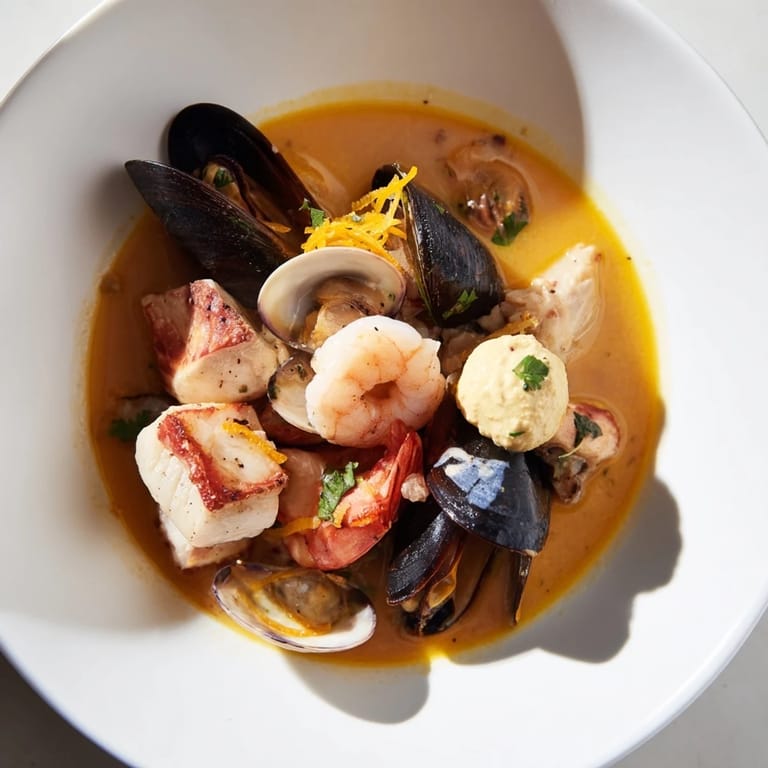
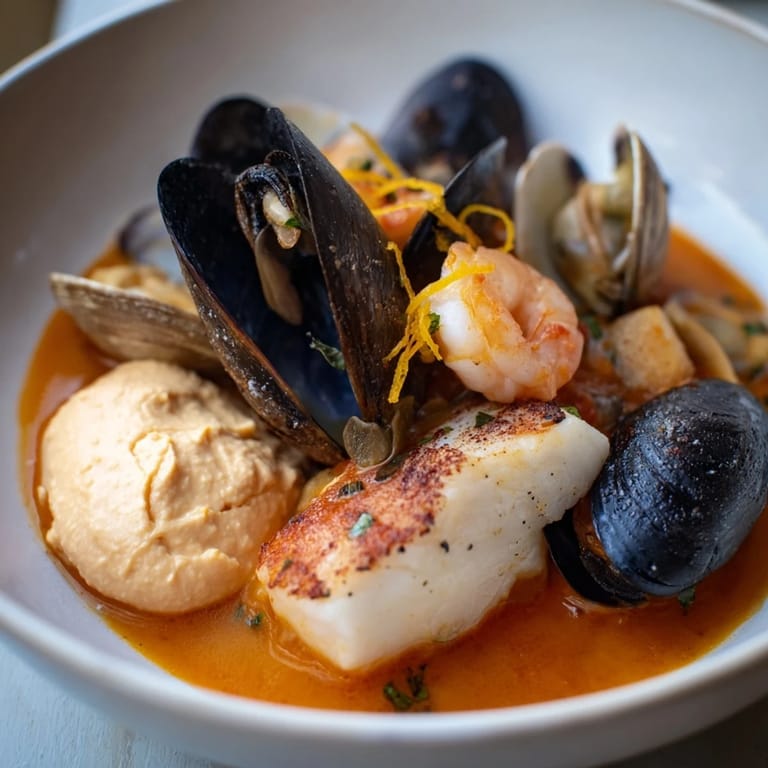
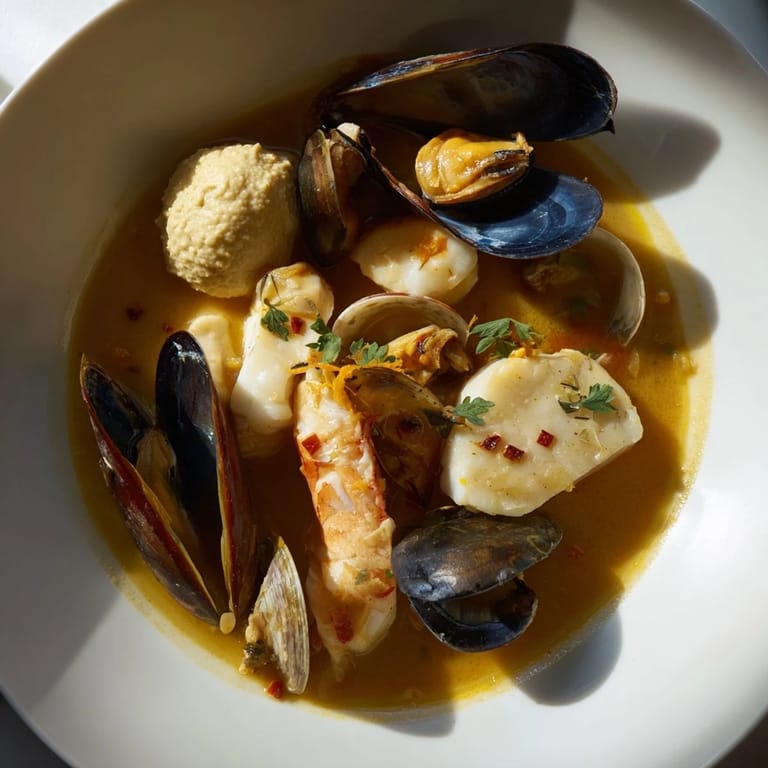
- Ladle the bouillabaisse into warm bowls, top with fresh parsley, and serve with toasted baguette slices brushed with olive oil. A generous spoonful of rouille on the side lets everyone customize their bowl.
 Save
Save Years later, I still think of bouillabaisse as the dish that taught me that cooking isn't about following rules perfectly—it's about respecting ingredients and understanding why each step matters. Every time I make it, someone new tastes real bouillabaisse for the first time, and that never gets old.
The Story of Saffron
Saffron is expensive because each thread is harvested by hand from a tiny crocus flower, and it takes thousands of threads to make even a small amount. In bouillabaisse, it's not just an ingredient—it's a tradition, a color, a flavor that says "this is Provençal." I learned to respect it by using exactly what the recipe calls for, no more, no less, and by steeping it in warm water before adding it so it releases its full fragrance and depth.
Seafood Selection and Freshness
The best bouillabaisse starts at the fish counter, not in your kitchen. Talk to your fishmonger, ask what's fresh that day, and don't insist on specific fish if something better is available—bouillabaisse is flexible as long as you use the freshest fish you can find. Red mullet is traditional, but sea bass, halibut, or even local whitefish works beautifully, and the diversity of fish is part of what makes the broth interesting and complex.
Rouille: The Golden Finishing Touch
Rouille is a saffron-garlic mayonnaise that feels fancy but is surprisingly straightforward once you understand that it's just a slow emulsion of egg yolk and oil, like any other mayonnaise. The chili and saffron give it color and depth, and I've discovered that making it by hand with a whisk rather than a blender gives it a silkier, more luxurious texture. You can make it hours ahead and keep it refrigerated, which means one less thing to worry about when friends are arriving.
- If your rouille breaks (looks grainy or separated), start fresh with a new egg yolk and slowly whisk the broken mixture back in rather than trying to salvage it.
- Taste it and adjust the salt and garlic to your preference; some people want it bold, others prefer subtlety.
- A little rouille goes a long way, so dollop it sparingly on the side so guests can control how much they want.
 Save
Save Bouillabaisse is the kind of dish that reminds you why cooking for people matters—it brings conversation to the table and makes an ordinary evening feel like something worth remembering.
Recipe Questions & Answers
- → What types of fish work best for this dish?
Firm white fish like monkfish or sea bass, combined with oily fish such as red mullet, provide depth in texture and flavor.
- → How is rouille sauce prepared?
Rouille is made by whisking egg yolk, garlic, chili, saffron-soaked water, mustard, and olive oil into a thick, creamy sauce.
- → Can the seafood be substituted for other varieties?
Yes, use fresh local fish and shellfish ensuring a mix of textures and flavors to keep the essence of the stew intact.
- → What is the purpose of straining the broth?
Straining removes solids, yielding a clear, concentrated broth that highlights the aromatic base before adding seafood.
- → How should leftovers be stored?
Cool and refrigerate in an airtight container for up to two days; reheat gently to preserve texture and flavor.