 Save
Save There's something about the smell of fresh chimichurri that stops me mid-thought every single time I make it. One afternoon, while prepping this marinade with a friend who'd just moved to the neighborhood, the aroma got so intense we both started laughing and ended up making extra just to have it around. That's when I realized this bowl wasn't really about the technique—it was about how one simple herb sauce could transform chicken into something people actually got excited about.
I made these bowls for a casual dinner party last spring, and my neighbor—who's usually skeptical about anything green—went back for seconds and asked for the recipe. Watching someone genuinely enjoy something you cooked, not out of politeness but because it actually tastes incredible, that's the moment you know you've found something worth repeating.
Ingredients
- Fresh parsley: This is your foundation, and using the flat-leaf kind gives you way more flavor than the curly stuff—I learned that the hard way by using what was already in my fridge.
- Fresh cilantro: If you're the type who finds it soapy, you can use more parsley instead, but don't skip it entirely if you can tolerate it.
- Garlic cloves: Minced fresh is non-negotiable here; the bottled stuff just doesn't have the same punch.
- Fresh oregano: The dried version works in a pinch, but fresh makes a noticeable difference in how vibrant everything tastes.
- Extra-virgin olive oil: Don't use the cheap stuff for the sauce portion—you taste every difference in quality here.
- Red wine vinegar: The acidity balances the richness and brings all those herbs into focus.
- Red pepper flakes: This gives you a gentle heat that builds as you eat, not a shock of spice.
- Chicken breasts: Get them roughly the same thickness so they cook evenly, or pound them out yourself if they're uneven.
- Cherry tomatoes: Halving them prevents that awkward moment when one rolls off your fork mid-bite.
- Cucumber: Keep the skin on for texture and nutrition; just dice it right before assembly so it stays crisp.
- Avocado: Add this at the very last second, or the browning will bother you more than it should.
- Rice: White rice is fluffier and cleaner-tasting, but brown rice adds chew and keeps you fuller longer.
Tired of Takeout? 🥡
Get 10 meals you can make faster than delivery arrives. Seriously.
One email. No spam. Unsubscribe anytime.
Instructions
- Make your chimichurri base:
- Chop everything finely—not so fine it becomes a paste, but fine enough that every bite has herbs throughout. Mix it all together in a bowl, and you'll see the color shift from dark green to something almost glowing as the oil and vinegar blend with the fresh ingredients.
- Reserve your serving sauce:
- Before you add the chicken, scoop out about a third of what you just made and set it aside in its own container. This is your finishing touch, and it'll taste fresher than the marinating version.
- Coat and marinate the chicken:
- Place your chicken in a bag or shallow dish—the bag is honestly easier because you can smoosh everything around to coat evenly. Pour the remaining chimichurri over the chicken and make sure every surface gets touched by the marinade.
- Let time do some work:
- Stick it in the fridge for at least 30 minutes, though four hours is where the magic really happens. If you're short on time, even 15 minutes is better than nothing, but patience pays off here.
- Get your heat ready:
- Preheat whatever cooking surface you're using to medium-high—you want a sizzle when the chicken hits, but not a violent char. Give it a few minutes to get properly hot.
- Cook the chicken with confidence:
- Take the chicken out of the marinade, pat it dry so it browns instead of steams, and season both sides with salt and pepper. Grill or pan-cook for six to seven minutes per side, and you'll know it's done when the juices run clear and a thermometer hits 165°F inside.
- Let it rest:
- After cooking, let the chicken sit for five minutes before slicing—this keeps all the juices inside where they belong instead of pooling on your cutting board.
- Assemble with intention:
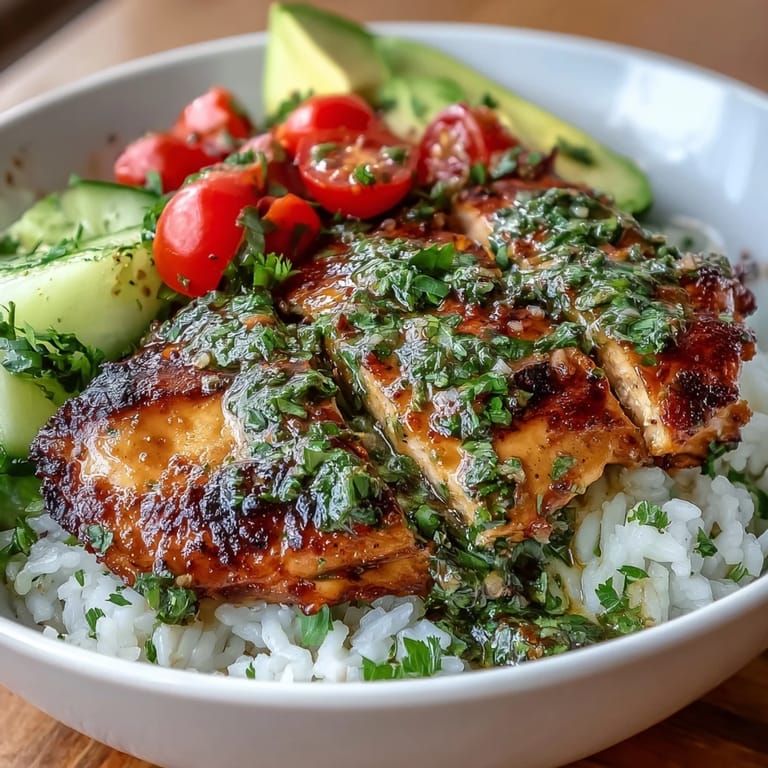
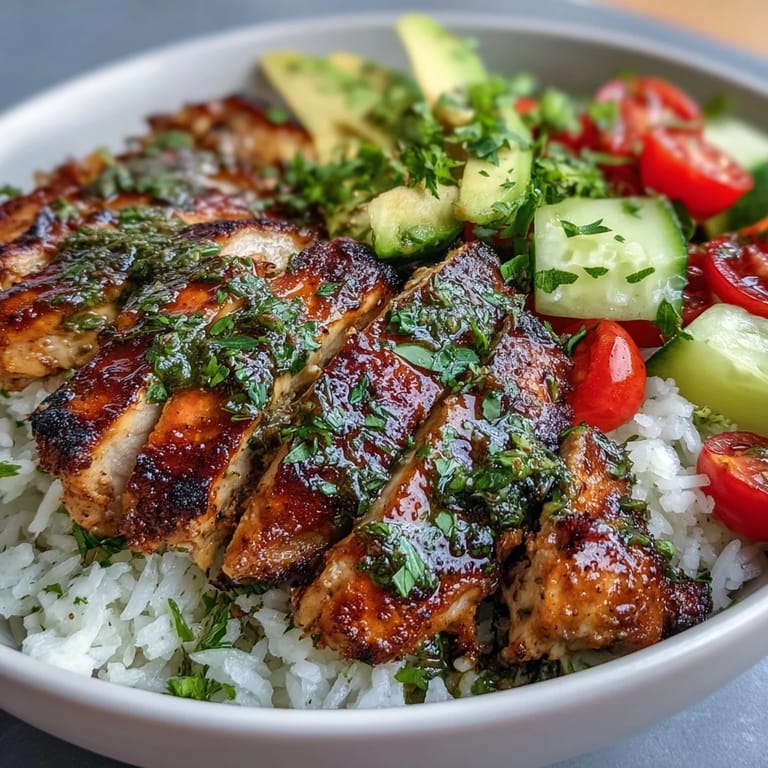
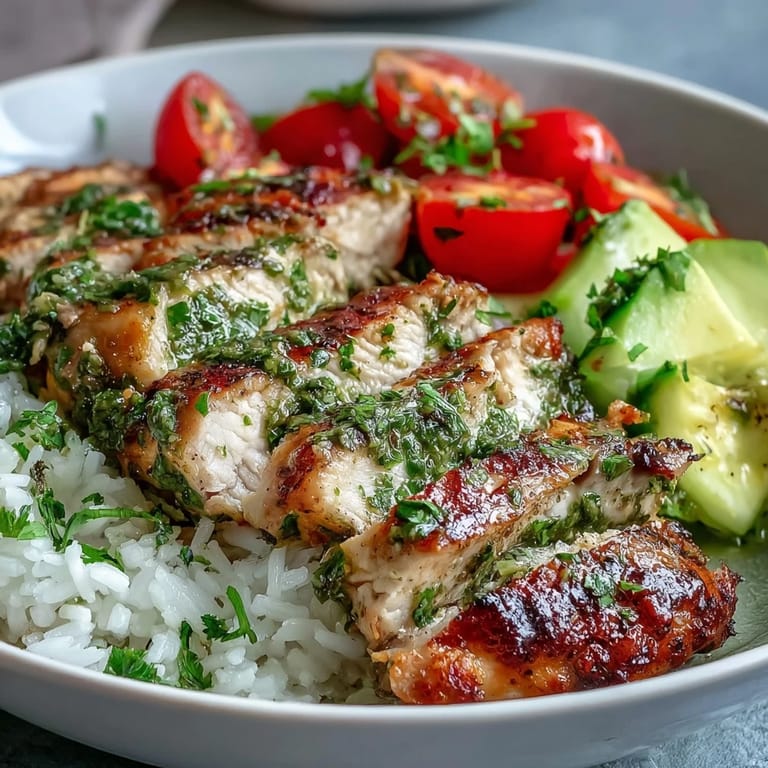
- Start with rice as your base, then add the chicken, tomatoes, cucumber, avocado, and red onion in whatever order feels good to you. The order doesn't really matter; what matters is that everything's cold and fresh except the warm chicken on top.
- Finish with the good stuff:
- Drizzle that reserved chimichurri over everything, sprinkle herbs, add a lime wedge, and taste before serving because you might want more salt or lime depending on your preferences.
 Save
Save There was this one dinner where someone asked if the chimichurri was homemade, and when I said yes, you could see it genuinely register—not because they didn't believe me, but because suddenly the dish meant something different. That's the thing about simple food made with care: it gets noticed in ways that complicated dishes sometimes don't.
The Chimichurri Secret Nobody Talks About
The real magic isn't in following measurements exactly—it's in understanding that chimichurri is a relationship between herbs, acid, and fat. Too much vinegar and it tastes like a salad dressing; too little and it tastes flat and oily. The herbs should dominate the smell when you lean over the bowl, and the oil should make it glossy enough that light bounces off it. I've made this with slightly different ratios depending on what was fresh that week, and as long as I keep that balance in mind, it always works out.
Why This Works as a Complete Meal
The rice provides substance and absorbs all the chimichurri when you mix everything together, the chicken gives you protein that actually tastes like something, and the fresh vegetables keep everything from feeling heavy. The avocado adds richness without being overdone, and the lime at the end wakes everything back up. When you eat it, nothing fights for attention—it's just flavors that know how to get along.
Make It Your Own Without Breaking It
The skeleton of this dish is strong enough that you can swap things around without losing what makes it work. Thighs instead of breasts stay juicier if you're nervous about drying out chicken. Cauliflower rice feels less like a compromise and more like a choice now that it's actually good. Grilled corn adds sweetness, feta adds tang, and extra cilantro for cilantro lovers is always welcome.
- Cook everything except the avocado ahead of time, and assemble the bowls right before eating so the chicken is still warm against the cold vegetables.
- If you have leftover chimichurri, it's incredible on eggs, roasted vegetables, or even stirred into plain yogurt as a dip.
- Make the chimichurri in the morning and let the flavors get to know each other before you use it—afternoon chimichurri tastes noticeably better than the version made five minutes before dinner.
 Save
Save This bowl has a way of becoming the thing people request, which is always the sign of a recipe worth keeping around. The fact that it's easy to make and genuinely delicious is just the bonus that keeps you making it.
Recipe Questions & Answers
- → How long should I marinate the chicken?
Marinate the chicken for at least 30 minutes to infuse the chimichurri flavors, but for maximum flavor, you can refrigerate it for up to 4 hours before cooking.
- → Can I make this bowl low-carb?
Absolutely! Simply swap the rice for cauliflower rice to create a low-carb version while maintaining all the delicious flavors and textures.
- → What other proteins work with chimichurri?
Chimichurri pairs beautifully with steak, pork chops, fish, or even roasted vegetables. The herb sauce adds incredible flavor to any protein you choose.
- → How should I store leftovers?
Store components separately in airtight containers in the refrigerator for up to 3 days. Keep the reserved chimichurri sauce in a separate jar and add it fresh when serving.
- → Can I use dried herbs instead of fresh?
Fresh herbs deliver the best chimichurri flavor, but you can substitute dried oregano. For parsley and cilantro, use half the amount of dried herbs and rehydrate them in the oil mixture.
- → What vegetables can I add?
Grilled corn, bell peppers, shredded cabbage, or roasted sweet potatoes make excellent additions. The bowl is highly versatile based on seasonal produce availability.