 Save
Save My neighbor brought these to a garden party last summer, and I watched three people go back for seconds without even trying anything else on the table. She whispered the recipe was simpler than I'd think, just butter, sugar, and the magic of two fillings that somehow taste like they belong together. That afternoon, sitting under the umbrella with jam-sticky fingers, I realized these weren't just cookies—they were an excuse to slow down. Within days, my kitchen smelled perpetually of vanilla and butter, and I'd made them twice more.
I made a batch one rainy Tuesday when my daughter's friend came over, and they helped me press the thumbprints, arguing about whether jam or cream should go first. We settled it by tasting both ways, and suddenly thirty minutes had vanished into laughter and powdered sugar everywhere. Those cookies disappeared before dinner, and my daughter asked when we could make them again—not as a chore, but like it was already becoming our thing.
Ingredients
- All-purpose flour (2 cups): This is your base, and measuring by weight if you have a scale prevents the dense mistakes I made early on—too much flour and they become almost shortbread-hard.
- Fine sea salt (1/4 tsp): Don't skip this tiny amount; it keeps the sweetness from becoming one-note and brightens every bite.
- Unsalted butter (1/2 cup), softened: Cold butter won't cream properly, so leave it out while you gather everything else—it should feel like a soft pillow when you press it.
- Granulated sugar (1/2 cup): The sweetness comes here, but not aggressively; these cookies let the fillings shine.
- Egg yolk (1 large): Just the yolk, not the white, creates richness without toughening the crumb—the white would add unnecessary structure.
- Pure vanilla extract (1 tsp): A small amount, but it rounds out the flavor in a way that feels almost French.
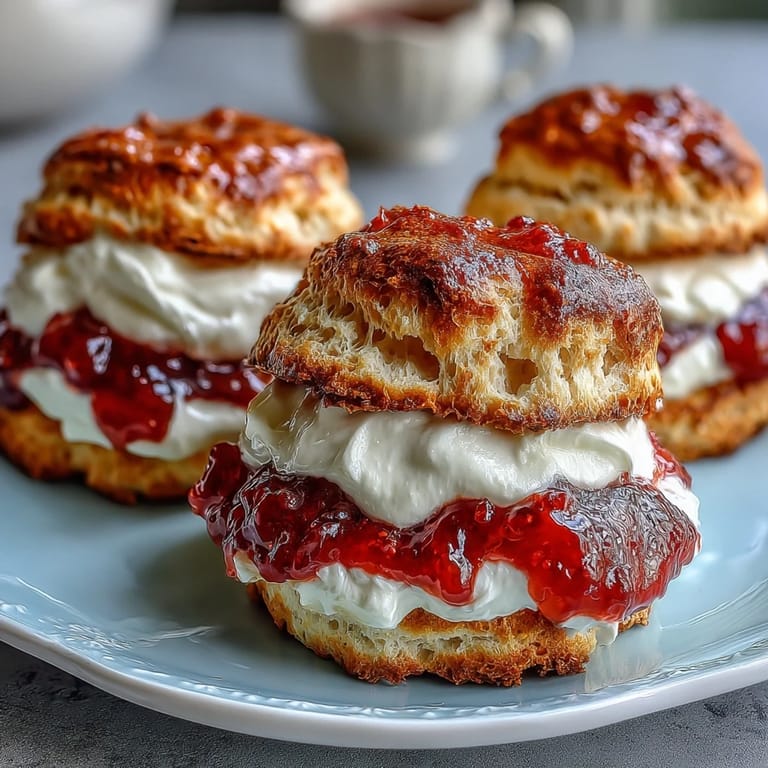
- Clotted cream (1/2 cup): The soul of these cookies; if you can't find it, mascarpone comes closest, though crème fraîche works when you're improvising.
- Strawberry jam (1/3 cup): Use a quality jam with visible fruit pieces—the cheap stuff just tastes like sugar.
Tired of Takeout? 🥡
Get 10 meals you can make faster than delivery arrives. Seriously.
One email. No spam. Unsubscribe anytime.
Instructions
- Prepare your stage:
- Heat the oven to 350°F and line two baking sheets with parchment paper while you're thinking about it—this takes thirty seconds now instead of interrupting you mid-bake.
- Dry ingredients:
- Whisk flour and salt together in a medium bowl, breaking up any tiny lumps you see. This ensures even salt distribution, which is harder to achieve if you just dump everything together.
- Cream butter and sugar:
- Beat the softened butter and sugar until the mixture looks pale and fluffy, roughly two to three minutes with an electric mixer or a solid five minutes by hand. You're incorporating air, which makes these light instead of dense.
- Add richness:
- Beat in the egg yolk and vanilla until completely combined, scraping down the sides if you're using a mixer. This step takes only a minute but matters for even texture.
- Bring it together:
- Gradually add the flour mixture to the wet ingredients, stirring gently until just combined. Overmixing develops gluten, which you want to avoid here—the dough should feel soft and slightly tacky.
- Shape the cookies:
- Roll dough into one-inch balls and place them two inches apart on your prepared sheets. If the dough feels sticky, dust your hands lightly with flour.
- Make the thumbprints:
- Press your thumb or the back of a teaspoon firmly into the center of each ball, creating a deep well without pushing through to the bottom. This is where the magic happens, so don't be shy with the pressure.
- Fill with intention:
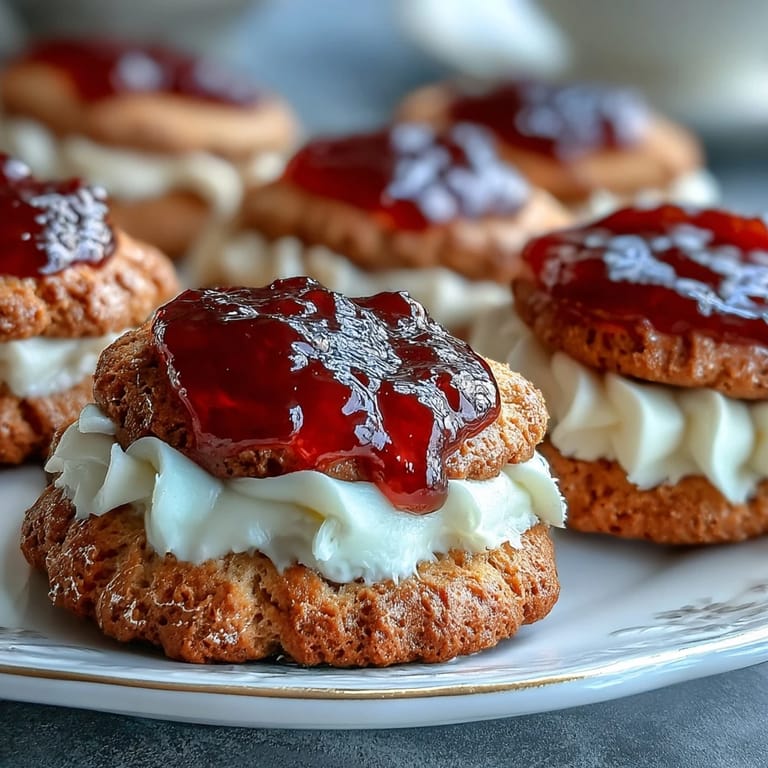
- Add about half a teaspoon of clotted cream to each indent, then top with a quarter teaspoon of jam on top. The cream prevents the jam from soaking into the cookie and adds that luxurious contrast.
- Bake:
- Bake for thirteen to fifteen minutes, watching for golden edges while the centers stay pale. They'll continue cooking slightly on the hot pan after you remove them.
- Cool properly:
- Leave them on the baking sheet for five minutes so they firm up, then transfer to a wire rack to cool completely. Rushing this step leads to broken cookies.
 Save
Save There's something about offering these with tea—even just regular tea, nothing fancy—that transforms an ordinary afternoon into something gentler. A friend once said these tasted like kindness, which I'd never heard before, but I understood exactly what she meant the moment the buttery cookie, cold cream, and warm jam hit her palate at the same time.
Why These Work So Well Together
The cookie itself is almost neutral, buttery without being greasy, sweet without being cloying. It's almost a vehicle for the two fillings, which is the whole point—the tender crumb holds the contrast between tangy clotted cream and bright jam without competing for attention. The texture matters too: soft enough to bite through cleanly, sturdy enough to hold the fillings without collapsing.
Troubleshooting Common Moments
If your cookies spread too much, your butter was too soft or your oven runs hot—chill the dough balls for fifteen minutes before baking next time. If they're dry or hard, you've likely overmixed the dough or used too much flour, which happens when you scoop straight from the bag instead of spooning and leveling. If the jam slides off during baking, you filled the thumbprints too generously or didn't wait long enough for the cookies to cool before filling them.
Variations Worth Exploring
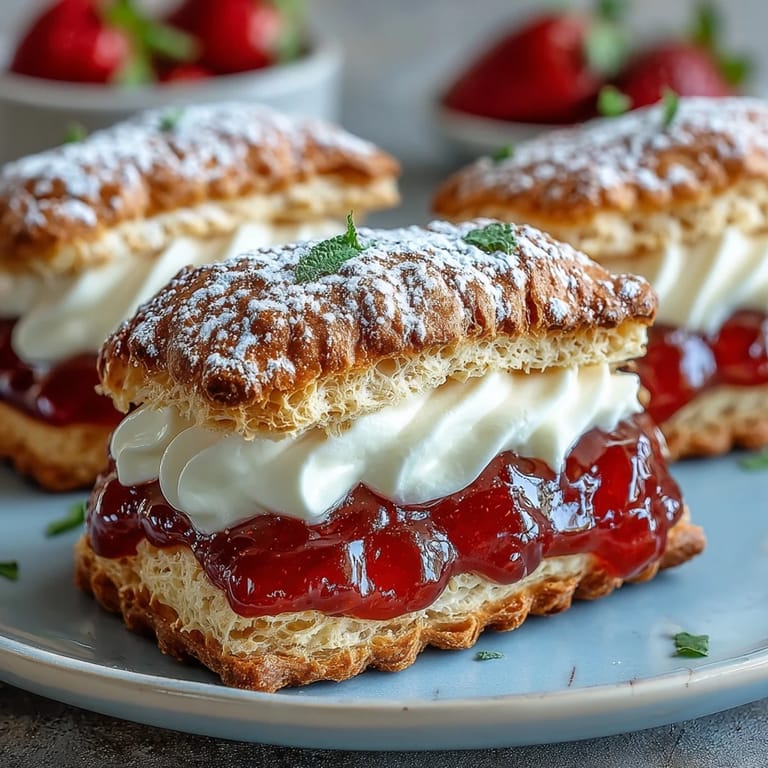
Once you make these once, you'll start seeing endless possibilities—I've tried raspberry jam instead of strawberry, which tastes more tart and sophisticated; mascarpone mixed with honey instead of straight clotted cream, which adds floral sweetness; and even a tiny spoonful of lemon curd under the jam for brightness. The basic formula stays the same, but the fillings let you follow the seasons or whatever's good at your farmers market.
- Apricot jam creates a subtle, almost mellow flavor that pairs beautifully with the richness of clotted cream.
- A small dollop of whipped mascarpone mixed with a pinch of sea salt changes the entire character into something almost savory.
- Try dulce de leche and a tiny sprinkle of fleur de sel on top for a completely different dessert that still feels familiar.
 Save
Save These cookies sit at the intersection of simple and special, the kind of thing that makes people feel cared for without demanding hours in the kitchen. Once you make them, they become the gift you give, the dessert you reach for, the small joy that fills an afternoon.
Recipe Questions & Answers
- → What is clotted cream and can I substitute it?
Clotted cream is a thick, creamy dairy product with a rich texture. If unavailable, you can substitute crème fraîche or mascarpone for a similar richness.
- → How do I prevent cookies from spreading too much during baking?
Ensure the dough is well chilled before shaping, and avoid adding too much butter. Placing cookies with enough space on the sheet also helps maintain shape.
- → Can I use different jams for filling?
Yes, raspberry or apricot jams work well as tasty alternatives to strawberry, suitable for varying the flavor profile.
- → What baking temperature and time are recommended?
Bake these cookies at 350°F (175°C) for 13–15 minutes, until edges turn lightly golden.
- → How should I store the thumbprint cookies?
Store cooled cookies in an airtight container at room temperature for up to 3 days to preserve freshness and texture.