 Save
Save The first time I truly understood French cooking wasn't in a culinary school or fancy restaurant—it was in my own kitchen on a gray Sunday afternoon, when I decided to tackle coq au vin after watching my neighbor descend her basement stairs with a dusty bottle of Burgundy and a knowing smile. She told me that this dish was less about technique and more about patience, about letting wine and time do the real work while you sat nearby with a glass of your own. That simple philosophy changed how I approached cooking altogether.
I made this for my sister's birthday dinner last October, and I remember standing in my kitchen at 5 PM, slightly panicked because the braising time meant the dish wouldn't be ready until nearly 8. But when everyone finally sat down and tasted it, someone said it tasted like autumn itself—dark, rich, and comforting—and suddenly the wait felt absolutely worth it.
Ingredients
- 1 whole chicken (about 1.5 kg), cut into 8 pieces: Pat these completely dry before cooking or they'll steam instead of brown; wet chicken is your enemy here.
- 150 g smoked bacon or pancetta, diced: This renders down to crispy bits that anchor the entire sauce with savory depth.
- 200 g pearl onions, peeled: Buy them pre-peeled if you can—the small ones stay whole and look beautiful in the finished dish.
- 250 g cremini or button mushrooms, cleaned and quartered: Don't wash them; just brush with a damp cloth to keep them from absorbing water and getting spongy.
- 2 medium carrots, sliced: Cut them on a slight bias so they look intentional and cook evenly.
- 2 garlic cloves, minced: Mince these yourself rather than using jarred; fresh garlic dissolves into the sauce rather than lingering as little chunks.
- 750 ml dry red wine (Burgundy or Pinot Noir): Use something you'd actually drink—cheap wine tastes cheap after two hours of cooking.
- 250 ml chicken stock: Homemade is ideal, but good-quality store-bought works if you read the ingredients.
- 2 tbsp tomato paste: This adds earthy undertones that make people ask what secret ingredient you used.
- 2 tbsp all-purpose flour: This acts as a gentle thickener that creates silkiness without any heaviness.
- 2 tbsp olive oil: Use regular olive oil, not extra virgin, since you're cooking at higher temperatures.
- 2 tbsp unsalted butter: The butter for the mushrooms creates a golden crust that catches the light in the final dish.
- 2 bay leaves and 4 sprigs fresh thyme: These infuse the sauce without overpowering it—remove them before serving so no one bites into a leaf.
- Salt and freshly ground black pepper: Season in stages; you'll need more than you think once the liquid reduces.
Tired of Takeout? 🥡
Get 10 meals you can make faster than delivery arrives. Seriously.
One email. No spam. Unsubscribe anytime.
Instructions
- Prep your chicken and season generously:
- Pat each piece completely dry with paper towels—this is the small thing that makes the difference between steamed and beautifully browned chicken. Season boldly with salt and pepper on all sides.
- Render the bacon until it's crackling:
- In a large Dutch oven over medium heat, cook your diced bacon until it releases its fat and turns crispy at the edges. The kitchen should smell smoky and inviting. Remove it with a slotted spoon and set aside on a paper towel.
- Brown the chicken in batches without crowding:
- Turn the heat up slightly and work in batches so each piece gets direct contact with the pot. Listen for that satisfying sizzle when the chicken hits the hot fat. You're aiming for deep golden-brown on all sides, which takes about 3-4 minutes per batch.
- Soften the vegetables in the flavorful drippings:
- Add your carrots, pearl onions, and minced garlic to the same pot. The fond—those browned bits stuck to the bottom—will start to dissolve into the vegetables. Sauté for about 5 minutes until everything smells sweet and the onions begin to turn translucent at the edges.
- Create your flavor base with tomato and flour:
- Stir in the tomato paste and flour, stirring constantly for just 1 minute. This blooms the paste and ensures the flour doesn't clump when the liquid hits it.
- Bring everything together in the braising liquid:
- Return the chicken and bacon to the pot. Pour in the red wine and chicken stock, then add your bay leaves and thyme sprigs. Use a wooden spoon to scrape up every last bit of that golden fond from the bottom of the pot—that's liquid gold in your sauce.
- Let time and gentle heat do the real work:
- Bring everything to a simmer over medium heat, then cover and reduce to low. Let it braise undisturbed for about 1.5 hours. The chicken should be falling off the bone tender, and the kitchen will smell absolutely incredible.
- Meanwhile, give the mushrooms their own treatment:
- While the chicken braises, heat the remaining butter and oil in a skillet over medium-high heat. Once it's foaming, add your mushrooms in a single layer—don't stir them constantly or they'll steam instead of sear. Let them sit for 2-3 minutes, then stir and cook another 2-3 minutes until they're deeply browned.
- Finish the sauce and marry all the flavors:
- In the last 15 minutes of braising, remove the Dutch oven's lid so the sauce can reduce slightly and concentrate its flavors. The liquid should go from thin and winey to glossy and coating. Stir in your sautéed mushrooms and taste for salt and pepper—you'll likely need more than you expect.
- Clean up and serve with ceremony:
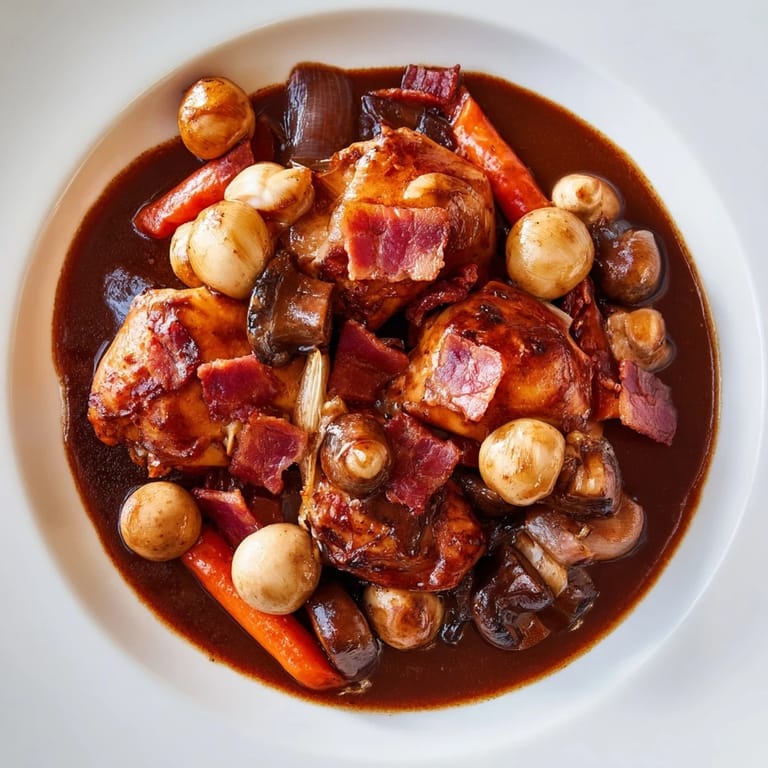
- Remove the bay leaves and thyme sprigs. Ladle everything into bowls—the chicken, vegetables, mushrooms, and that magnificent sauce—and serve hot.
 Save
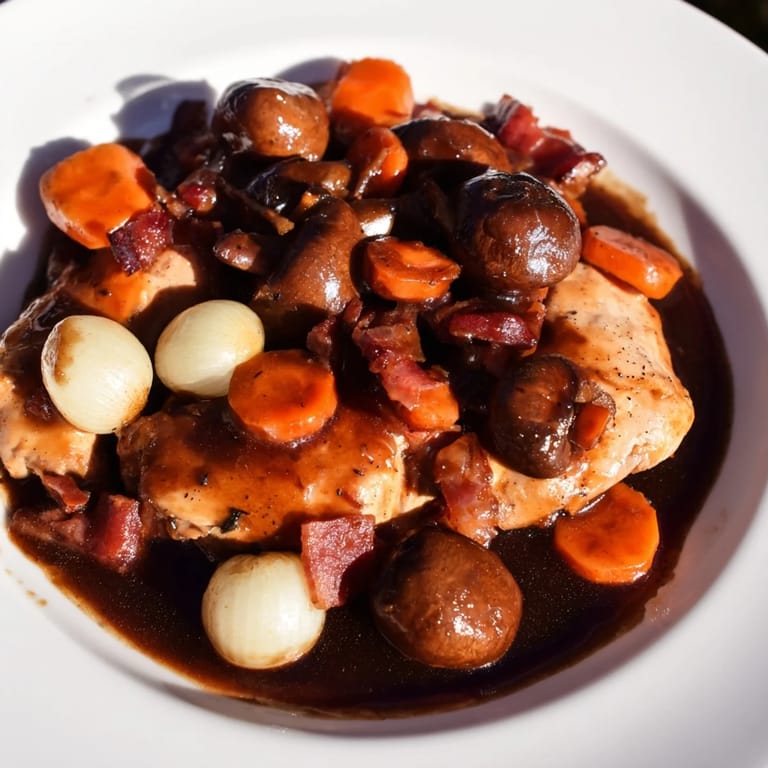
Save I learned something crucial the night my mother tasted this dish for the first time—she closed her eyes after the first spoonful and didn't speak for a moment. When she did, she said it tasted like the kind of food that reminds you why you learned to cook in the first place. That's when I understood this wasn't just a recipe; it was an invitation to slow down.
Why This Dish Matters
Coq au vin represents something beautiful about French cooking: the idea that humble ingredients—chicken, wine, vegetables—become transcendent when given time and respect. There's no technique showmanship here, no complicated methods. Instead, there's an almost meditative trust in process. You brown things carefully, add your ingredients thoughtfully, then step back and let physics and chemistry create magic. This dish taught me that sometimes the most impressive cooking looks deceptively simple.
The Wine Question Everyone Asks
People always hesitate on the wine choice, worried they'll make a mistake. The truth is simpler than it sounds: use a red wine you'd actually drink and enjoy. Burgundy is traditional and beautiful, but so are good Pinot Noir, Côtes du Rhône, or even a decent Merlot. The wine's acidity and tannins break down the chicken's proteins and create that silky sauce, so the quality matters far more than the specific variety. I've made this with different wines depending on what I had open, and every version was delicious.
Building Flavors in Layers
What makes coq au vin feel sophisticated is actually just careful layering of flavors at different stages. The bacon renders first, then chicken browns in that rendered fat, then vegetables soften in the fond, then tomato paste blooms. Each step adds complexity without requiring fancy equipment or difficult techniques. It's like building a flavor library in one pot, and by the time you add the wine, everything is ready to sing together. This is the lesson that changed my cooking forever—that depth comes from patience and intention, not from complexity.
- Taste your sauce at 1.5 hours; the chicken should be tender but not falling apart.
- If your sauce seems too thin after braising, simmer uncovered for another 10 minutes to reduce it further.
- Leftovers actually taste better the next day as flavors meld overnight in the refrigerator.
 Save
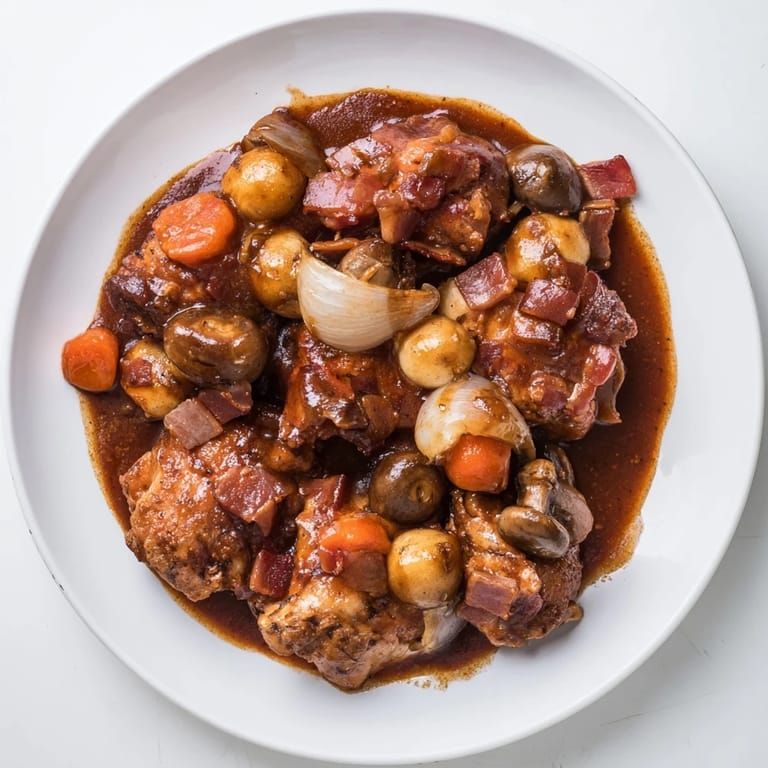
Save This dish has become my answer when someone asks what to cook for people who matter. It's the kind of food that brings everyone to the table and keeps them talking long after dinner is finished.
Recipe Questions & Answers
- → What type of wine is best for braising?
Dry red wines such as Burgundy or Pinot Noir work best, offering a balanced acidity and depth without overpowering the dish.
- → Can chicken thighs be used instead of whole chicken?
Yes, chicken thighs are an excellent alternative as they stay moist and tender during the slow braising process.
- → How do the pearl onions contribute to the dish?
Pearl onions add subtle sweetness and texture, softening as they cook to enhance the overall flavor profile.
- → What is the purpose of sautéing the mushrooms separately?
Sautéing mushrooms separately ensures a nice browning that adds depth and texture when folded back into the stew at the end.
- → Are there recommended side dishes to serve with this dish?
Crusty French bread, mashed potatoes, or buttered noodles complement the rich sauce and tender chicken perfectly.
- → How can the sauce be thickened naturally?
Using flour during the tomato paste step and reducing the sauce by simmering helps achieve a rich, velvety consistency.