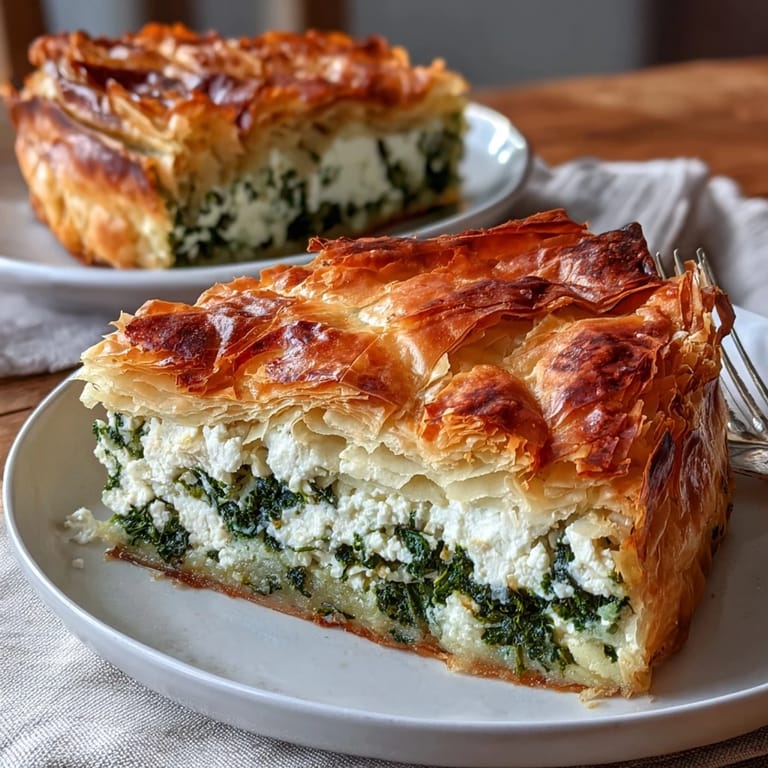
 Save
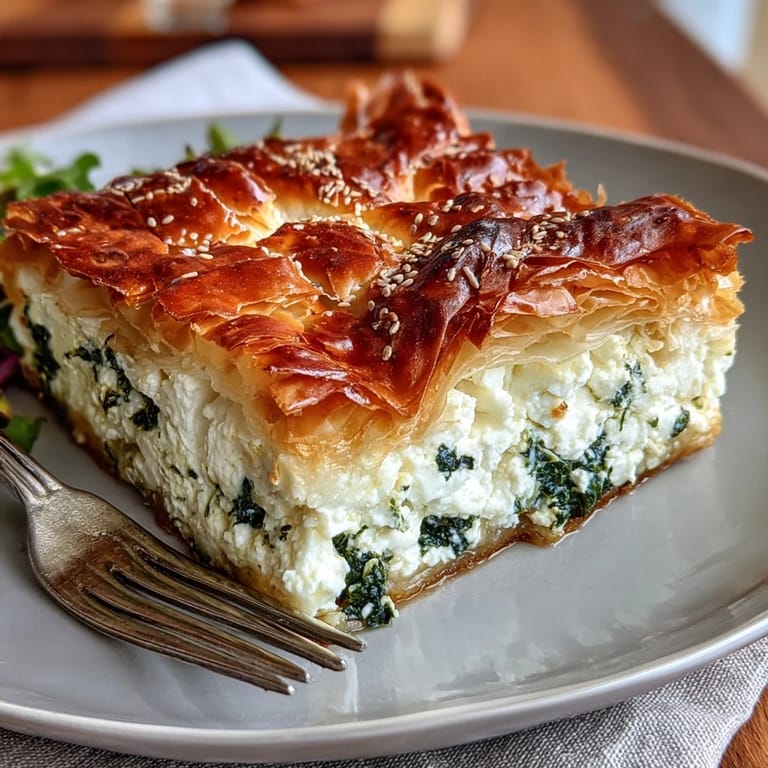
Save My neighbor knocked one evening with an armful of kale from her garden, and I panicked because I had no plan for it. I remembered a börek I'd eaten at a tiny café years ago, all buttery layers and tangy cheese, and thought maybe I could fake it. That night I learned that filo pastry forgives almost everything, and that kale, when it meets feta, stops tasting like a chore and starts tasting like comfort.
I made this for a small gathering once, and people kept asking if I'd ordered it from somewhere. The truth is, it looks far more complicated than it is. Watching everyone peel back the crisp layers and reach for seconds made me feel like I'd pulled off some kind of magic trick, even though all I really did was layer, brush, and trust the oven.
Ingredients
- Fresh kale (250 g): I remove the thick stems because they never soften in time, and I chop the leaves roughly so they wilt down without turning to mush.
- Onion (1 medium): Finely chopped so it melts into the background, adding sweetness without announcing itself in every bite.
- Garlic (2 cloves): Minced and added just before the kale so it perfumes the pan without burning and turning bitter.
- Feta cheese (200 g): Crumbled by hand because the uneven pieces create pockets of salt and tang that make each forkful different.
- Ricotta cheese (100 g): This smooths out the feta's sharpness and keeps the filling from drying out in the oven.
- Filo pastry (8 sheets): Delicate and quick to dry, so I keep it covered with a damp towel and work fast.
- Eggs (3 large): They bind everything together and give the filling a soft, custardy texture that holds its shape when sliced.
- Whole milk (100 ml): Adds richness and helps the eggs stay tender instead of rubbery.
- Olive oil (50 ml, plus extra): I brush it between every filo layer because that's what makes them crisp and golden instead of pale and sad.
- Black pepper (1/2 tsp): Freshly ground if possible, because it adds a gentle heat that wakes up the cheese.
- Nutmeg (1/4 tsp, optional): Just a whisper of it makes the whole filling taste warmer and more complex.
- Fresh dill (1 tbsp, optional): Chopped and stirred in at the end for a bright, grassy note that cuts through the richness.
- Sea salt (1/2 tsp): I taste the filling before adding it because feta is already salty, and I've oversalted this more than once.
Tired of Takeout? 🥡
Get 10 meals you can make faster than delivery arrives. Seriously.
One email. No spam. Unsubscribe anytime.
Instructions
- Prep the oven and dish:
- Preheat your oven to 180°C and lightly grease a 23 cm tart dish with olive oil. This keeps the filo from sticking and makes cleanup easier later.
- Sauté the vegetables:
- Heat a tablespoon of olive oil in a large skillet over medium heat, then cook the onion until it's soft and translucent, about 4 minutes. Add the garlic and kale, stirring until the kale wilts and darkens, about 3 to 5 minutes, then remove from heat and let it cool so the eggs don't scramble when you mix everything.
- Make the filling:
- In a large bowl, whisk together the eggs, milk, and 50 ml olive oil until smooth. Stir in the feta, ricotta, black pepper, nutmeg, dill, and salt, then fold in the cooled kale mixture until everything is evenly combined.
- Layer the bottom filo:
- Lay one filo sheet in the greased dish, letting the edges hang over the sides, then brush it lightly with olive oil. Repeat with 3 more sheets, brushing each one and rotating them slightly so the overhang covers the dish evenly.
- Add the filling:
- Spoon the kale and cheese mixture over the filo base, spreading it out gently so it reaches the edges. The filling should sit in an even layer without any big gaps.
- Top with remaining filo:
- Cover the filling with the remaining 4 filo sheets, brushing each with oil and tucking the edges down into the sides of the dish to seal the tart. If you like, score the top gently with a knife to mark out slices before baking.
- Bake until golden:
- Slide the dish into the oven and bake for 30 to 35 minutes, or until the pastry is crisp and deeply golden. Let it cool for 10 minutes before slicing so the filling sets and doesn't spill out.
 Save
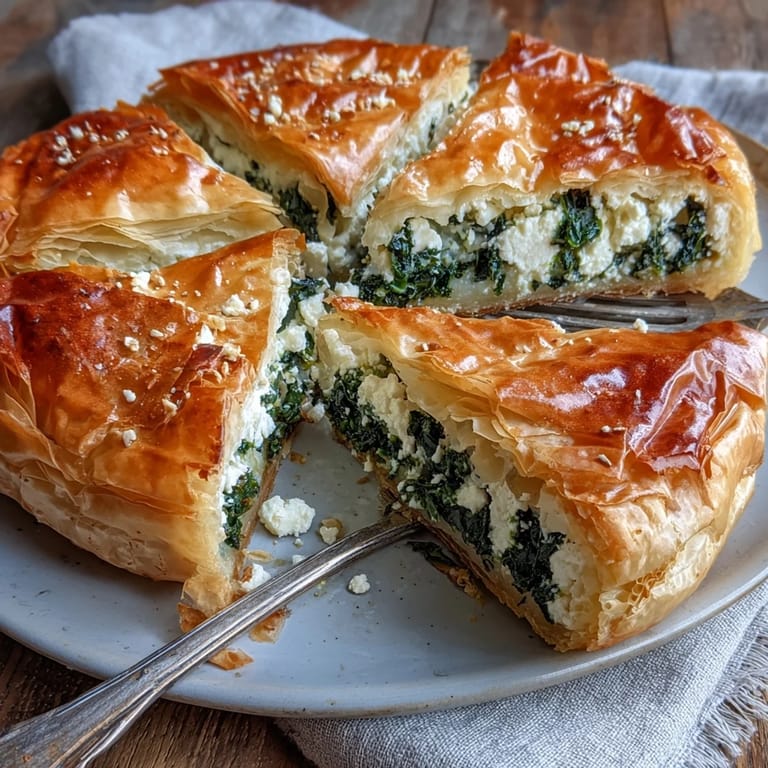
Save One afternoon I served this warm from the oven with a simple arugula salad, and my friend said it tasted like something her grandmother would have made. I don't think my version has any claim to tradition, but I liked that it felt familiar to her, like comfort she didn't expect to find on a Tuesday.
Choosing Your Greens
Kale works because it has enough structure to stand up to the baking without dissolving, but I've used spinach when that's what I had, and it turned softer and sweeter. Swiss chard is lovely too, especially the rainbow kind, though the stems need a few extra minutes in the pan. Whatever green you choose, make sure it's wilted and cooled before it meets the eggs, or you'll end up with a watery filling that won't set properly.
Serving Suggestions
I like this best when it's still a little warm, with a crisp side salad dressed in lemon and olive oil to cut through the richness. A glass of cold Sauvignon Blanc is perfect if you're in the mood, but it's just as good with sparkling water and a wedge of lemon. Leftovers keep well in the fridge for a couple of days, and I've eaten them cold straight from the container more times than I'd admit in polite company.
Make It Your Own
Once you get the hang of layering filo and mixing a simple filling, you can change almost everything. I've added red pepper flakes for heat, swapped the dill for parsley or mint, and even stirred in some cooked mushrooms when I had them.
- Try crumbled goat cheese instead of ricotta for a tangier, creamier filling.
- A handful of toasted pine nuts or walnuts adds crunch and a nutty richness that plays well with the greens.
- If you want it richer, brush melted butter between the filo layers instead of olive oil.
 Save
Save This börek taught me that you don't need a perfect plan to make something delicious, just a willingness to layer things carefully and trust that the oven will do the rest. I hope it feels as satisfying to you as it does to me every time I pull it out, golden and crackling, and remember that evening I had no idea what to do with all that kale.
Recipe Questions & Answers
- → Can I substitute the kale with other greens?
Yes, spinach or Swiss chard work wonderfully as alternatives. Use the same quantity and cook until wilted, adjusting cooking time as needed since spinach wilts faster than kale.
- → How do I prevent the filo pastry from drying out?
Keep unused filo sheets covered with a slightly damp kitchen towel while working. Brush each layer generously with olive oil to maintain moisture and achieve that signature golden, crispy texture.
- → Can I prepare this börek ahead of time?
Absolutely. Assemble the börek completely, cover tightly with plastic wrap, and refrigerate for up to 24 hours before baking. You may need to add 5-10 minutes to the baking time if starting from cold.
- → What cheese alternatives can I use instead of feta?
Goat cheese offers a tangy alternative, while halloumi provides a saltier, firmer texture. You can also use a combination of cottage cheese and parmesan for a milder flavor profile.
- → How should I store leftovers?
Store cooled börek in an airtight container in the refrigerator for up to 3 days. Reheat in a 160°C oven for 10-15 minutes to restore crispness. Avoid microwaving as it makes the pastry soggy.
- → Can I freeze this börek?
Yes, either freeze unbaked or baked börek. Wrap tightly in plastic wrap and foil. Bake frozen unbaked börek directly, adding 15-20 minutes to cooking time. Thaw baked börek overnight and reheat in the oven.