 Save
Save I discovered this dish by accident one autumn evening when a guest mentioned she only ate white foods on certain nights. Instead of panicking, I found myself absorbed in the quiet challenge of building layers of paleness—cream against ivory, with just a whisper of black pepper to prove the food was really there. What started as a constraint became an obsession with elegance, and I realized that sometimes the most memorable meals are born from the smallest, strangest requests.
I remember serving this to friends who'd just moved into their first real apartment, all of them sitting at a wobbly second-hand table under bad lighting, and somehow the pale, mysterious plate made the moment feel expensive and intentional. One guest actually paused mid-conversation just to admire it before eating, which almost never happens with food. That's when I knew the visual storytelling of this dish was half the point.
Ingredients
- Boneless, skinless chicken breasts: Look for breasts that are roughly the same thickness so they poach evenly without any overdrying on the edges.
- Cauliflower florets: Smaller, more tender pieces break down faster into a luxurious purée without turning grainy or watery.
- White button mushrooms: They stay pale and don't bleed color into your cream sauce, which is essential for maintaining the ghostly aesthetic.
- Heavy cream and cream cheese: The combination creates a purée that's silky without being runny, and the tang from cream cheese adds depth.
- Low-sodium chicken broth: Keep it clear and pale—avoid anything that looks golden or amber, which will muddy the purity of the dish.
- Freshly cracked black pepper: The drama of this dish lives here; buy a small grinder and crack it fresh, as pre-ground loses its visual impact and flavor.
Tired of Takeout? 🥡
Get 10 meals you can make faster than delivery arrives. Seriously.
One email. No spam. Unsubscribe anytime.
Instructions
- Poach the chicken gently:
- Bring your broth to a bare simmer—if it's a rolling boil, your chicken will toughen and shred. Slide the breasts in, cover, and let them cook low and slow for 12–15 minutes until they're just cooked through with no pink inside. They should feel tender when you poke them with a knife.
- Blend the cauliflower into silk:
- After boiling, drain your cauliflower thoroughly—excess water is the enemy of a smooth purée. Add it to the blender with cream, butter, and cream cheese while still hot so everything emulsifies beautifully, then taste and season carefully.
- Sauté mushrooms until just golden:
- Start with the onions to build a gentle base, then add mushrooms and garlic. Watch them carefully—you want them soft and barely kissed with color, never brown or dark. This takes about 5–6 minutes over medium-high heat.
- Build the plate with intention:
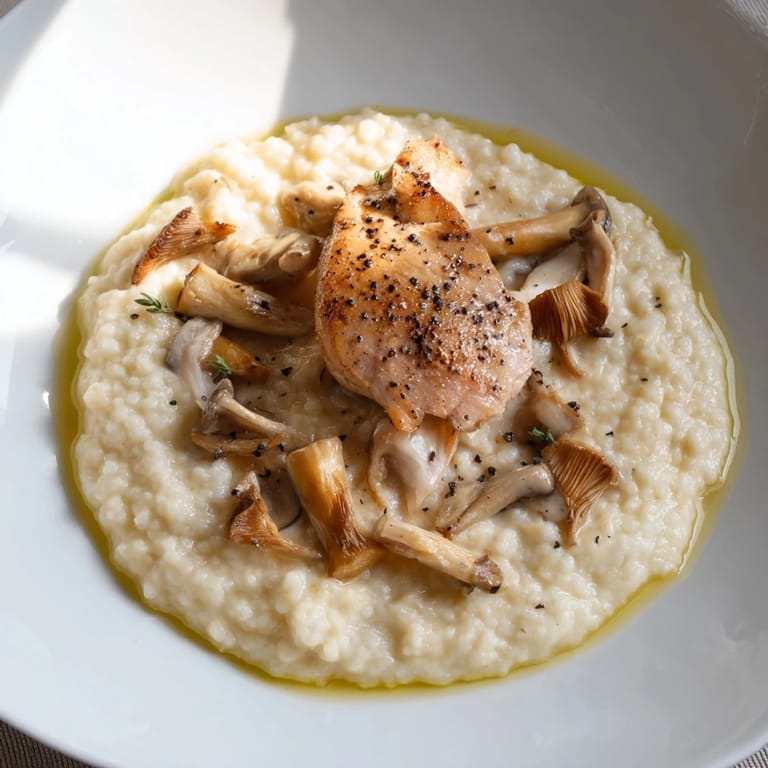
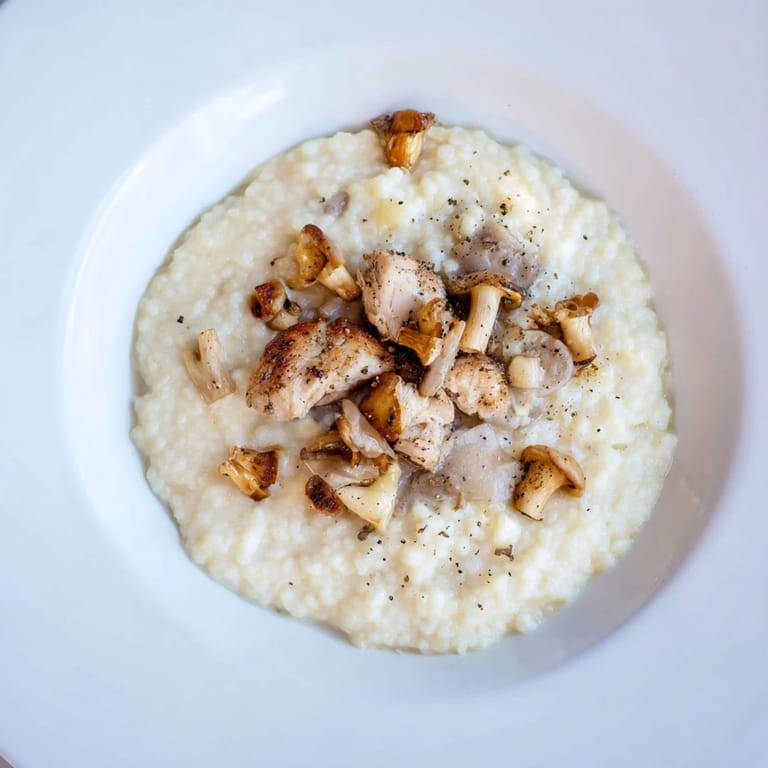
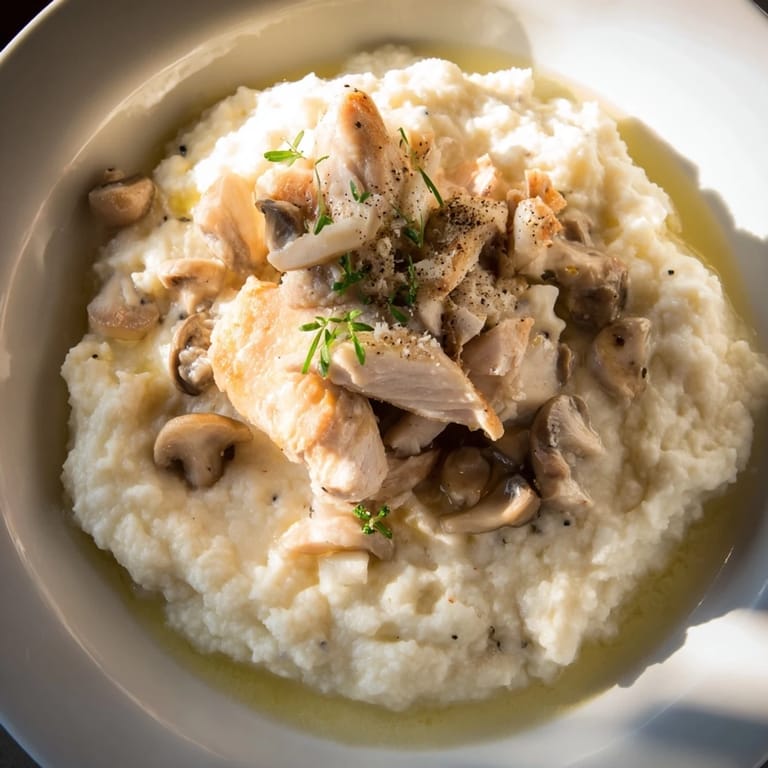
- Start with a generous spoon of cauliflower purée as your anchor, nestle the chicken on top, scatter mushrooms around it, then finish with a light, artful sprinkle of black pepper around the edges. The pepper should frame the food, not blanket it.
 Save
Save This dish taught me that presentation isn't superficial—it's a form of respect, a way of saying I took care with this meal. When food looks intentional and considered, it tastes better somehow, even if the ingredients are simple and mild.
The Art of Eating in Monochrome
There's something almost meditative about a white plate of white food punctuated only by black pepper. You taste each component clearly without visual distraction, and your palate picks up subtle flavors that might get buried under colorful plating. The creaminess plays against the delicate chicken, and the earthiness of the mushrooms anchors it all. It's minimalism with purpose, not deprivation.
Timing and the Perfect Plate
This recipe thrives on what I call the assembly sprint—everything comes together in the final minutes, so you need to be ready. The cauliflower purée can stay warm in a low oven, the chicken comes off the heat early, and the mushrooms should still be warm when you plate. Rushing the plating at the end spoils the whole thing, so take your time arranging each element like you're composing a small painting.
Variations and Substitutions
If you need vegetarian, roasted celeriac slices poached in vegetable broth gives you the same tender, pale result as chicken. I've also played with infusing the broth with garlic or bay leaf for aroma, but keep the broth clear and pale so your visual story stays intact. For a slightly richer purée, fold in a touch of mascarpone instead of cream cheese if you want a softer tang.
- Swap chicken for thick celeriac or firm tofu if you're cooking for vegetarians and want to keep the monochrome magic alive.
- A whisper of white miso in the cauliflower purée adds umami without changing the color.
- Serve with crisp Sauvignon Blanc or dry Riesling to mirror the pale, elegant aesthetic.
 Save
Save This dish proved that constraint breeds creativity, and sometimes the most striking meals come from the simplest ideas. Serve it when you want dinner to feel like an occasion, even on an ordinary Tuesday.
Recipe Questions & Answers
- → How do I poach chicken perfectly for this dish?
Simmer chicken breasts gently in lightly salted broth, covered, for 12–15 minutes until just cooked through. Avoid boiling to keep chicken tender.
- → What makes the cauliflower purée so creamy?
Blending steamed cauliflower with heavy cream, butter, and cream cheese creates a smooth, luscious purée with rich flavor and silky texture.
- → How should mushrooms be sautéed for best texture?
Sauté sliced white mushrooms with finely chopped onion and garlic in olive oil over medium-high heat until soft and lightly golden but still pale, about 5–6 minutes.
- → What’s the purpose of sprinkling cracked black pepper around the plate?
The cracked black pepper is sprinkled around (not on) the food to create artistic shadows, enhancing the dish’s mysterious and elegant appearance.
- → Can this dish be adapted for a vegetarian diet?
Yes, substitute the chicken with thick slices of roasted celeriac or tofu poached in vegetable broth for a satisfying vegetarian alternative.