 Save
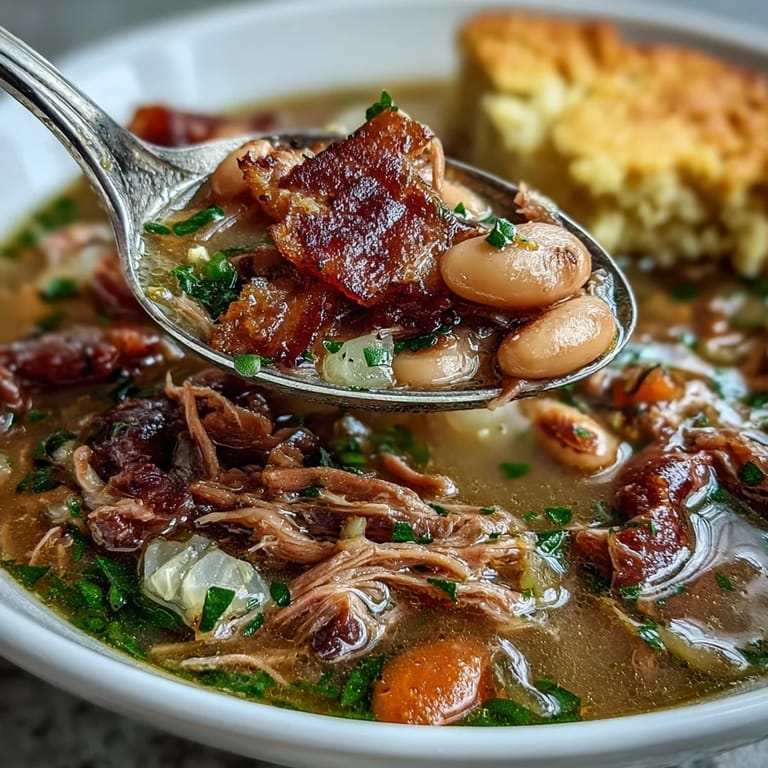
Save There's something about the smell of a ham hock simmering that makes a kitchen feel like home, even if you've only just walked in. My grandmother would start hers on Sunday mornings, and by afternoon the whole house smelled like smoke and comfort. Years later, I finally understood why she paired it with cornbread—not just because they go together, but because that golden, buttery bread soaks up every bit of the broth's soul. This soup is the kind of dish that asks nothing fancy of you, just time and a little attention.
I made this for a friend who'd just moved into her first apartment, and she cried a little at the table—not from sadness, but from the kind of contentment that only happens when you're warm and fed and somebody cared enough to cook. She's made it three times since then, and now it's hers just as much as mine. That's what this soup does: it becomes part of people's stories.
Ingredients
- Smoked ham hock (about 1 lb): This is your flavor foundation—look for one with good color and marbling, and don't be shy about asking the butcher for advice on which cut will give you the most meat.
- Dried white beans (1 lb, soaked overnight): Navy or Great Northern beans both work beautifully; soaking them overnight isn't just tradition, it actually speeds up cooking and makes them creamy rather than mushy.
- Low-sodium broth (8 cups): The ham hock will add plenty of salt and depth, so holding back on the broth seasoning lets you control the final taste.
- Yellow onion, carrots, and celery (diced): This trio—your aromatic base—is where the soup's sweetness comes from, and dicing them evenly means they'll cook at the same rate.
- Garlic (3 cloves, minced): Add it after the softer vegetables have had their time, or it'll turn bitter and shadow everything else.
- Bay leaves and thyme: These herbs whisper rather than shout; bay leaves especially need to come out before serving or they'll catch between someone's teeth and ruin the moment.
- Smoked paprika and black pepper: The paprika echoes the ham's smokiness, while pepper adds a gentle heat that builds as you eat.
- Yellow cornmeal (1 cup): Use stone-ground if you can find it—it has more texture and flavor than the ultra-fine kind.
- All-purpose flour (1 cup): This gives the cornbread structure so it doesn't fall apart when you slice it warm.
- Sugar (1/4 cup): Just enough to bring out the corn's natural sweetness without making it taste like dessert.
- Baking powder (1 tbsp): Don't skip or substitute this; it's what gives cornbread its tender, open crumb.
- Whole milk and eggs: These bind everything together and create that golden-brown crust that shatters when you bite into it.
- Unsalted butter (1/4 cup, melted): Let it cool just slightly before stirring into the wet ingredients, or you'll scramble the eggs.
Tired of Takeout? 🥡
Get 10 meals you can make faster than delivery arrives. Seriously.
One email. No spam. Unsubscribe anytime.
Instructions
- Sauté your vegetables until they soften:
- Heat olive oil in a large Dutch oven over medium heat, then add onion, carrots, and celery—listen for that gentle sizzle and watch them turn translucent and tender, about 5 minutes. This step isn't just cooking; it's building flavor by coaxing out the vegetables' natural sweetness.
- Build the aromatic foundation:
- Add minced garlic and let it bloom for just a minute, until the smell hits you and you know it's ready. Timing here matters because garlic burns fast and tastes bitter if you're not careful.
- Combine beans, ham hock, and broth:
- Add your soaked beans (drained), the ham hock, bay leaves, thyme, pepper, and smoked paprika to the pot, then pour in all the broth and bring everything to a boil. You'll see the broth turn slightly milky and the beans will start to bob at the surface—this is the sign you're ready to lower the heat.
- Let time do the work:
- Reduce heat to low, cover the pot, and simmer for 2 hours, stirring occasionally so nothing sticks to the bottom. The ham hock will gradually surrender its meat to the broth, and the beans will soften into something almost creamy.
- Shred the ham and finish the soup:
- Remove the ham hock with tongs and set it aside to cool slightly, then pick the meat from the bone, discarding the skin and bone, and return just the shredded meat to the pot. Fish out the bay leaves, taste for salt, and if you like a thicker soup, simmer uncovered for 10 to 15 minutes to reduce the liquid.
- Mix your cornbread dry ingredients:
- Preheat your oven to 400°F and grease an 8-inch square baking dish while the oven heats. In a large bowl, whisk together cornmeal, flour, sugar, baking powder, and salt, breaking up any lumps in the cornmeal.
- Combine wet ingredients gently:
- In a separate bowl, whisk milk, eggs, and cooled melted butter until smooth, then pour this into your dry ingredients and stir until just barely combined—lumps are your friend here, because overmixing will make the cornbread tough and dense.
- Bake until golden:
- Pour the batter into your prepared dish and bake for 20 to 25 minutes, until the top is golden and a toothpick inserted in the center comes out clean or with just a few moist crumbs clinging to it. The cornbread will smell incredible as it bakes, and your kitchen will smell like a home.
- Serve together:
- Ladle the hot soup into bowls, stir in fresh parsley for color and brightness, and serve alongside warm cornbread for soaking up every last drop.
 Save
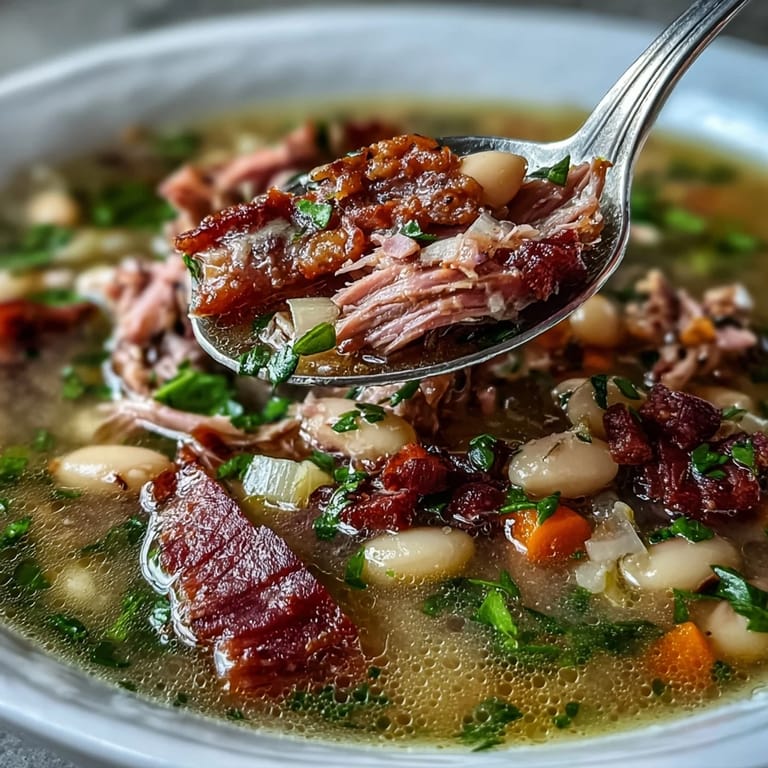
Save My mother told me once that soup is how you say 'I'm thinking of you' in a language everybody understands. She was right—there's something about handing someone a warm bowl that says you care in a way words sometimes can't. This dish does that effortlessly.
Why This Soup Tastes Even Better Tomorrow
If you have leftovers (and you probably will), resist the urge to eat them all that night. The flavors keep getting to know each other as the soup cools and sits in the refrigerator—the beans soften further, the broth takes on a silkier texture, and the smoke from the ham hock seems to deepen. Reheat gently on the stovetop with a splash of broth or water to loosen it up, and you'll have something almost better than the original.
The Cornbread Question
Some people ask whether you should make the cornbread in the same baking dish every time, and the answer is no—it actually bakes better and more evenly in an 8-inch square dish than in a cast iron skillet, though cast iron gives you a darker, crispier crust if that's what you love. The real secret is that slightly warm cornbread is the best cornbread; if you make it ahead, wrap it in a clean kitchen towel and reheat it in a 350°F oven for 5 to 10 minutes before serving, and nobody will ever know it wasn't just baked.
Variations and Swaps That Actually Work
This recipe is sturdy enough to bend without breaking, which is one reason it's lasted this long in American kitchens. Add chopped kale or fresh spinach in the last 10 minutes of simmering if you want earthier greens, or swap the ham hock for a smoked turkey leg if you're cooking for someone who doesn't eat pork. A small dash of liquid smoke can deepen the flavor if your ham hock seems mild, and if you like heat, a pinch of cayenne pepper at the end won't hurt.
- Cornbread keeps well for two days wrapped in foil, and it freezes beautifully for up to three months.
- If you don't have fresh parsley, dried parsley works fine, though fresh really does taste brighter and more alive.
- Leftover soup thickens as it sits, so thin it with a little water or broth when you reheat it.
 Save
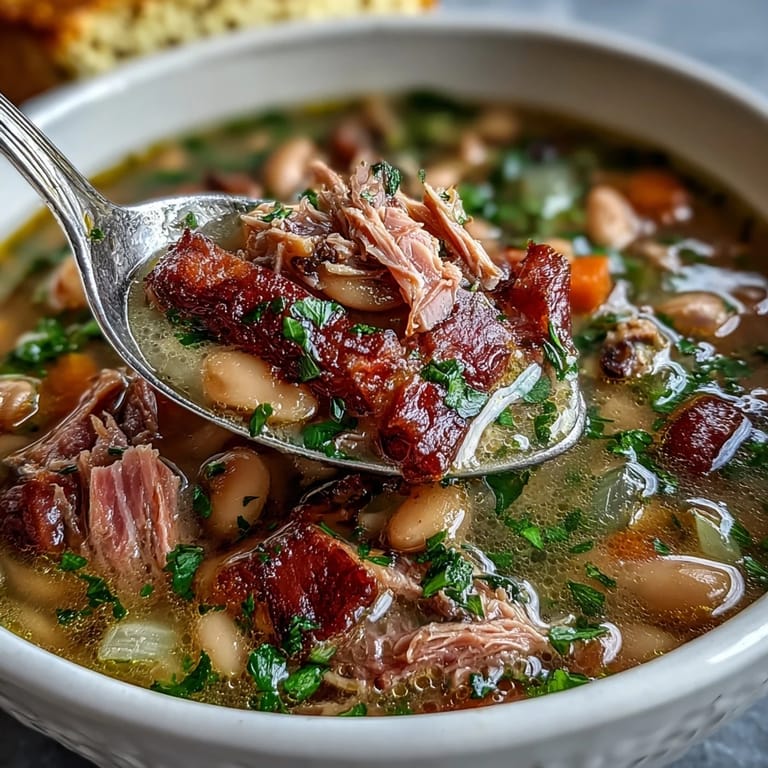
Save Make this soup on a day when you have time to let it simmer, and you'll understand why it's been passed down through generations—it rewards patience with comfort, and it feeds people in a way that sticks with them long after the bowl is empty.
Recipe Questions & Answers
- → What type of beans works best in this dish?
Dried white beans such as navy or Great Northern beans are ideal for their creamy texture and ability to absorb smoky flavors during simmering.
- → Can the ham hock be substituted?
Yes, smoked turkey leg can be used as a pork-free alternative while still providing a rich, smoky depth.
- → How long should the soup simmer for optimal flavor?
Simmering the soup for about 2 hours allows the beans to become tender and the ham hock to release its smoky richness thoroughly.
- → What is the best way to make the cornbread moist and tender?
Combining cornmeal with flour and adding melted butter and eggs creates a tender crumb. Avoid overmixing the batter to keep it light.
- → Can greens be added to the soup?
Adding chopped kale or spinach in the final 10 minutes of cooking introduces fresh color and nutrients without overpowering the flavors.
- → How should leftovers be stored?
Store the soup and cornbread separately in airtight containers in the refrigerator and reheat gently to maintain texture and flavor.