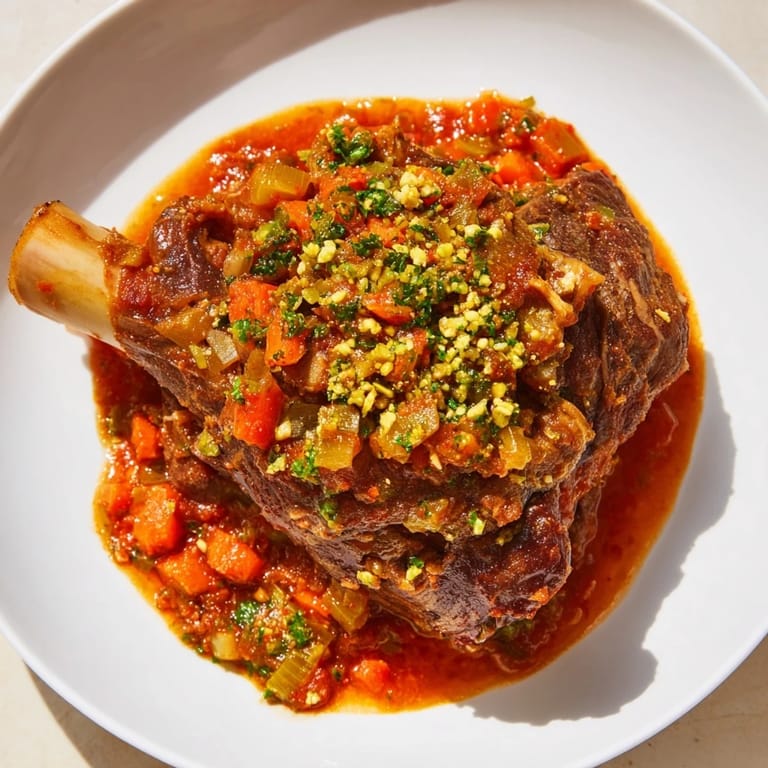
 Save
Save There's something about the aroma of veal slowly transforming in the oven that makes you feel like you're in a Milanese kitchen, not your own. I stumbled onto osso buco years ago when a friend's mother casually mentioned it was the opposite of difficult—just time and patience. The first time I made it, I nearly skipped the browning step to save time, but something made me stop and do it properly. That golden crust was the whole difference, the foundation of everything that came after. Now whenever I braise those shanks, I'm reminded that some of the best dishes aren't about technique or tricks; they're about giving meat and vegetables the hours they need to become something transcendent.
I made this for my brother's birthday dinner, and I'll never forget how quiet the table got once everyone started eating. He's not one for compliments, but he went back for seconds without saying a word, which meant everything. That's when I realized this dish has a way of silencing conversations in the best possible way—it demands your full attention.
Ingredients
- Veal shanks (4, about 350 g each, cross-cut, bone-in): The bone marrow enriches the sauce as it braises, so don't even think about boneless cuts. Ask your butcher to cross-cut them; this exposes the marrow and helps the meat cook evenly.
- Salt and freshly ground black pepper: Don't skimp here—season generously before dredging, as this is your only real seasoning moment.
- All-purpose flour (1/3 cup or 40 g): This creates that crucial brown crust; gluten-free flour works just as well if you need it.
- Olive oil (2 tbsp) and unsalted butter (2 tbsp): The combination gives you a higher smoke point than butter alone while keeping that rich flavor.
- Onion (1 large, finely chopped), carrots (2, diced), celery (2 stalks, diced), garlic (4 cloves, minced): This is your soffritto base, and the finer you chop everything, the better it dissolves into the sauce.
- Dry white wine (1 cup or 240 ml): Choose something you'd actually drink; the acidity brightens the final sauce.
- Diced tomatoes (1 can, 400 g with juice), beef or veal stock (1 1/2 cups or 360 ml), tomato paste (2 tbsp): Together these create the braising liquid's body and depth.
- Bay leaves (2), dried thyme (1 tsp), lemon zest (1 lemon, reserved for gremolata): The herbs are subtle but essential; they prevent the dish from feeling one-dimensional.
- Fresh flat-leaf parsley (2 tbsp, finely chopped), garlic clove (1, minced), lemon zest (reserved): The gremolata is your flavor reset button, cutting through the richness right before you eat.
Tired of Takeout? 🥡
Get 10 meals you can make faster than delivery arrives. Seriously.
One email. No spam. Unsubscribe anytime.
Instructions
- Prep and season the shanks:
- Pat them completely dry with paper towels—this is what lets them brown properly instead of steam. Season generously with salt and pepper, then dredge lightly in flour and shake off any excess; you want a whisper of coating, not a thick crust.
- Get that golden color going:
- Heat your oil and butter in a large Dutch oven over medium-high heat until it shimmers. Working in batches if needed, brown each shank for 3–4 minutes per side until deeply golden, then transfer to a plate and set aside.
- Build your flavor base:
- In the same pot, add the onion, carrots, celery, and garlic and sauté until softened, about 6 minutes. You want them to be tender enough that they'll almost disappear into the sauce eventually.
- Wake up the tomato paste:
- Stir in the tomato paste and cook for just 1 minute, letting it caramelize slightly and deepen in color. This stops it from tasting raw and metallic.
- Deglaze and build the sauce:
- Pour in the white wine and scrape the bottom of the pot with a wooden spoon, releasing all those browned bits that are pure flavor. Add the diced tomatoes with their juice, stock, bay leaves, thyme, and half the lemon zest, stirring everything together.
- Return the shanks to their home:
- Nestle them back into the pot in a single layer and spoon sauce over them. Bring everything to a simmer on the stovetop, then cover and transfer to a preheated 160°C (325°F) oven for 2 hours, or until the veal is so tender a fork slides through it easily.
- Make the gremolata while you wait:
- Mix the fresh parsley, minced garlic, and remaining lemon zest in a small bowl. This fresh mixture is what you'll scatter on top at the very end.
- Finish and serve:
- Remove the shanks to a serving platter, skim any excess fat from the sauce if you'd like, and simmer it for a few minutes if it seems thin. Spoon the sauce over the shanks and sprinkle generously with the gremolata just before serving.
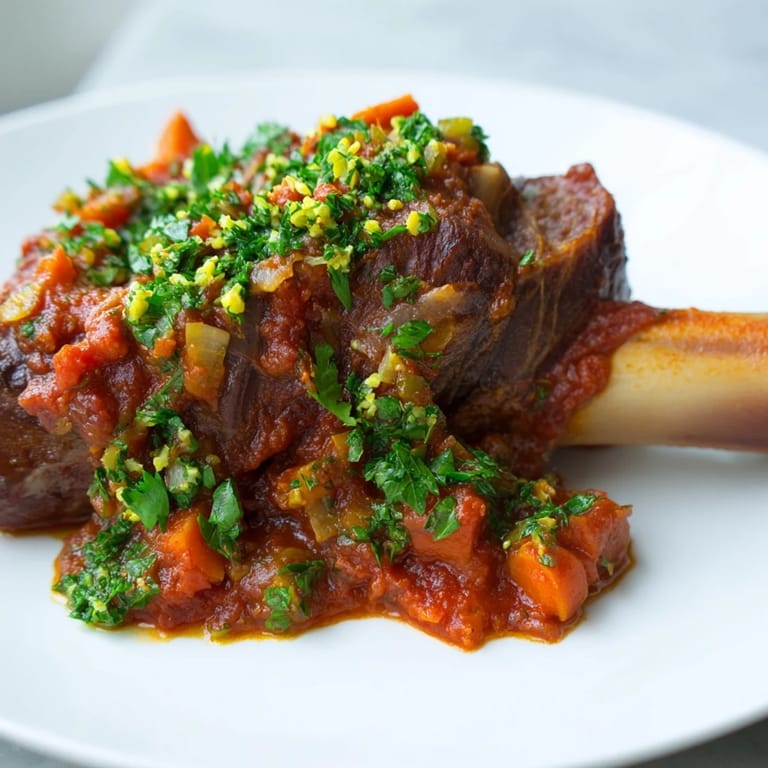 Save
Save I once served this to someone who claimed they didn't like veal, and watching them reconsider that stance mid-meal was worth every minute I'd spent in the kitchen. That's the power of osso buco—it transforms a potentially intimidating ingredient into something so comforting and honest that it doesn't need any pretense.
What to Serve It With
Osso buco is traditionally paired with risotto alla Milanese, which is finished with saffron and bone marrow for a luxurious match. If you want something lighter, creamy mashed potatoes or soft polenta both catch the sauce beautifully and let the veal shine without competing for attention. Even a simple green salad on the side works if you want to balance the richness, though honestly, the sauce alone is often enough.
Make-Ahead and Storage
This dish actually improves overnight as the flavors meld and deepen, so feel free to braise it a day ahead and gently reheat it before serving. Store it covered in the refrigerator for up to three days, or freeze the shanks and sauce together for up to two months. When reheating, do it slowly and gently over low heat so the meat doesn't toughen.
Variations and Swaps
Beef shanks work beautifully in place of veal and often require just a bit more cooking time—check tenderness around the 2.5-hour mark. For a gluten-free version, simply use gluten-free flour for dredging; the sauce itself is naturally gluten-free. Some people add a splash of Marsala wine or finish with a touch of cream, but I find the classic version needs nothing—it's already complete.
- You can brown the shanks the night before and refrigerate them, then braise the next day when you're ready.
- If your sauce seems too thin at the end, whisk together a little cornstarch and water to thicken it rather than boiling it down, which can concentrate the salt.
- The gremolata is non-negotiable, but if you hate raw garlic, you can reduce it to half a clove and still get that bright, fresh finish.
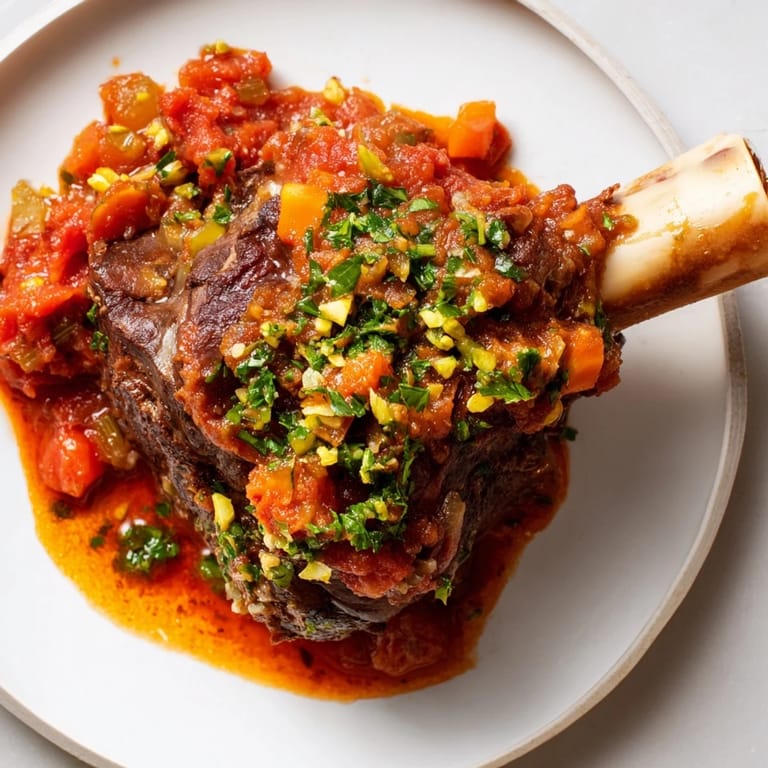 Save
Save Osso buco has this way of making you feel like you've accomplished something, even though most of the work is just showing up and waiting. Serve it with presence, and let the meat and sauce speak for themselves.
Recipe Questions & Answers
- → What cut of meat is best for Osso Buco?
Veal shanks cut crosswise with the bone in are ideal as they become tender and flavorful when slow braised.
- → Can I substitute beef for veal in this dish?
Yes, beef shanks can be used as a substitute but may require a longer cooking time for tenderness.
- → What is gremolata and how is it used here?
Gremolata is a fresh mix of lemon zest, garlic, and parsley added at the end to brighten and complement the rich flavors.
- → Is this dish suitable for gluten-free diets?
Yes, by using gluten-free flour when dredging the meat, this dish can be made gluten-free.
- → What sides pair best with Osso Buco?
Traditional sides include saffron risotto, creamy mashed potatoes, or soft polenta which soak up the rich sauce beautifully.