 Save
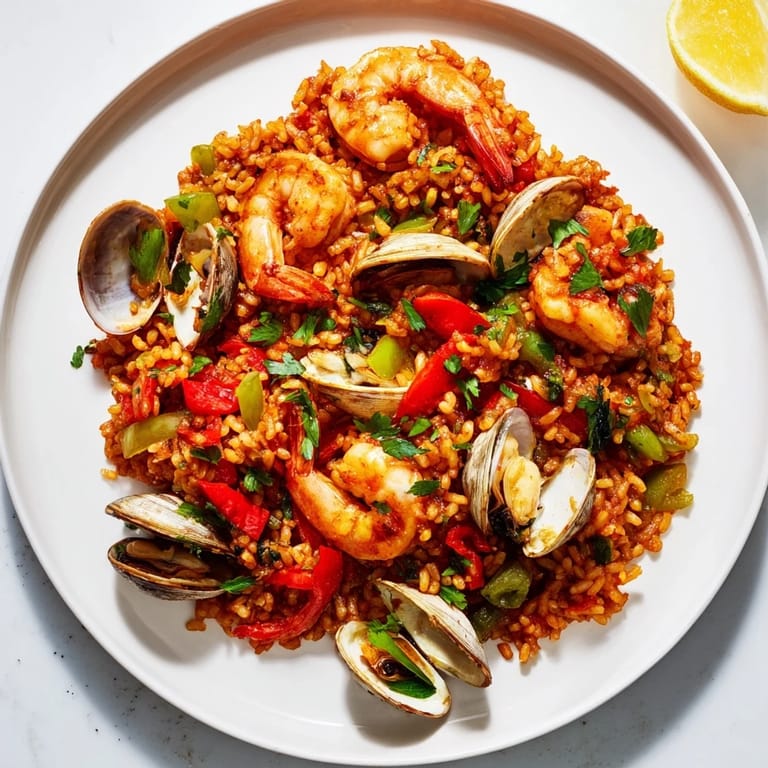
Save The first time I made paella, I was standing in a borrowed kitchen in Barcelona, watching my friend Maria's grandmother work a massive pan over an open flame with the kind of calm confidence that only comes from making something a thousand times. She never consulted a recipe, just moved through the motions like a dance she'd known since childhood, and somewhere between the sizzle of the soffritto and the moment the saffron turned the rice molten gold, I understood that this wasn't just a dish—it was a memory maker. Now, whenever I make paella at home, I'm chasing that feeling, that moment when everything comes together and suddenly your kitchen smells like Spain.
I made this for a dinner party on a rainy November evening, and I remember my friend Jake taking one bite and going completely quiet—the kind of quiet that means you've done something right. His partner asked him if something was wrong, and he just shook his head and said, "No, this is just really good," which somehow meant everything. That moment taught me that paella isn't about impressing people with technique; it's about creating something so delicious that it stops conversation.
Ingredients
- Shrimp, mussels, and clams: These three give you layers of ocean flavor—briny, sweet, and mineral all at once. Make sure they're fresh, and never skip the scrubbing step; nobody wants sand between their teeth.
- Short-grain paella rice (Bomba or Arborio): This rice absorbs liquid without falling apart, which is the whole secret to paella's texture. Regular long-grain rice will turn to mush, so don't substitute.
- Saffron threads: Yes, it's expensive, but a little goes a long way—those threads bloom in warm stock and turn everything golden. If you skip it, you're making risotto, not paella.
- Smoked paprika: This is what gives paella its deep, warm color and a subtle smokiness that makes you close your eyes.
- Fish or seafood stock: Homemade is best, but a good quality store-bought version works fine. Avoid bouillon cubes if you can; they're too salty and one-note.
- Olive oil: Spanish olive oil is traditional, but use what you have. This is where good oil matters, though—you're tasting it directly.
- Bell peppers, onion, garlic, and tomato: These are the foundation, and taking time to chop them properly makes everything cook evenly and look beautiful on the finished dish.
- Fresh parsley and lemon: The parsley adds brightness right at the end, and the lemon is essential—those wedges are your ticket to cutting through the richness.
Tired of Takeout? 🥡
Get 10 meals you can make faster than delivery arrives. Seriously.
One email. No spam. Unsubscribe anytime.
Instructions
- Bloom your saffron in warm stock:
- Pour your fish stock into a saucepan and add the saffron threads, then keep it warm over low heat. You'll see the water slowly turn to liquid gold—that's the saffron releasing all its flavor and color, and it's worth the 5 minutes of patience.
- Build your flavor base:
- Heat olive oil in your paella pan over medium heat and sauté the onion until it's soft and starting to turn translucent, about 2 minutes. Add garlic next, stirring constantly so it doesn't burn—30 seconds is enough.
- Soften the vegetables:
- Toss in your bell pepper strips and cook for 3 to 4 minutes, stirring occasionally, until they're slightly soft but still have some color. Then stir in your grated tomato and let it cook down until most of the liquid evaporates, which takes about 2 minutes and smells incredible.
- Toast the rice:
- Coat the rice:
- Add your rice to the pan, stirring constantly for about a minute so every grain gets coated in the oil and vegetables. Sprinkle in your smoked paprika, salt, and pepper, stirring once more to combine.
- Add the saffron stock (and stop stirring):
- Pour in your warm saffron-infused stock all at once, distributing the rice evenly across the pan. Here's the critical part: do not stir from this moment on. The rice needs to contact the bottom of the pan to develop that golden, crispy socarrat layer.
- Arrange your seafood:
- After the rice has been cooking for about 15 minutes and has absorbed most of the liquid, arrange your shrimp, mussels, and clams over the top in a pretty pattern. They'll steam in the remaining liquid and cook perfectly in about 10 more minutes.
- Cover and let it finish:
- Loosely cover the pan with foil or a lid and keep the heat at medium-low. Listen for a gentle sizzle; you want that socarrat to develop but not burn.
- Rest and rest some more:
- When the rice is tender and the shells have opened (discard any that don't), remove the pan from heat. Let it sit covered for 5 minutes—this resting period lets everything settle and the flavors meld together.
- Garnish and serve:
- Scatter fresh parsley over the top and serve immediately with lemon wedges on the side. Tell your guests to squeeze a little lemon on their portion before eating; it brightens everything.
 Save
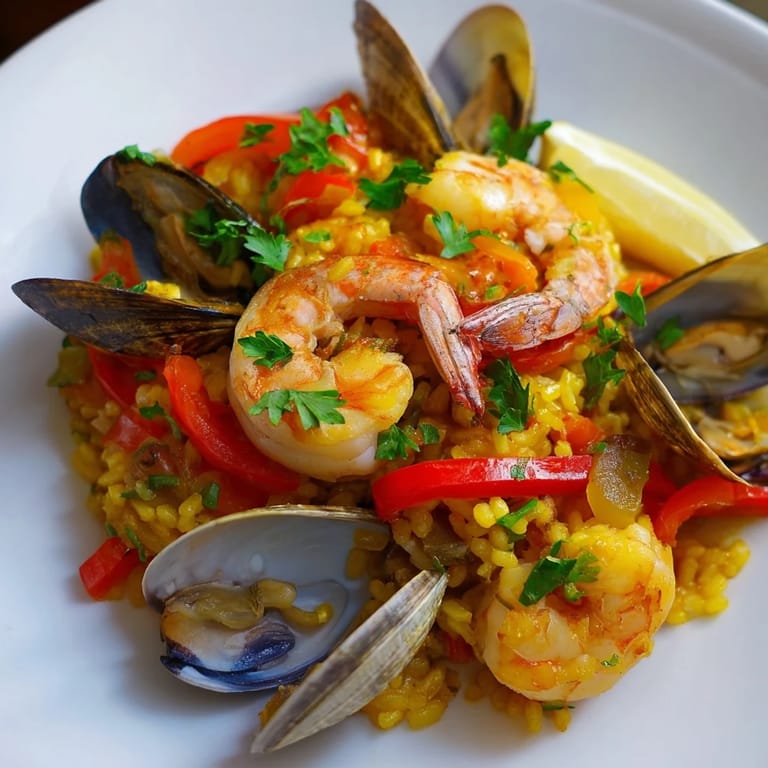
Save My sister served this paella at her daughter's sixth birthday party, and instead of the kids fighting over the last piece, they were passing lemon wedges and parsley to each other like they were sharing gold. That moment, watching a table full of people—kids included—slow down and actually taste their food, that's when I realized why paella has survived for centuries.
The Magic of the Socarrat
The best part of paella isn't in the middle; it's on the bottom of the pan where the rice makes contact with the heat and develops a thin, golden, slightly crispy layer called the socarrat. When you hear that gentle crackling sound and smell the toasted rice, you know you've hit the mark—it's not burned, it's caramelized, and it's the textural contrast that makes every bite interesting. The socarrat is why people actually fight over the edges of the pan, and why paella tastes better than it has any right to.
Choosing Your Seafood and Stock
The quality of your seafood and stock will echo through every bite, so this is where it's worth spending a little extra. Fresh shellfish has a sweet, clean smell—if anything smells off or ammonia-like, put it back. For stock, I've had better luck with homemade or high-end store-bought versions that actually taste like the ocean rather than salt water and sadness. Fish mongers are usually happy to help you pick out the best specimens if you ask, and they might even tell you where the seafood came from.
Serving and Pairing
Paella is meant to be shared, eaten straight from the pan if you're with close friends, or transferred to a beautiful serving dish if you're trying to impress. A crisp Spanish white wine like Albariño cuts through the richness perfectly, or if you're not drinking wine, sparkling water with lemon is honestly just as good. Serve it while it's hot, with extra lemon wedges and maybe some crusty bread for soaking up the last of the flavorful rice.
- Always serve paella immediately; it's one of those dishes that loses something magical if it sits too long.
- If you're making this for vegetarians, skip the seafood and stock, double the vegetables, and add spinach and artichokes for depth.
- Frozen peas stirred in at the very end add a pop of sweetness and color if you want a little extra something.
 Save
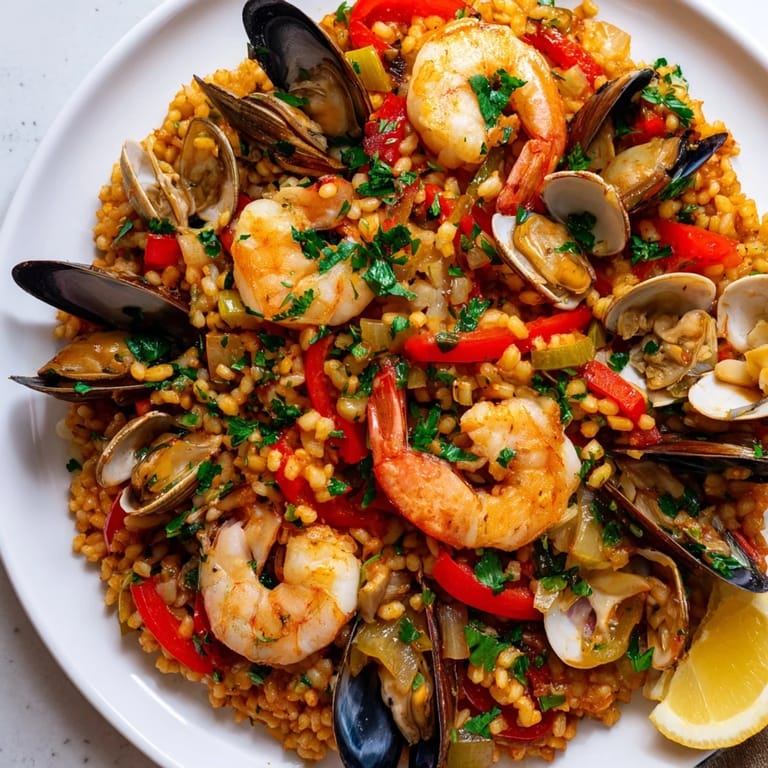
Save Paella is one of those dishes that fills a room with anticipation from the moment you start cooking, and delivers on every promise it makes. Make it once, and you'll find yourself making it again for every celebration that comes along.
Recipe Questions & Answers
- → What type of rice works best for Spanish paella?
Short-grain varieties like Bomba or Arborio absorb flavors well while maintaining a firm texture.
- → How is saffron used in this dish?
Saffron threads are infused in warm seafood stock, imparting a distinct aroma and golden color to the rice.
- → Can I substitute the seafood with other ingredients?
Yes, calamari or firm white fish can replace some shellfish for flavor variations.
- → What is the cooking technique for the seafood and rice together?
The rice is cooked with the saffron-infused broth and topped with seafood to steam gently without stirring after adding stock.
- → How should the dish be served for best flavor?
Let the dish rest covered after cooking, then garnish with parsley and lemon wedges to enhance freshness and brightness.
- → Are there common allergens to be aware of?
The dish contains shellfish and may have gluten traces depending on the stock used, so checking ingredient labels is advised.