 Save
Save There's something almost magical about watching a room full of people gather around a single pot of bubbling cheese, all of them leaning in with their forks, trading bites and stories. I discovered Swiss fondue not in Switzerland, but in a cramped apartment kitchen on a cold January evening when my neighbor insisted on teaching me the proper technique after I'd mentioned feeling uninspired by winter cooking. She pulled out her grandmother's caquelon and walked me through each step with the kind of patience that only comes from years of practice, and by the end of the night, what had started as a simple dinner became something closer to a ritual—one I've been repeating ever since.
The first time I made this for friends without my neighbor's guidance, I got nervous halfway through—the cheese suddenly looked too thick, and I panicked, thinking I'd ruined everything. But a splash more wine and a few more figure-eight stirs brought it back to silky perfection, teaching me that fondue is forgiving if you stay calm. That night, I realized this dish isn't just about feeding people; it's about creating a space where conversation flows as easily as the cheese does from fork to bread.
Ingredients
- Gruyère cheese: The backbone of any proper fondue, aged and nutty with a melting point that's just perfect—buy it in a block and grate it yourself for better texture.
- Emmental cheese: Adds sweetness and stretch to the blend; this is what gives fondue that luxurious, silky quality.
- Dry white wine: Never use anything you wouldn't drink—it's the flavor base, so quality matters here.
- Kirsch: A touch of cherry brandy deepens everything without being obvious; it's optional but worth hunting down if you can.
- Cornstarch: The secret to preventing the cheese from becoming grainy or separating—toss it with the cheese before adding it to the wine.
- Garlic clove: Just a whisper of flavor; the halved clove perfumes the pot and then gets discarded.
- Nutmeg and white pepper: Small amounts that make the whole thing taste somehow more refined and complete.
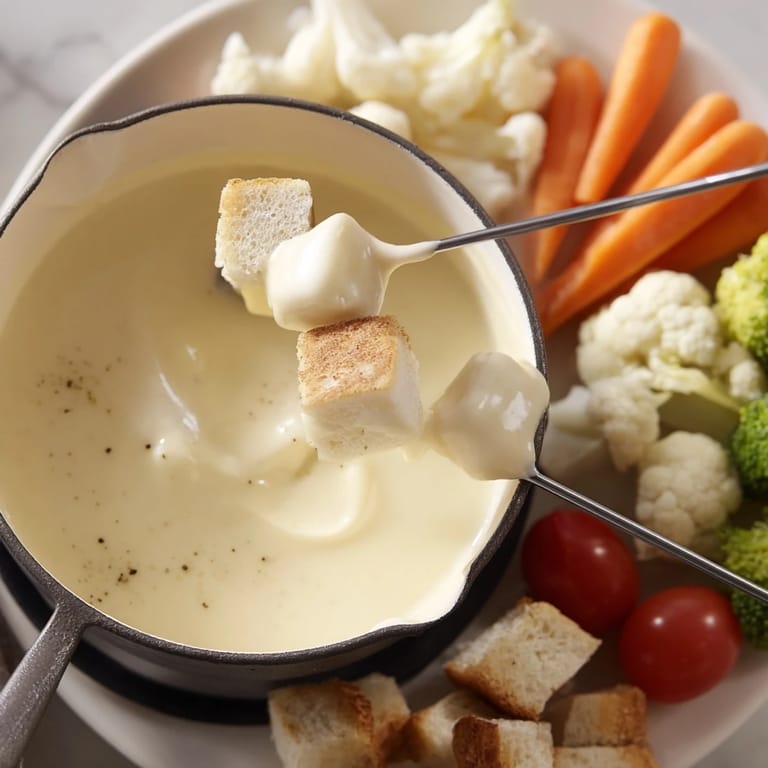
- Bread cubes: Use slightly stale bread so it won't fall apart on your fork—fresh bread is too soft and will disintegrate.
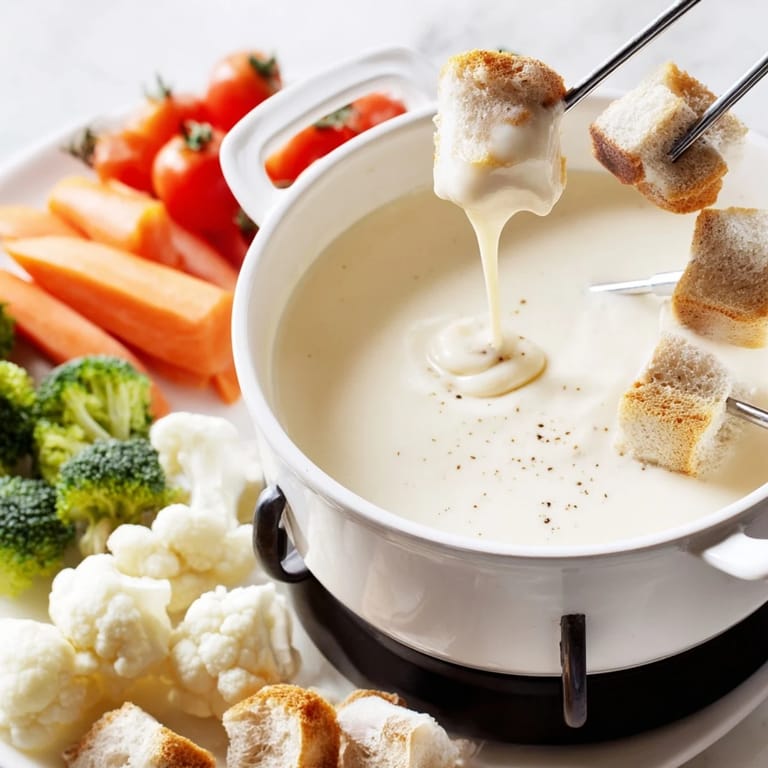
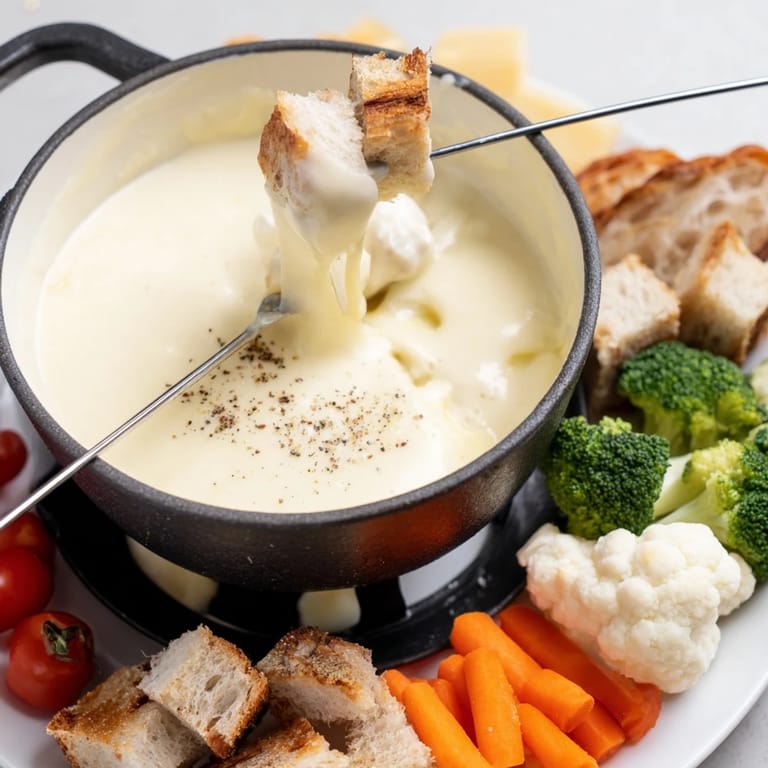
- Vegetables: Blanch them lightly so they stay crisp and don't release too much water into the pot, and pick vegetables that can handle being pierced by a fondue fork.
Tired of Takeout? 🥡
Get 10 meals you can make faster than delivery arrives. Seriously.
One email. No spam. Unsubscribe anytime.
Instructions
- Season the pot:
- Rub the inside of your fondue pot with the cut garlic clove, using both sides so the whole interior is lightly coated. The garlic flavor will subtly perfume everything without being overwhelming—then discard the clove itself.
- Heat the wine gently:
- Pour the wine in and let it warm over medium-low heat until you see tiny bubbles starting to form at the bottom; it should smell inviting, not sour. This gentle heat is crucial because you're setting the stage for everything that comes next.
- Prepare the cheese:
- In a separate bowl, toss your grated cheeses with the cornstarch until every piece is evenly coated in a light dust. This prevents clumping and keeps the final texture smooth and creamy.
- Add cheese gradually:
- Begin sprinkling the cheese mixture into the hot wine a small handful at a time, stirring constantly in a figure-eight pattern—this motion keeps everything moving and prevents sticking. The cheese should melt smoothly within a minute or two; if you go too fast, it seizes up.
- Season and finish:
- Once the cheese is completely melted and glossy, stir in the kirsch, nutmeg, and white pepper, tasting as you go. Keep the heat low and steady; it should stay warm and creamy, never bubbling or separating.
- Set up for serving:
- Transfer the pot to your tabletop burner and arrange all your dipping items on a board around it, giving everyone easy reach. The burner keeps the fondue at the perfect temperature throughout the meal, so nothing firms up or breaks.
 Save
Save I'll never forget the moment when my teenage nephew, who usually pushes away anything he considers "old-fashioned," actually got excited about this fondue and spent the whole dinner debating which vegetable paired best with the bread. It was the kind of small victory that reminded me why food matters—it's not really about the cheese, but about drawing people close.
The Art of Dipping
Dipping isn't as simple as it sounds; there's a rhythm to it that becomes intuitive once you've done it a few times. Stab your bread or vegetable firmly so it doesn't slip off halfway through the cheese, then dip with a slight twirl to coat evenly, and lift straight up—if you pull sideways, you'll lose your bite to gravity. The vegetables need to be just firm enough to hold up to the heat of the cheese without turning to mush, which is why blanching them beforehand matters so much.
Wine Pairing and Serving
A dry Swiss white wine like Fendant is the traditional choice, and there's a reason—it has just enough acidity to cut through the richness of the cheese and refresh your palate between bites. If wine isn't your thing, a light lager beer works beautifully too, with that crisp, clean finish that prevents the meal from feeling heavy. The alcohol itself matters less than choosing something you actually enjoy drinking alongside the meal.
Making It Your Own
The beauty of fondue is that it invites customization without losing its essential character. Some people add a touch of white miso paste for umami depth, others include a handful of caramelized onions for sweetness, and I've even seen versions with truffle oil whispered in at the last moment. The core technique stays the same, but the flavors can shift to match your mood and what you have on hand. The most important thing is keeping the heat gentle, the stirring consistent, and the company good—everything else is just variation on a beloved theme.
- Try adding thin slices of apple or pear alongside your bread and vegetables for a sweet-savory contrast.
- Keep a ladle nearby filled with warm wine in case your fondue thickens too much as it sits.
- If anyone dips with a fork that touches their mouth and then goes back into the pot, gently remind them it's not a health code violation—it's just how fondue is meant to be shared.
 Save
Save Fondue is one of those dishes that reminds you cooking doesn't have to be complicated to be memorable—it just has to bring people together around something warm. Once you've made it once and felt that first silky-smooth batch coat your bread, you'll understand why it's lasted centuries.
Recipe Questions & Answers
- → What cheeses are best for this dish?
Gruyère and Emmental provide a rich, creamy texture with balanced flavors essential for a smooth melt.
- → Can the kirsch be omitted?
Yes, kirsch adds depth but can be left out without compromising the overall flavor.
- → How to keep the melted cheese smooth?
Stir constantly in a figure-eight motion over low heat and use cornstarch to prevent separation.
- → What dipping foods complement this blend?
Crusty bread cubes and blanched vegetables like broccoli, cauliflower, cherry tomatoes, and baby carrots work well.
- → How to prevent bread from falling off the forks?
Using slightly stale bread helps cubes hold better on fondue forks.