 Save
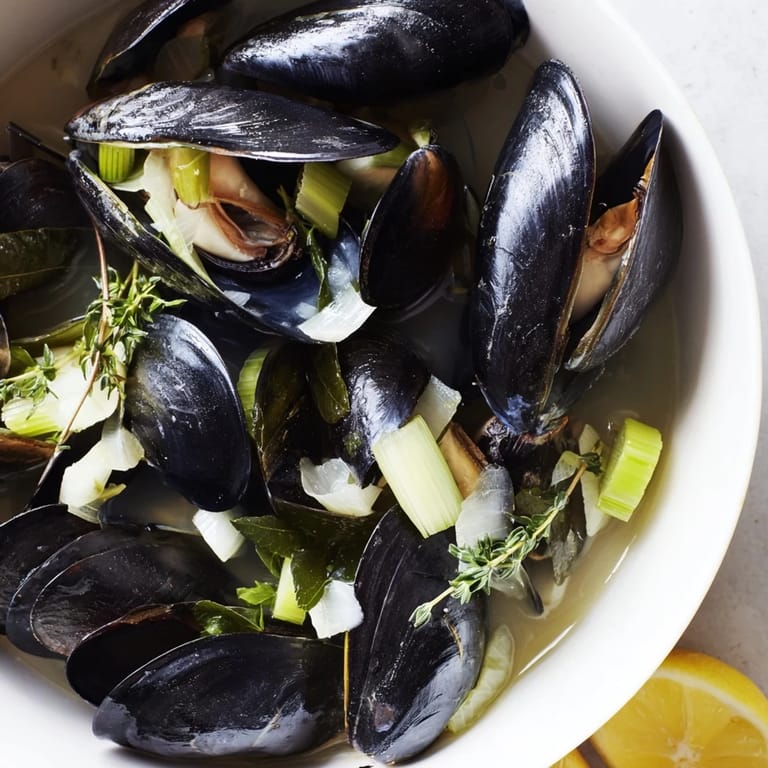
Save The first time I truly understood what made mussels special, I was standing in a Brussels kitchen on a drizzly evening, watching a friend pour white wine into a pot of dark shells. The aroma that rose up—briny, garlicky, alive—changed how I thought about seafood entirely. Belgian moules marinière is deceptively simple: just mussels, wine, aromatics, and time. Yet somehow it transforms into something that feels both comforting and elegant, the kind of dish that makes you realize the best meals don't need to be complicated.
I made this for a dinner party once where half my guests had never eaten mussels before, and I remember the quiet moment when someone tasted the broth and closed their eyes. That's when I knew it wasn't about impressing anyone—it was about sharing something genuine. The wine, the herbs, the way the shells open like little gifts; it all comes together in a way that feels both casual and memorable.
Ingredients
- Fresh live mussels, 2 kg: Buy them the day you're cooking if possible; they stay fresher and open more eagerly. Look for tightly closed shells and give them a gentle tap—any that don't close are dead and should go straight in the compost.
- Dry white wine, 300 ml: Skip anything too fancy or too cheap; a simple, unoaked white works best so you taste the wine, not oak.
- Shallots, 2 medium: They're sweeter than onions and dissolve slightly into the broth, creating a subtle foundation that garlic alone can't achieve.
- Garlic, 2 cloves: Minced fine so it distributes evenly, but watch it doesn't brown—you want mellow, not sharp.
- Leek, 1 small: The white part only carries a gentle onion sweetness that rounds out the other aromatics beautifully.
- Celery, 2 stalks: A secret ingredient most people forget; it adds depth and a whisper of herbaceous flavor.
- Fresh thyme, 2 sprigs: Whole sprigs are easier to fish out later, and they release flavor slowly as everything steams.
- Bay leaf, 1: Non-negotiable for this dish—it brings a subtle earthiness that pulls everything together.
- Flat-leaf parsley: Added at the very end so it stays bright and doesn't become bitter from heat.
- Olive oil, 2 tbsp: Good enough to taste on its own, since there's so little in the final dish.
- Freshly ground black pepper and sea salt: Taste as you go; mussels release their own salinity, so you may not need much.
- Lemon wedges, to serve: A squeeze of acid at the table lifts everything and cuts through the richness of the broth.
Tired of Takeout? 🥡
Get 10 meals you can make faster than delivery arrives. Seriously.
One email. No spam. Unsubscribe anytime.
Instructions
- Prepare the mussels:
- Rinse them under cold water with a brush in your hand, scrubbing gently but firmly to remove any sand or grit. As you work, feel for any that are already open and won't close when you tap them—those go in the trash. It takes a few minutes, but it's worth it for clean, safe mussels.
- Build the base:
- Heat olive oil in a large pot or Dutch oven over medium heat, then add shallots, garlic, leek, and celery. Sauté for 3–4 minutes, stirring often, until they're soft and fragrant but not yet browning. You want to coax out their sweetness, not caramelize them.
- Add the herbs and wine:
- Stir in thyme and bay leaf, letting them warm for just a breath, then pour in the white wine. Bring it to a gentle simmer and let it bubble quietly for a minute to mellow the raw edge of the alcohol.
- Steam the mussels:
- Add all the cleaned mussels to the pot, give everything a gentle stir, then cover tightly with a lid and turn the heat up to high. After about 5 minutes, carefully shake the pot (lid still on) to help them open evenly. They'll be done when most have opened—this usually takes 5–7 minutes total.
- Finish and serve:
- Discard any mussels that stubbornly refused to open; they're not worth the risk. Stir in the chopped parsley, taste the broth, and add black pepper and salt as needed. Ladle into deep bowls with plenty of that golden broth and serve immediately with lemon wedges and crusty bread.
 Save
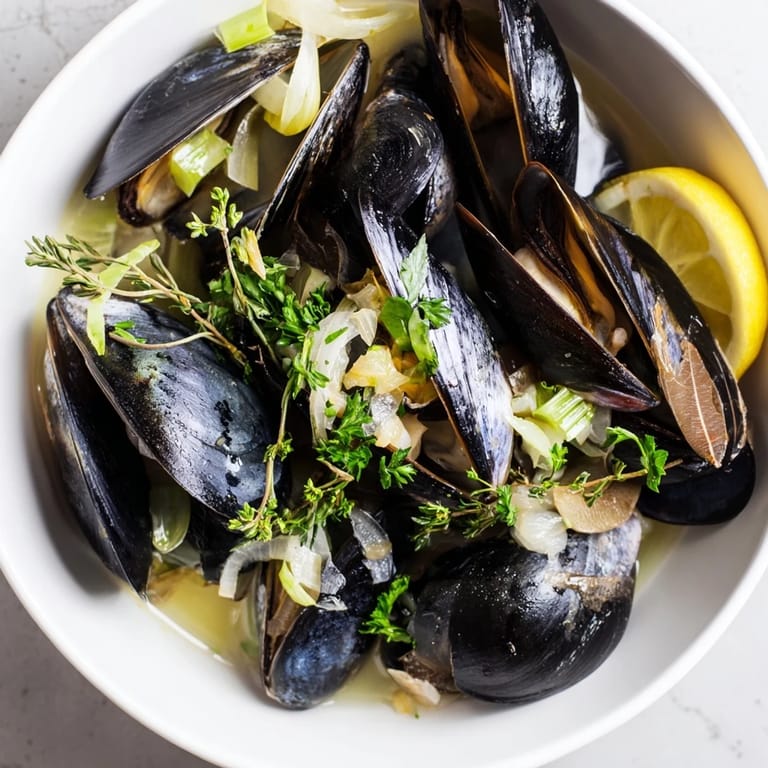
Save There was an evening when everything felt rushed, and I almost skipped making this because I thought it seemed too fancy for a weeknight. I'm grateful I didn't. The whole dish took less time than ordering takeout would have, and the smell alone made everyone in the house feel cared for in a way that no delivery could replicate.
Why the Broth Matters Most
The broth is honestly the star here, not the mussels themselves. It captures everything—the brine of the sea, the warmth of wine, the whisper of herbs—and becomes something that tastes far more complex than its ingredients suggest. This is why you need crusty bread or Belgian fries; they're not just sides, they're the reason you made this dish. Tear off a piece of bread, dip it into that golden liquid, and suddenly you understand why this dish has been made the same way in Belgium for generations.
Wine Selection and Flavor Balance
The wine doesn't need to be expensive, but it does need to be something you'd actually drink. Avoid anything labeled 'cooking wine'—it usually tastes sharp and vinegary. A simple Sauvignon Blanc, Pinot Grigio, or even a dry Chablis works beautifully. I once made this with a wine that was too oaky, and it overwhelmed the delicate flavor of the mussels. Since then, I reach for lighter, crisper whites that let the shellfish and aromatics shine.
Serving and Pairing Ideas
Moules marinière is flexible enough for both casual weeknight dinners and dinner parties, which is part of why it's become such a favorite. Serve it with whatever sounds best: Belgian fries with mayo, crusty bread, a simple green salad with vinaigrette, or even over pasta if you're feeling creative. The key is having something to soak up the broth, because that liquid is liquid gold and leaving it behind is a tragedy.
- If you want richness, whisk in 2 tablespoons of cold butter right before serving for a silky finish.
- Leftover broth keeps in the fridge for three days and makes an incredible base for seafood soup or risotto.
- This dish is naturally dairy-free and pescatarian, but always check your wine bottle if you're cooking for someone with dietary restrictions.
 Save
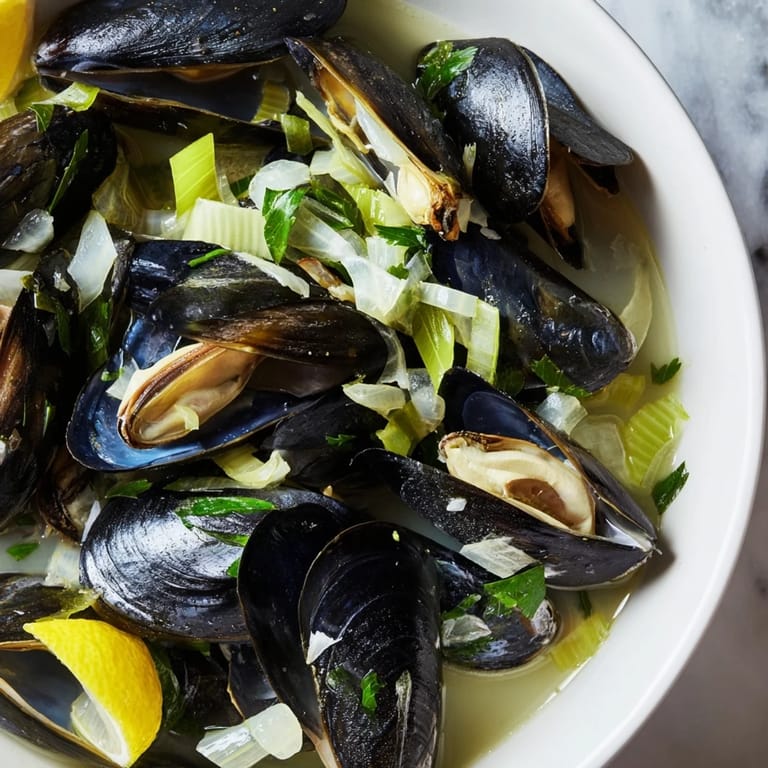
Save This dish has a way of turning an ordinary evening into something special. It reminds me that the best meals are the ones made with care, served with bread and wine, and shared with people you want to be around.
Recipe Questions & Answers
- → How do I clean mussels properly?
Rinse mussels under cold running water, scrub the shells to remove debris, and discard any that remain open or broken when tapped.
- → What wine is best for steaming mussels?
A dry white wine with crisp acidity complements the mussels, such as Sauvignon Blanc or Pinot Grigio.
- → Can I substitute shallots in this preparation?
Yes, small yellow onions can be used as a substitute, though shallots provide a milder, sweeter flavor.
- → How do I tell when the mussels are cooked?
The mussels open up during steaming, which usually takes about 5 to 7 minutes; discard any that remain closed.
- → What are suitable sides to serve with this dish?
Crusty bread or Belgian fries (frites) are excellent accompaniments to soak up the flavorful broth.