 Save
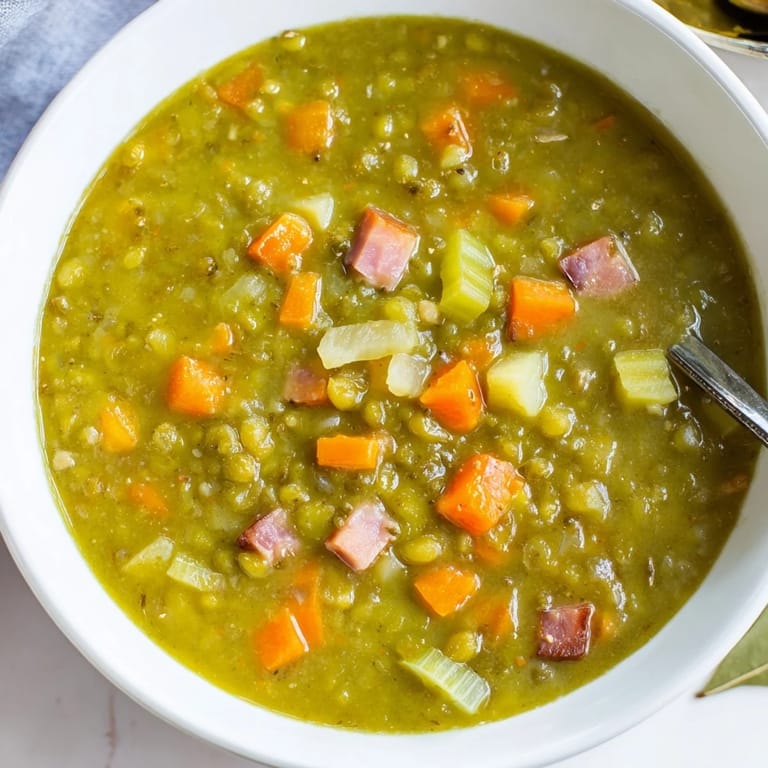
Save The grayest January afternoon called for something that would stick to your ribs. I'd been putting off making split pea soup for years, convinced it was too much work. That day, staring at the bag of dried peas in my pantry, I finally gave in. The whole house filled with the most incredible earthy aroma within an hour. Now it's the soup that signals comfort season has officially begun.
My grandmother kept a ham bone in her freezer specifically for this soup. I never understood the obsession until I tried making it with just vegetables. Then one day I added a pinch of smoked paprika, and suddenly everything clicked. The smokiness without any meat made it a whole different experience. Now even my meat loving friends request the vegan version when they come over.
Ingredients
- 2 cups dried split green peas: These little powerhouses break down completely and create the silkiest texture, so dont be tempted to substitute whole peas which stay stubbornly intact
- 1 large onion: The foundation that sweetens as it cooks, so take your time getting it soft and translucent before moving on
- 2 carrots: They add natural sweetness and color, and dicing them small means they practically disappear into the soup
- 2 celery stalks: Essential for that classic soup base flavor, but if you really hate celery, increase the carrots instead
- 2 garlic cloves: Minced fine so they melt into the background without any harsh bites
- 1 medium potato: The secret ingredient that makes the soup extra creamy without actually adding cream
- 1 bay leaf: Throw it in whole and fish it out later, it adds an earthy depth you cant quite put your finger on
- 1 teaspoon dried thyme: Fresh is lovely, but dried actually works better here since it will simmer for so long
- 6 cups vegetable broth: Homemade is ideal but any quality broth works, just taste before adding salt at the end
- 1 tablespoon olive oil: Just enough to sauté the vegetables and start building those flavor layers
- 1 cup diced smoked ham or ham bone: Completely optional but adds the traditional smoky depth that people expect from this soup
- 1/2 teaspoon black pepper: Freshly ground makes a noticeable difference in the final flavor
- Salt: Wait until the very end because the broth and ham will contribute plenty of saltiness
Tired of Takeout? 🥡
Get 10 meals you can make faster than delivery arrives. Seriously.
One email. No spam. Unsubscribe anytime.
Instructions
- Build your flavor base:
- Heat that olive oil in your biggest soup pot over medium heat and toss in the onion, carrots, and celery, letting them soften and become fragrant for about 5 minutes. You want them to sweat, not brown.
- Wake up the garlic:
- Stir in the minced garlic and give it just one minute, watching carefully so it doesnt take on any bitter brown color.
- Bring everything together:
- Dump in the rinsed split peas, diced potato, bay leaf, thyme, and all that broth, then add the ham or ham bone if you are using it. The liquid should cover everything by a couple inches.
- Let it simmer gently:
- Bring the pot to a full boil, then drop the heat to low and cover it with a lid, checking and stirring every 15 minutes for about an hour. The peas should completely lose their shape and the soup will thicken dramatically.
- Finish and season:
- Fish out the bay leaf and ham bone, then decide if you want to blend part of it for creaminess or leave it rustic. Taste and add salt only if needed before serving hot.
 Save
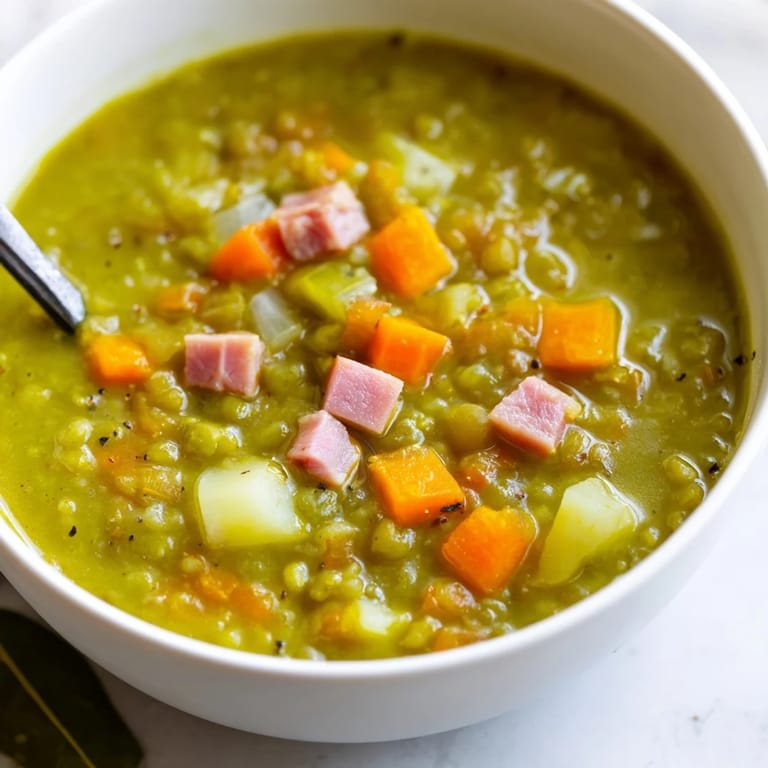
Save Last winter my neighbor came over while this was simmering. She stayed for dinner and took home three containers for her freezer. Now she texts me every time she makes it, asking what she did differently because hers never tastes quite as good. I told her the secret is just time and patience, and maybe a little bit of love.
Making It Your Own
Once you have the basic method down, this soup becomes a canvas for whatever you have on hand. I've added chopped kale in the last ten minutes, stirred in a dollop of mustard for tang, or topped it with crispy croutons for texture contrast.
Perfect Texture Every Time
Some people love it completely smooth while others want chunks of vegetables visible. An immersion blender lets you control exactly how much you puree, blending just enough to thicken while leaving plenty of texture intact. If you use a regular blender, work in batches and leave the vent open to prevent hot soup explosions.
Serving Suggestions
A crusty loaf of bread is non negotiable for soaking up every last drop. I also like to set out a bowl of hot sauce, some crunchy croutons, and a dollop of sour cream or yogurt for those who want extra richness.
- A simple green salad with bright vinaigrette cuts through the richness
- Grilled cheese sandwiches make this feel like a complete diner meal
- Leftovers reheat perfectly with just a splash of water or broth to loosen them up
 Save
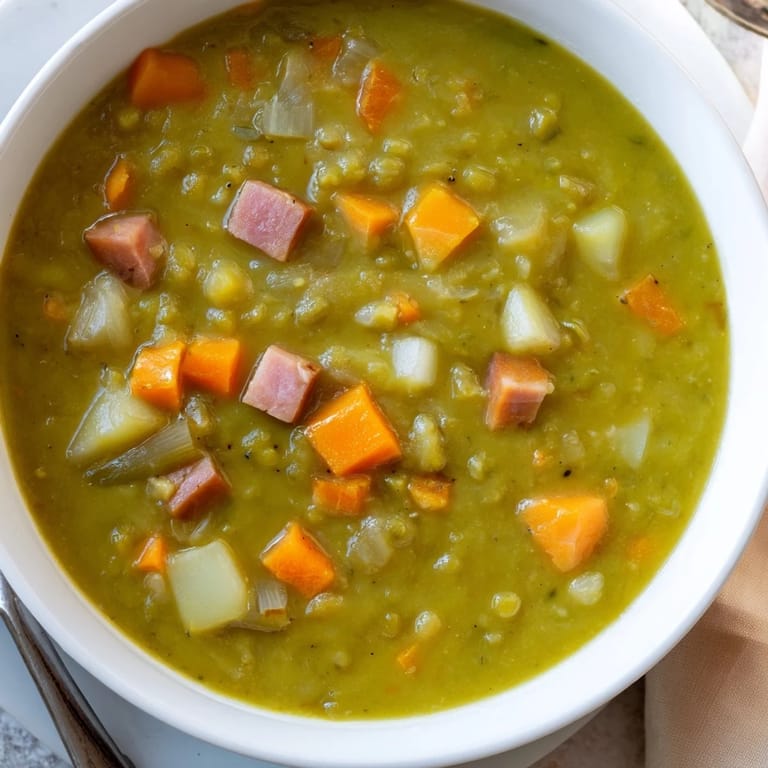
Save There is something deeply satisfying about turning a handful of dried peas into a meal that feeds you for days. This is the soup that proves the best comfort food often comes from the humblest ingredients.
Recipe Questions & Answers
- → Do split peas need to be soaked before cooking?
No, split peas do not require soaking. Unlike dried beans, they cook relatively quickly and break down naturally during simmering, creating the soup's characteristic creamy texture.
- → Can I make this soup in a slow cooker?
Yes. Combine all ingredients in your slow cooker and cook on low for 6-8 hours or high for 3-4 hours until peas are tender. Add the ham during the last hour if using.
- → How long does split pea soup last in the refrigerator?
Properly stored in an airtight container, split pea soup keeps for 4-5 days in the refrigerator. The flavors often deepen and improve after a day or two.
- → Can I freeze split pea soup?
Absolutely. Cool completely before transferring to freezer-safe containers. Leave some space as liquid expands when frozen. It keeps well for up to 3 months.
- → What gives the soup its smoky flavor without ham?
For a vegetarian version with smoky depth, add 1-2 teaspoons of smoked paprika or use liquid smoke. A tablespoon of soy sauce also adds savory umami notes.
- → Why is my soup too thick?
Split peas continue absorbing liquid as they sit. Simply add more water, broth, or even milk when reheating to reach your desired consistency.