 Save
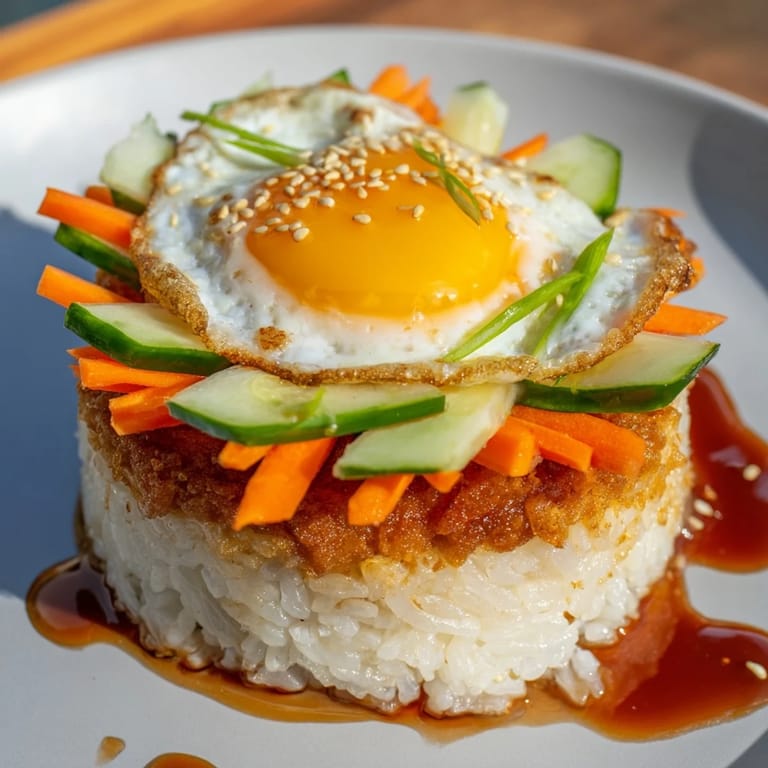
Save Last spring, I was in a rush between back-to-back meetings when my stomach reminded me that skipping lunch wasn't sustainable. I opened the fridge to find leftover rice, a couple of eggs, and some vegetables that needed rescuing before they wilted. What came together in my skillet that afternoon—a shattering crust of golden rice beneath a runny-yolked egg—turned out to be so much more satisfying than whatever I'd planned to order. Now it's become my go-to solution when time is tight but flavor can't be compromised.
I made this for my friend who'd just moved into her first apartment, and we stood in her barely-stocked kitchen watching the rice crisp up in that one skillet she'd borrowed from her mom. When we slid the eggs on top and drizzled that salty-sweet sauce over everything, she actually paused mid-bite and said, 'This tastes like I figured out how to cook.' That's when I knew this recipe had something special—it looks more complicated than it is, which means it builds confidence.
Ingredients
- Rice: Day-old, cold rice is your secret weapon here; it won't turn mushy when it hits the hot skillet and will crisp up more reliably than fresh rice.
- Eggs: Large eggs give you enough yolk to coat everything when it breaks, so don't skimp or swap them out for smaller sizes.
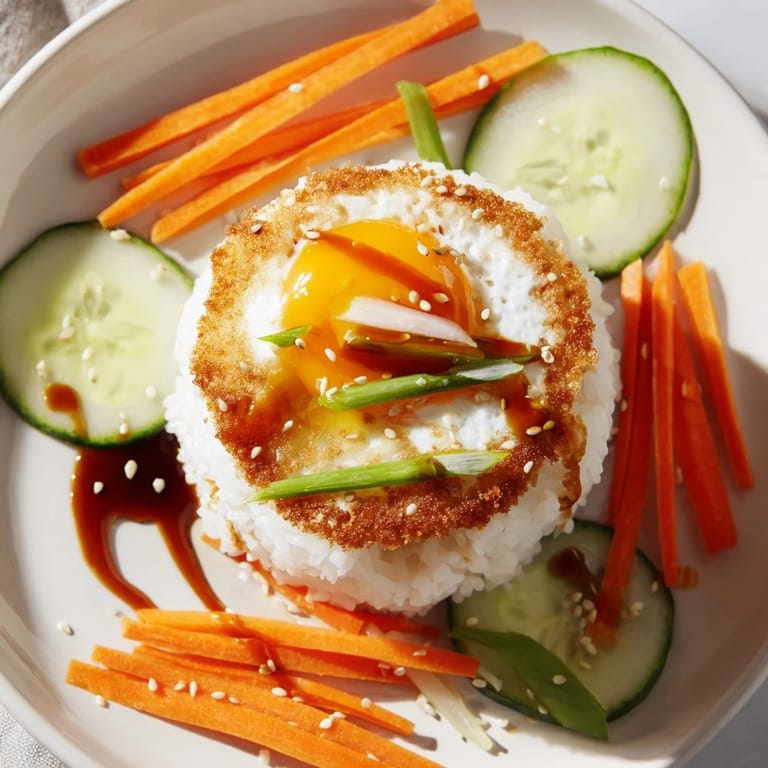
- Carrot: Julienned thin so it stays fresh and slightly sweet, a bright note against the savory rice and egg.
- Cucumber: Keep it cool and crisp by slicing it just before serving, and it adds a refreshing contrast that keeps the dish from feeling heavy.
- Scallions: The green parts especially bring a gentle onion bite that ties everything together.
- Sesame seeds: Toast them yourself if you can; the moment you smell them warming in a dry pan is the moment you'll understand why they're not optional.
- Soy sauce, rice vinegar, sesame oil, honey: This four-ingredient sauce is balanced on purpose—salty, tangy, nutty, and just a touch sweet—and it's the backbone of the whole dish.
- Vegetable oil: Use a neutral oil that can handle medium-high heat without smoking or breaking down.
Tired of Takeout? 🥡
Get 10 meals you can make faster than delivery arrives. Seriously.
One email. No spam. Unsubscribe anytime.
Instructions
- Make the sauce first:
- Whisk soy sauce, rice vinegar, sesame oil, and honey in a small bowl until the honey dissolves completely. This way it's ready and the flavors have time to mingle while you handle the rice and eggs.
- Get the rice golden:
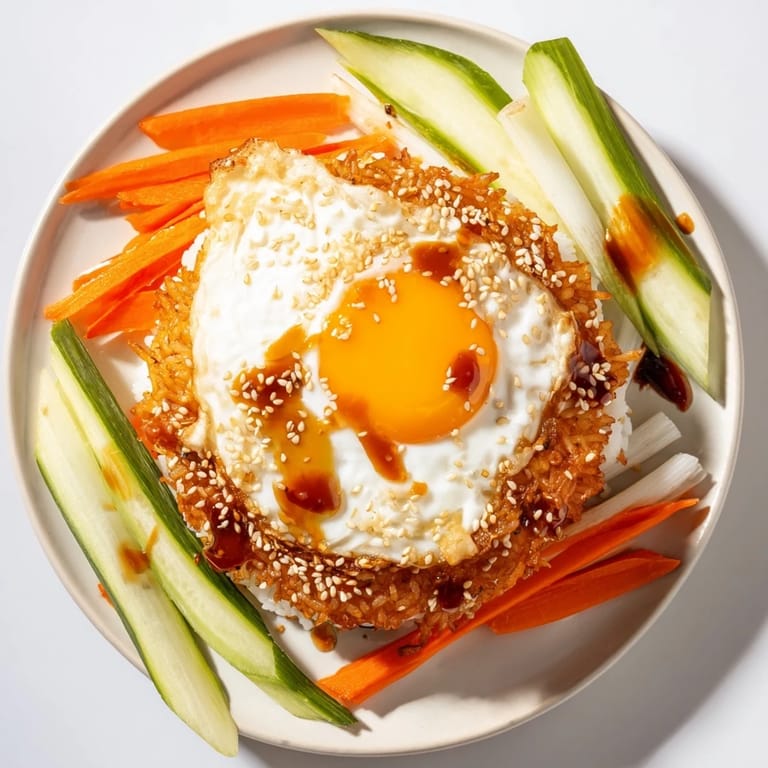
- Heat 1 tablespoon of oil in your nonstick skillet over medium-high heat until it shimmers, then spread the cold rice in an even layer and press it down with your spatula. Don't move it for 5–7 minutes; you're building that golden, crispy crust on the bottom, and patience here is everything.
- Finish crisping the edges:
- If you want extra crunch, gently flip sections of the rice or stir it around a bit to crisp more surfaces. Divide the rice between two bowls and keep them warm while you move on to the eggs.
- Fry the eggs just right:
- Return the skillet to the heat, add the remaining oil, and crack both eggs into it. They're done when the whites are set and the edges have turned lacy and crisp, but the yolks still jiggle slightly when you give the pan a gentle shake, about 2–3 minutes.
- Build and eat:
- Top each bowl with a fried egg, arrange the fresh carrot, cucumber, and scallions around it, drizzle generously with your sauce, and finish with a sprinkle of toasted sesame seeds. Stir it all together before you eat so every bite gets a mix of everything.
 Save
Save There's something almost meditative about this bowl—the way the egg breaks into the rice, how the sauce winds around the vegetables, how a meal that takes less time than a phone call can feel so composed and thoughtful. It's the kind of food that transforms a solo lunch into something you look forward to.
Why Cold Rice Changes Everything
The trick I learned the hard way was understanding that moisture is the enemy of crispness. Freshly cooked rice holds onto water even after it's been transferred to a bowl, and that steam will sabotage any chance of a golden crust. Cold rice—ideally from the day before, stored uncovered in the fridge—has had time to dry out slightly, and that's exactly what you need. The first time I tried this with warm rice, I ended up with something more like a rice cake than a crispy base, and I realized I'd been fighting the rice instead of working with it.
Building Flavor Into a Simple Dish
What makes this bowl feel restaurant-quality despite its simplicity is the sauce. That balance of salty soy, bright vinegar, nutty sesame oil, and just enough honey to smooth the edges is a lesson in seasoning restraint. You could add sriracha or chili oil for heat, toss in kimchi for funky richness, or scatter sautéed mushrooms for earthiness, but the core sauce is perfect as is. The kind of small detail that teaches you something about cooking when you stop to think about why it works.
Variations and Personal Touches
The beauty of this recipe is that it's a framework, not a mandate. I've made it dozens of different ways depending on what's in my kitchen and what I'm craving that day. Sometimes I add sliced avocado for creaminess, sometimes I swap the white rice for brown and let it cook a minute or two longer to get an even crispier base.
- Stir in some thinly sliced kimchi right before serving, or mix it into the sauce for a spicy, funky depth.
- Top with sautéed shiitake or oyster mushrooms if you want something more substantial and savory.
- Use gluten-free soy sauce if you need to avoid gluten, and the dish loses absolutely nothing.
 Save
Save This bowl has taught me that the best meals aren't always the most complicated—they're the ones where every element knows its job and does it well. Make it whenever you need something quick, nourishing, and unmistakably delicious.
Recipe Questions & Answers
- → What type of rice works best for this dish?
Day-old cooked white or jasmine rice is ideal as its firmness helps form a crispy crust without sticking excessively.
- → How do you achieve the crispy rice base?
Cook the rice undisturbed in hot oil until the bottom forms a golden brown crust, about 5–7 minutes, then optionally crisp other sides.
- → Can the eggs be cooked differently?
Yes, the eggs can be fried sunny-side up with runny yolks or cooked to your preference, as long as the edges are slightly crisp.
- → What is the purpose of the soy dressing?
The dressing balances savory, tangy, and sweet notes, enhancing the rice and vegetables with rich, layered flavors.
- → Are there suggested variations to try?
Add kimchi for spice, sautéed mushrooms for earthiness, or avocado slices for creaminess to customize texture and taste.
- → Is this suitable for specific diets?
It fits vegetarian diets but contains eggs and soy; gluten-free soy sauce substitutions are recommended for gluten sensitivity.