 Save
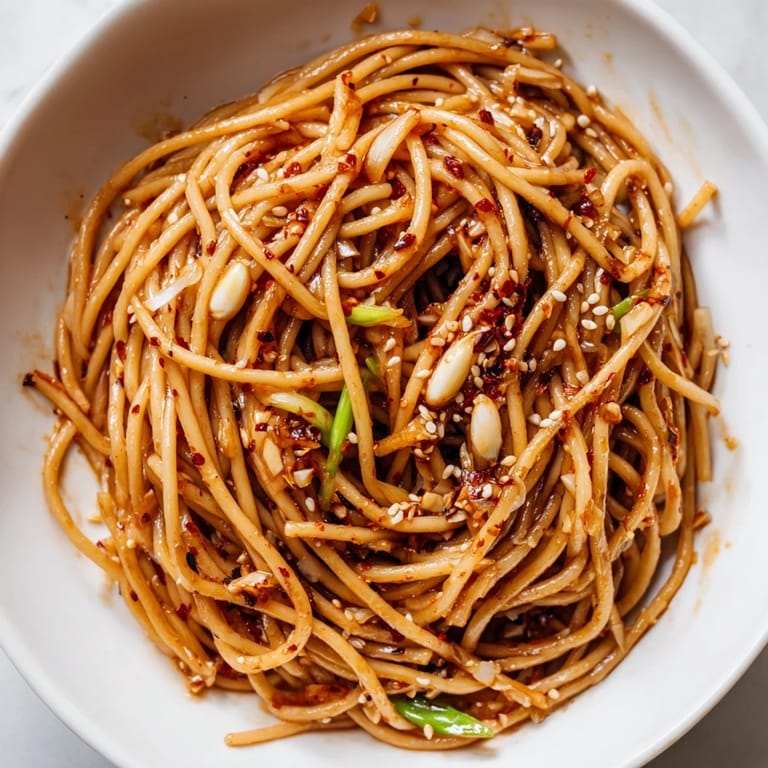
Save Late one night, I was rummaging through my pantry at 11 PM, hungry and too tired to order delivery, when my hand landed on a bag of chili flakes that had been sitting there for months. On impulse, I heated some oil, watched it shimmer, and poured it over garlic and those flakes—the sound alone made me pause. The aroma that filled my kitchen was so intoxicating that I had to do something with it immediately, so I threw together some noodles and tossed them in the mixture. That accidental midnight experiment became the most reliable thing I reach for when I need bold, instant satisfaction.
I made this for my roommate once when she came home absolutely exhausted from work, and I remember her eyes widening the moment she smelled it cooking. She didn't say much while eating, just kept going back for more, and by the end she was asking me to write down every single ingredient. That's when I realized this dish has a quiet power to it—it doesn't need fancy plating or explanation, just the smell and the first bite.
Ingredients
- 200g wheat noodles: Fresh or dried both work, but dried ones hold the oil better and give you that satisfying chew. Don't rinse them after draining if you want the sauce to cling properly.
- 4 cloves garlic, finely minced: The finer you mince, the more evenly the hot oil will cook it and release its aroma. Don't be timid here—garlic is the backbone.
- 2 scallions, thinly sliced: Keep the white and green parts separate; the white goes into the chili oil to bloom in the heat, while green gets scattered on top for a fresh contrast.
- 1 tablespoon toasted sesame seeds: These add a subtle nuttiness and crunch that balances the heat beautifully.
- 2½ tablespoons chili flakes: Sichuan or Korean varieties bring different personalities—Sichuan adds a numbing tingle, Korean is more straightforward heat. Start with less and adjust to your comfort.
- ½ teaspoon Sichuan peppercorns: Optional, but they create that unique mouth-tingling sensation that keeps you reaching for another bite.
- ¼ teaspoon ground white pepper: This adds a clean, sharp bite that prevents the dish from feeling flat or one-dimensional.
- ½ teaspoon sugar and ½ teaspoon salt: These two quiet ingredients round out the heat and make everything sing together.
- 3 tablespoons neutral oil: This is your vehicle for heat; getting it to shimmer without smoking is the difference between fragrant and burnt.
- 1½ tablespoons light soy sauce, 1 tablespoon black vinegar, ½ teaspoon sesame oil: Black vinegar (Chinkiang) has a depth that regular vinegar can't replicate, so don't skip it if you can help it.
Tired of Takeout? 🥡
Get 10 meals you can make faster than delivery arrives. Seriously.
One email. No spam. Unsubscribe anytime.
Instructions
- Cook your noodles and save the water:
- Follow the package timing, but taste at the 1-minute mark before it's done—you want them tender but still with slight resistance. Drain into a colander and set aside, but don't forget to measure out 2 tablespoons of that starchy cooking water; it's liquid gold for binding the sauce.
- Build your chili mixture in a heatproof bowl:
- Combine the minced garlic, white scallion parts, chili flakes, Sichuan peppercorns if using, white pepper, sugar, salt, and sesame seeds in a bowl that can handle heat. This is your flavor base, so arrange everything now.
- Heat the oil to the shimmer point:
- In a small saucepan over medium-high heat, watch the oil carefully until it stops sounding still and begins to shimmer—tiny ripples across the surface. You want it fragrant and hot but not smoking or browning; this usually takes 3-4 minutes.
- Bloom your spices with hot oil:
- When the oil reaches that perfect shimmer, carefully pour it over the chili-garlic mixture in the bowl. You'll hear it sizzle immediately, and the whole room will fill with an almost perfume-like aroma—that's exactly what you're after. Stir gently to combine and let it cool for about 1 minute.
- Prepare your sauce:
- In a large mixing bowl, whisk together the light soy sauce, black vinegar, dark soy sauce if using, and sesame oil. Add the reserved noodle cooking water and stir until combined.
- Bring everything together:
- Add the drained noodles to the sauce bowl, then pour the chili oil mixture over them. Use chopsticks or tongs to toss everything together, making sure every strand of noodle gets coated with that glossy, fragrant oil.
- Finish and serve:
- Scatter the green scallion parts and any extra sesame seeds across the top, then eat immediately while the noodles are still warm and the flavors are singing. If you're eating with someone, make sure to toss it together one more time before serving—that final toss distributes everything evenly.
 Save
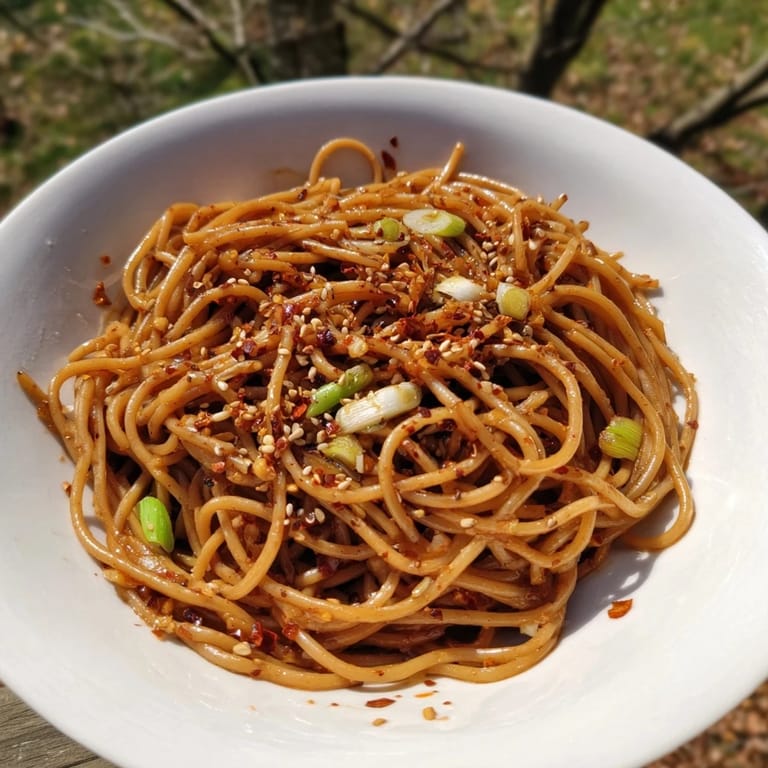
Save There's a moment right when you pour that hot oil over the chili mixture where your whole kitchen seems to hold its breath, and then the sizzle happens and suddenly everything smells alive. That's when I know the dish is going to be good, and it's become a small ritual I look forward to every time I make this.
Customizing Your Heat Level
The beauty of this dish is that you're completely in control of the fire. I started making this with barely a tablespoon of chili flakes because I wasn't sure how I'd react, and now I'm at two and a half without hesitation. If you're new to spice, begin conservatively and work up—you can always add more chili oil to your bowl, but you can't take it back out.
Making It a Complete Meal
As written, this dish is technically vegan and technically a main course, but it works best as a foundation. The first time I added soft tofu cubes, they soaked up all that chili oil and became these little flavor bombs, and now that's my default. You can also toss in sautéed mushrooms, blanched broccoli, or shredded leftover chicken—the chili oil welcomes anything you want to fold in.
Storing and Reheating Leftovers
Leftovers keep for about three days in an airtight container in the fridge, though the noodles firm up as they sit. I reheat mine in a bowl with a splash of water and a drizzle of sesame oil, either over low heat on the stove or in short bursts in the microwave, stirring between each burst to prevent hot spots.
- The chili oil actually deepens in flavor overnight, so day-two leftovers sometimes taste even better than the first time around.
- If you're meal prepping, keep the cooked noodles and the chili oil mixture separate until you're ready to eat, and just toss them together at the last minute.
- This freezes poorly because of the oil, so eat it fresh or within a few days rather than trying to plan further ahead.
 Save
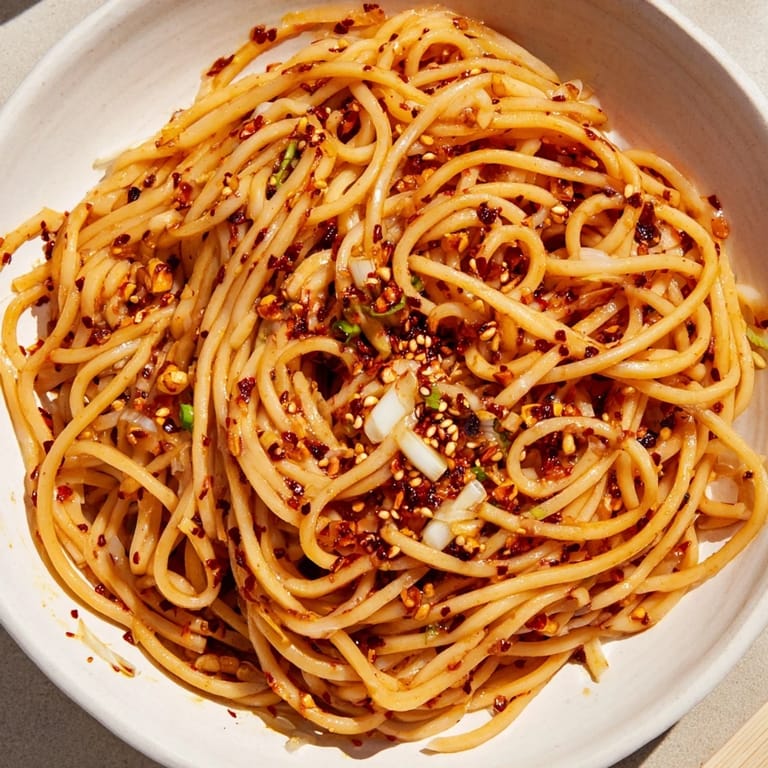
Save This recipe taught me that sometimes the most satisfying meals come from happy accidents and simple ingredients that know how to work together. Make it once, taste it, and adjust it to be exactly what your kitchen and your palate want it to be.
Recipe Questions & Answers
- → How can I adjust the heat level in this dish?
Modify the amount of chili flakes according to your preference. For milder heat, reduce the chili flakes or omit Sichuan peppercorns.
- → What type of noodles work best here?
Wheat noodles like Chinese-style wheat noodles or linguine are ideal for their chewy texture, which holds the spicy oil well.
- → Can I prepare the chili oil in advance?
Yes, chili oil can be made ahead and stored in an airtight container. Reheat gently before combining with noodles.
- → What garnishes complement the flavors?
Thinly sliced green scallions and toasted sesame seeds add fresh aroma and a slight crunch to the finished dish.
- → Is this dish suitable for vegan diets?
Yes, it uses plant-based ingredients and soy sauce, making it appropriate for vegan diets with attention to noodle labels.