 Save
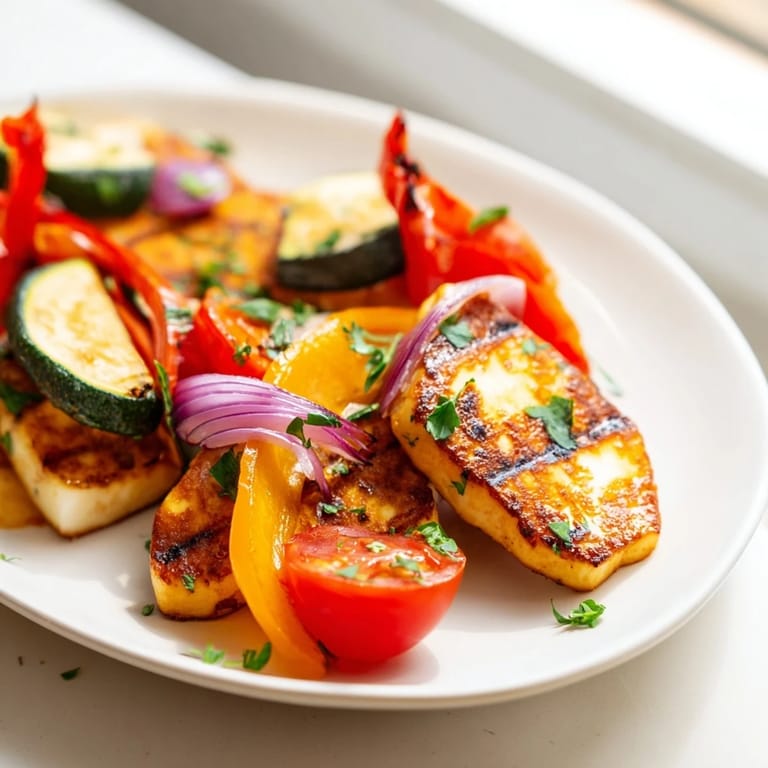
Save There's a certain magic that happens when halloumi hits a hot grill—that unmistakable squeak against the metal grates, the way the cheese develops those golden, caramelized edges while somehow staying firm enough to hold its shape. I discovered this dish entirely by accident one summer evening when a friend handed me a block of halloumi at a Mediterranean market, insisting I'd understand why it was worth buying once I cooked it. Twenty minutes later, surrounded by the aroma of charred peppers and salty cheese, I understood completely.
I'll never forget cooking this for my sister's surprise dinner party—she'd mentioned being tired of the same rotation of meals, and I wanted to shake things up. Watching her face when she tasted the halloumi, slightly crispy with those vibrant grilled vegetables piled on top, made me realize sometimes the simplest dishes create the most memorable moments.
Ingredients
- Halloumi cheese, sliced into 1.5 cm steaks: This is the star, and the thickness matters—too thin and it melts away, too thick and the inside won't soften properly, so those half-inch cuts are genuinely important.
- Red and yellow bell peppers, sliced into strips: The color contrast is beautiful, but more importantly, they caramelize gorgeously on the grill and add natural sweetness.
- Zucchini, sliced into rounds: Choose a small one so the rounds cook through before the edges burn, and slice them on the thicker side.
- Red onion, sliced into wedges: The slight bitterness balances the richness of the cheese, and grilling mellows it into something almost sweet.
- Cherry tomatoes, halved: These stay raw and bright, providing a fresh pop that cuts through the richness beautifully.
- Olive oil: Use something you'd actually taste—this isn't the time for the cheapest bottle.
- Balsamic vinegar: A good quality one makes the vegetable marinade sing; cheap versions taste one-dimensional.
- Garlic, minced: One clove is restrained but perfect, letting the cheese and vegetables remain the focus.
- Dried oregano: The Mediterranean backbone of this dish, tying everything together with warmth and herbaceousness.
- Fresh parsley, chopped: Added at the very end for brightness and a visual finish that makes the plate look intentional.
- Lemon wedges: Non-negotiable for serving—their acidity is the final flavor correction the dish needs.
Tired of Takeout? 🥡
Get 10 meals you can make faster than delivery arrives. Seriously.
One email. No spam. Unsubscribe anytime.
Instructions
- Get your grill ready:
- Heat your grill or grill pan over medium-high heat for a few minutes until it's genuinely hot—you should feel serious heat radiating off it when you hold your hand above the grates. This prevents sticking and creates those beautiful charred marks.
- Build your vegetable marinade:
- Whisk together the olive oil, balsamic vinegar, minced garlic, oregano, salt, and pepper in a large bowl, tasting as you go. Some people skip this step and grill vegetables naked, but the marinade means every bite has flavor built in, not just on the surface.
- Coat and grill the vegetables:
- Toss your bell peppers, zucchini, and red onion in that marinade until everything glistens, then arrange them on the hot grill. You're looking for tender flesh with charred edges—roughly 3 to 5 minutes per side depending on your grill's temperament, and don't be tempted to flip constantly.
- Grill the halloumi steaks:
- Once the vegetables are done, place the cheese slices directly on the grill and let them sit undisturbed for 2 to 3 minutes until golden and marked. Flip gently and repeat on the other side—they cook faster than you think, so watch them closely to avoid overdoing it.
- Compose your plate:
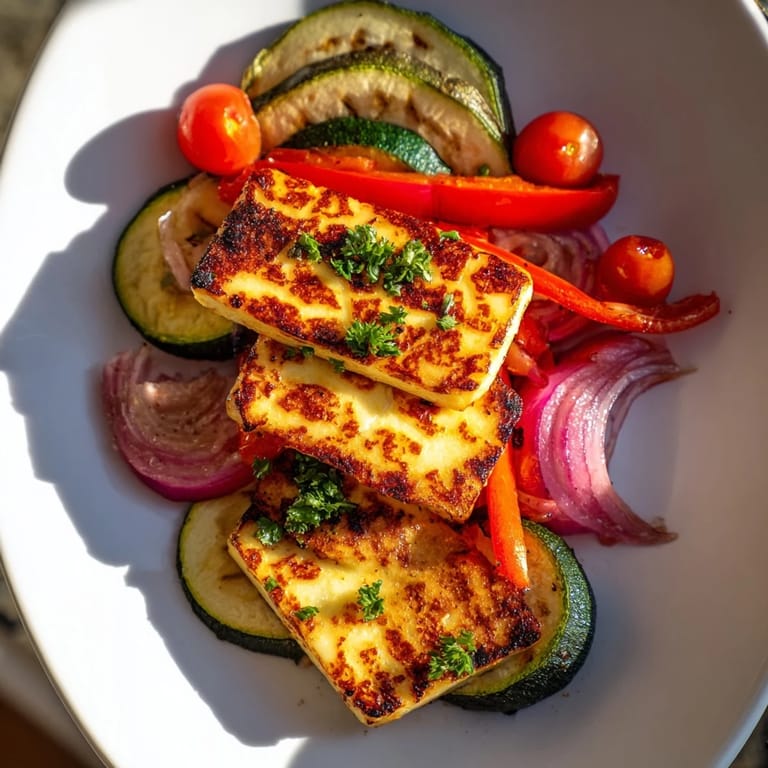
- Arrange the warm halloumi steaks on a serving platter, pile the grilled vegetables on top, scatter the fresh cherry tomatoes over everything, and finish with parsley. The halloumi should still be warm enough that everything comes together as one cohesive, steaming dish.
 Save
Save There was a moment, sitting at that dinner table with my sister and her friends, when someone asked for the recipe and everyone at the table leaned forward like they were hearing a secret. That's when I realized this wasn't just cheese and vegetables on a plate—it was something that made people slow down and pay attention.
The Halloumi Question
Halloumi's high melting point is what makes this whole thing work, and once you understand that one fact, you see why it's different from every other cheese. It's been made the same way in Cyprus for centuries, and while you can find versions made with cow's milk now, the traditional sheep and goat blends have a tang and texture that feel more authentic to this particular dish. If you can find a brand made with at least some goat's milk, grab it—the flavor is noticeably more interesting.
Grilling Temperatures and Timing
Medium-high heat is the sweet spot here because it's hot enough to create those coveted grill marks but not so intense that you're charring the outside before the inside cooks. Every grill behaves differently—gas grills heat more evenly than charcoal, and electric grill pans can have hot spots—so the first time you make this, watch carefully and adjust timing if needed. Once you've made it once, you'll develop an instinct for exactly when to flip.
Vegetable Variations and Swaps
The beauty of this dish is how forgiving it is with vegetables—whatever looks fresh at your market will work beautifully. Eggplant slices develop a silky texture and mild flavor that plays nicely with the cheese, while thick mushroom caps become almost meaty and substantial. You could add asparagus, thick slices of tomato, or even spring onions, and as long as you're hitting that balance of something slightly charred and slightly soft, you're winning. Consider what's in season and what you're genuinely excited to eat—that enthusiasm translates into better cooking.
- Thicker vegetable slices grill more evenly and are harder to accidentally overcook.
- Cut everything relatively uniform so nothing finishes before something else.
- Leftovers taste even better the next day when the flavors have melded.
 Save
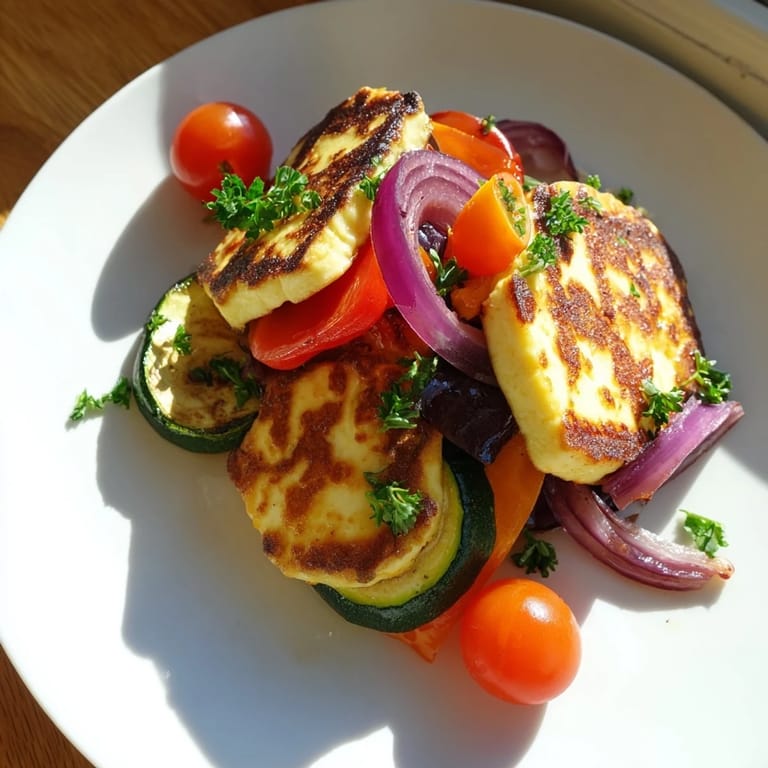
Save This dish has become my go-to when I want to feel like I've accomplished something in the kitchen without the stress, and it consistently impresses people who walk into my kitchen asking what smells so good. It's the kind of meal that reminds you why Mediterranean cooking endures—simple, honest, and utterly satisfying.
Recipe Questions & Answers
- → How thick should I slice the halloumi cheese?
Slice the halloumi into steaks approximately 1.5 cm (½ inch) thick. This thickness allows the cheese to develop a golden, crispy exterior while maintaining a warm, slightly soft interior when grilled.
- → Can I prepare this without a grill?
Yes, a grill pan works excellently as an alternative. Heat it over medium-high heat until very hot, then grill the halloumi and vegetables in batches, ensuring not to overcrowd the pan. This gives you the same beautiful char marks.
- → What vegetables work best for grilling?
Firm vegetables with lower water content work best. Bell peppers, zucchini, eggplant, and red onions are excellent choices. Cut them into pieces thick enough to prevent them from falling through the grill grates while cooking.
- → How do I know when the halloumi is properly grilled?
Grill for 2-3 minutes per side until the cheese develops golden-brown grill marks and a slightly crispy exterior. The cheese should hold its shape but be warm throughout. Avoid moving it too frequently on the grill.
- → Is this dish suitable for meal prep?
While best served immediately after grilling, you can prepare the vegetable marinade and slice the halloumi ahead of time. Store separately in the refrigerator, then grill everything fresh just before serving for optimal flavor and texture.
- → What beverages pair well with this dish?
The Mediterranean flavors pair beautifully with crisp white wines like Sauvignon Blanc or Pinot Grigio, or lighter reds like Pinot Noir. Chilled rosé is also an excellent choice. For non-alcoholic options, try sparkling water with lemon.