 Save
Save There's something about the hour after sunset when the kitchen light feels softer and you're not quite cooking, just composing. I discovered this platter one evening while rummaging through the fruit bowl, finding those deep purple grapes that looked almost black in the dim light, alongside plums so ripe they were practically glowing. I'd just bought this creamy goat cheese with ash coating—the kind that looks almost mysterious—and suddenly I wasn't thinking about dinner anymore. I was thinking about arrangement, about color, about how sometimes the best dishes are really just moments of good taste presented honestly.
I made this for the first time when unexpected guests arrived on a Friday night—the kind of arrival that sends you into a small panic because your refrigerator suddenly needs to perform miracles. Instead of ordering something, I realized I had all these beautiful fruits and that beautiful cheese, and thirty minutes later we were gathered around this platter with glasses of something cold and bubbly, everyone reaching for different combinations. Someone said it tasted like summer ended gracefully, and I've never forgotten that description.
Ingredients
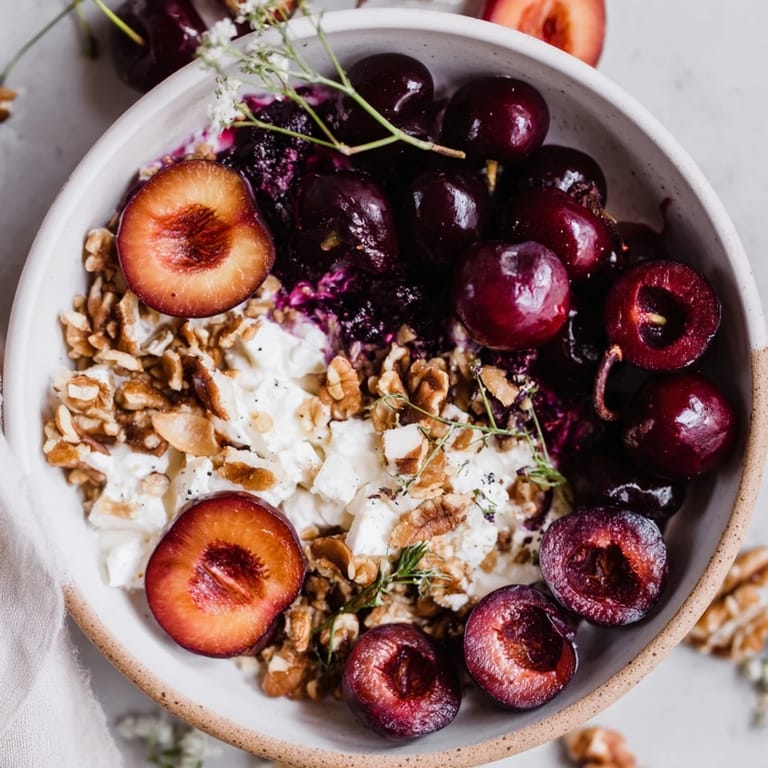
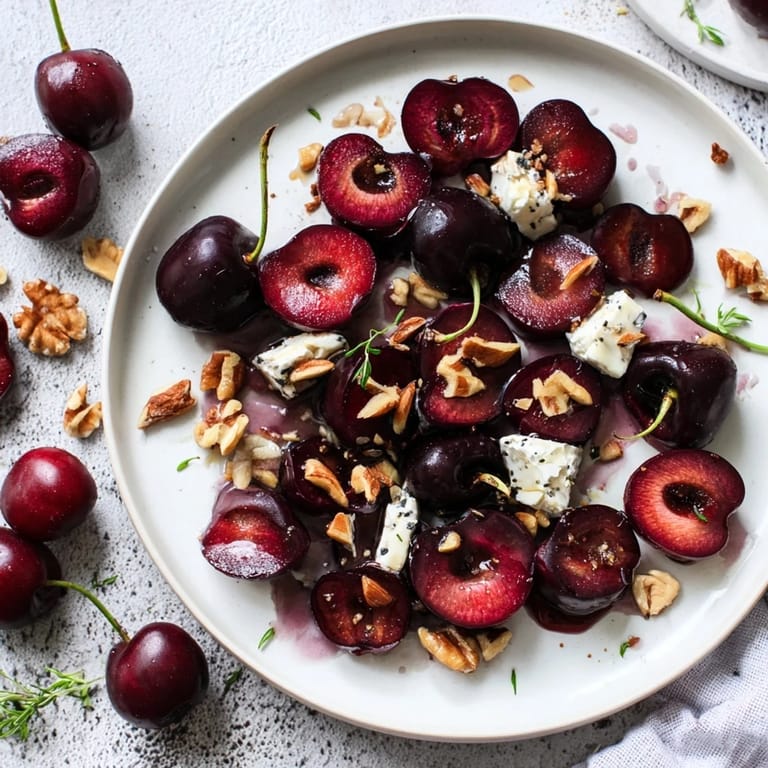
- Dark cherries (1 cup, pitted and halved): These are your visual anchor—deeply colored, they make everything else on the platter look more intentional and sophisticated.
- Ripe plums (2, sliced into wedges): The slight tartness keeps the plate from feeling too sweet; look for ones that yield gently to pressure but aren't mushy.
- Purple grapes (1 cup, halved): Halving them lets the fruit juice glisten slightly, and they become easier to pick up for grazing.
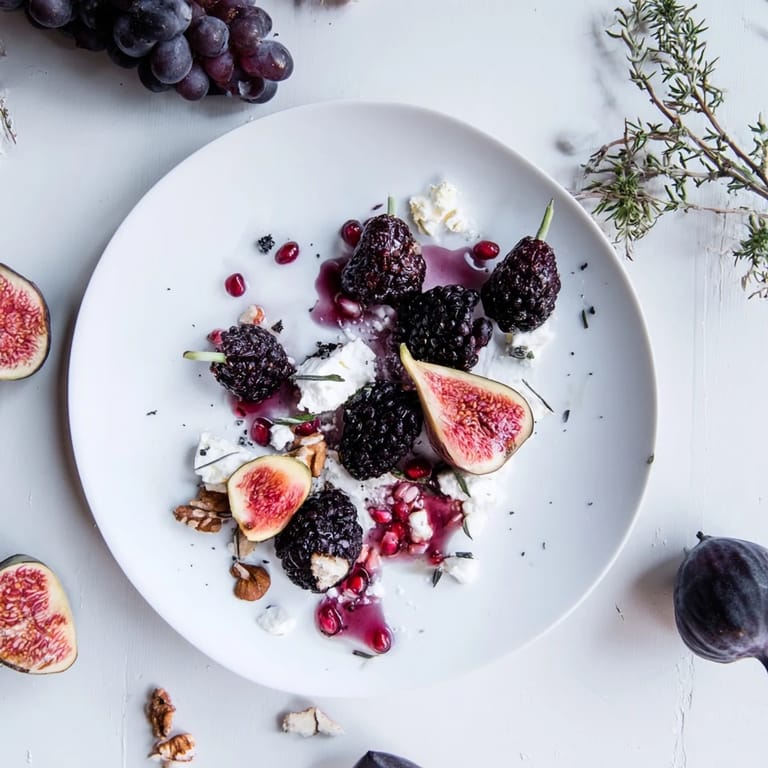
- Black-ashed goat cheese (200 g, sliced or crumbled): This is the magic ingredient—creamy, tangy, and visually striking with its dark ash coating that comes from vegetable ash or activated charcoal.
- Toasted walnuts (2 tbsp, optional): They add a textural surprise and a subtle earthiness that balances the fruit's brightness.
- Honey (1 tbsp, optional): A light drizzle connects all the flavors without overwhelming them.
- Fresh thyme sprigs (for decoration): These aren't just garnish—they hint at what flavors live inside each bite.
Tired of Takeout? 🥡
Get 10 meals you can make faster than delivery arrives. Seriously.
One email. No spam. Unsubscribe anytime.
Instructions
- Arrange your fruit with intention:
- Take your time grouping cherries together, plums in their own section, and grapes clustered like they belong. The platter becomes part of the dish—think about where your eye travels and what makes you want to reach for something next.
- Introduce the cheese as the anchor:
- Place your goat cheese slices or crumbles so they're scattered but visible, almost like they're waiting to be paired with each fruit rather than buried beneath it. The contrast between the creamy white interior and dark ash coating matters visually and flavor-wise.
- Add texture and sweetness:
- If using walnuts, scatter them thoughtfully rather than evenly—let some cluster near the cheese where they'll be discovered. A light honey drizzle (not heavy-handed) makes people lean in closer because suddenly they can smell caramelized sweetness.
- Finish with fresh herbs:
- Tuck thyme sprigs around the platter so they're part of the composition but feel organic, like they just landed there.
- Present while fruit is still cool:
- Serve immediately so the fruit hasn't begun to soften and the cheese maintains its texture.
 Save
Save I watched someone taste this platter for the first time and the way their expression shifted—moving from polite interest to actual delight—reminded me why food matters. It wasn't complicated, but it was considered. That's when platters stop being just arrangements and become invitations to slow down and savor.
The Art of Building a Platter
A platter isn't just about putting things on a board. It's about negative space, about letting your eye rest, about creating a path that makes sense. I've learned to group similar items and let different colors create visual anchors—the deep purple and black of the cherries against the creamy cheese, the lighter green-white of the grapes, the warmer tones of the plums. When you plate this way, people eat with their eyes first and then their mouths, and somehow it tastes better.
Wine Pairing and Serving Suggestions
This platter was born for dry sparkling wine—something with acidity that matches the fruit's tartness while the bubbles cleanse your palate between bites. A light-bodied red works beautifully too, particularly if it has good acidity and subtle tannins. I've also learned that these platters work as an opener before a meal, a between-course pause, or even that perfect light option when people want something elegant but not heavy. Whatever role it plays, it sets a tone that the rest of the meal rises to meet.
Making It Work for Everyone
The beauty of this platter is how it accommodates without announcing accommodations. Vegetarian, gluten-free, dairy-free if you swap the cheese—it's fundamentally flexible while staying exactly what it is. I've added toasted baguette slices for people who want something to anchor their bites, and gluten-free crackers for others, and everyone's satisfied because the platter already stands on its own.
- For vegan guests, plant-based ash-coated cheeses have come remarkably far and work beautifully here.
- Toast your walnuts just before serving if possible—they stay crunchier and their flavor brighter.
- If you're making this ahead, cover it loosely and refrigerate, then bring to cool room temperature before serving so the cheese doesn't taste cold and muted.
 Save
Save This platter reminds me that sometimes the most graceful meals are the ones that feel effortless, where quality ingredients do the talking and your only job is to arrange them kindly. Make this when you want to feel like you've thought of something.
Recipe Questions & Answers
- → Can I substitute the black-ashed goat cheese?
Yes, a plant-based ash-coated cheese works well for vegan adaptations without sacrificing flavor.
- → What beverages pair well with this platter?
Dry sparkling wines or light-bodied reds complement the sweet and creamy elements beautifully.
- → Are toasted walnuts essential?
Walnuts add crunch and depth but can be omitted for nut-free preferences.
- → How should the fruit be prepared?
Dark cherries should be pitted and halved; plums sliced into wedges; grapes halved for easy serving.
- → Can this platter be served ahead of time?
Best served immediately to maintain freshness and texture, especially of the fruit and cheese.