 Save
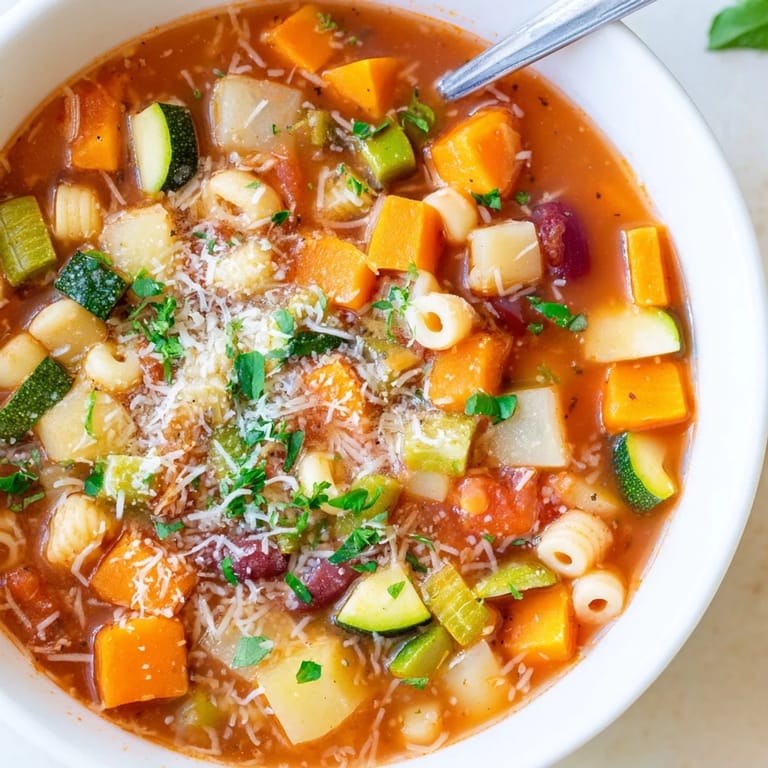
Save The smell of onions and garlic hitting warm olive oil still makes my kitchen feel complete. I started making minestrone during rainy season when cranking up the heat seemed wasteful but something warm was non negotiable. Now its the soup I make when vegetables are piling up in the crisper drawer and I need a bowl that feels like a hug.
Last winter my neighbor dropped off a bag of vegetables from her garden and I had no plan. I threw everything into a pot with beans and pasta and that soup fed us through three snow days. Now whenever I make minestrone I think about how the best meals often come from exactly what you have on hand.
Ingredients
- Olive oil: Use a decent one here since it builds the foundation flavor
- Onion and garlic: These aromatics create the savory base that makes the soup taste restaurant quality
- Carrots and celery: Classic mirepoix vegetables that add sweetness and depth
- Zucchini: Adds texture without overpowering other flavors
- Potato: This secret ingredient thickens the broth naturally as it breaks down
- Green beans: Provide a fresh crunch even after long simmering
- Canned diced tomatoes: Choose whole tomatoes and crush them yourself for better texture
- Vegetable broth: Homemade stock tastes best but store bought works perfectly fine
- Cannellini beans: Creamy white beans that make the soup filling and protein rich
- Small pasta: Ditalini or elbows catch in your spoon for the perfect bite to broth ratio
- Dried oregano and basil: These dried herbs develop deep flavor during long cooking
- Bay leaf: Remove before serving but let it work its magic during simmering
- Fresh parsley and basil: Add at the end to brighten everything up
Tired of Takeout? 🥡
Get 10 meals you can make faster than delivery arrives. Seriously.
One email. No spam. Unsubscribe anytime.
Instructions
- Start the base:
- Warm the olive oil in a large pot over medium heat then add the chopped onion and minced garlic letting them soften until translucent and fragrant
- Add the hard vegetables:
- Toss in the carrots celery zucchini potato and green beans cooking them for about six minutes until they start to soften and smell amazing
- Create the broth:
- Pour in the canned tomatoes with their juices followed by the vegetable broth and water then add the dried oregano basil bay leaf and seasonings
- Let it simmer:
- Bring everything to a boil then lower the heat cover the pot and let it gently simmer for fifteen minutes so the flavors meld together
- Add pasta and beans:
- Stir in the cannellini beans and pasta then continue cooking uncovered for about twelve minutes until the pasta is tender and has thickened the soup
- Finish with fresh herbs:
- Fish out the bay leaf and stir in the fresh parsley and basil tasting one last time to adjust the seasoning
- Serve it up:
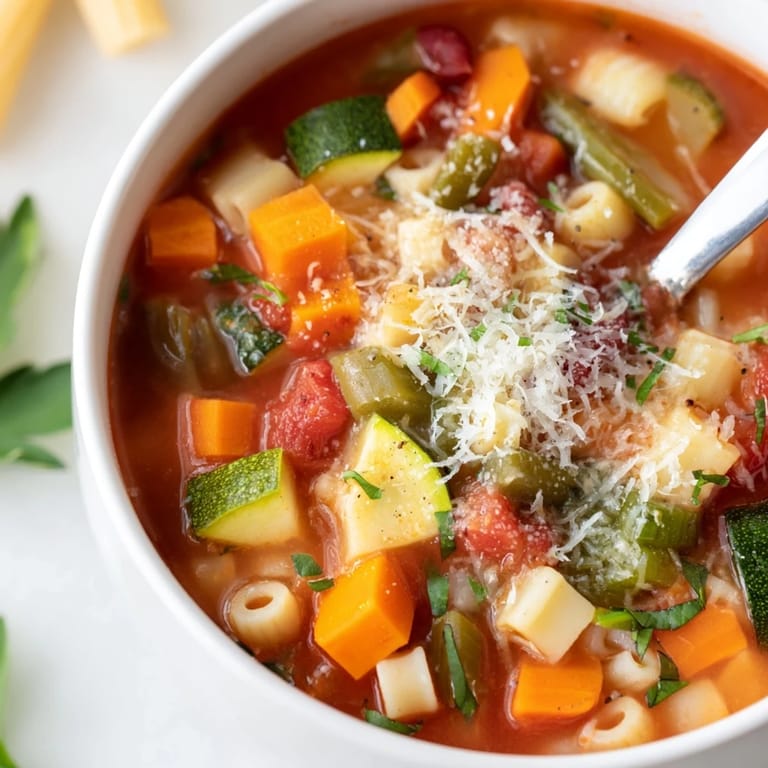
- Ladle the hot soup into bowls and if you like sprinkle some grated Parmesan on top
 Save
Save  Save
Save My grandmother used to say soup needs to sit and think before its ready. Letting minestrone rest for ten minutes before serving somehow makes all the flavors wake up and talk to each other.
Making It Your Own
Minestrone is the ultimate use what you have soup. I have made it with spinach kale cabbage and even frozen peas when the fresh vegetable selection was looking sad. The only rule is keeping the vegetables in bite size pieces so everything fits on your spoon together.
The Bread Factor
Crusty bread is not optional here. Toast thick slices and rub them with raw garlic while still warm or let chunks soak directly in the bowl. That soaked bread becomes the best part of the whole experience.
Batch Cooking Wisdom
This soup doubles beautifully but cook the pasta separately if you plan to freeze portions. Pasta turns mushy in the freezer but having cooked pasta ready to toss into reheated soup keeps everything perfect. Store soup and pasta separately and combine when ready to eat.
- Use a tall container because soup expands when freezing
- Leave an inch at the top of the container
- Label with the date because frozen soup all looks the same
 Save
Save 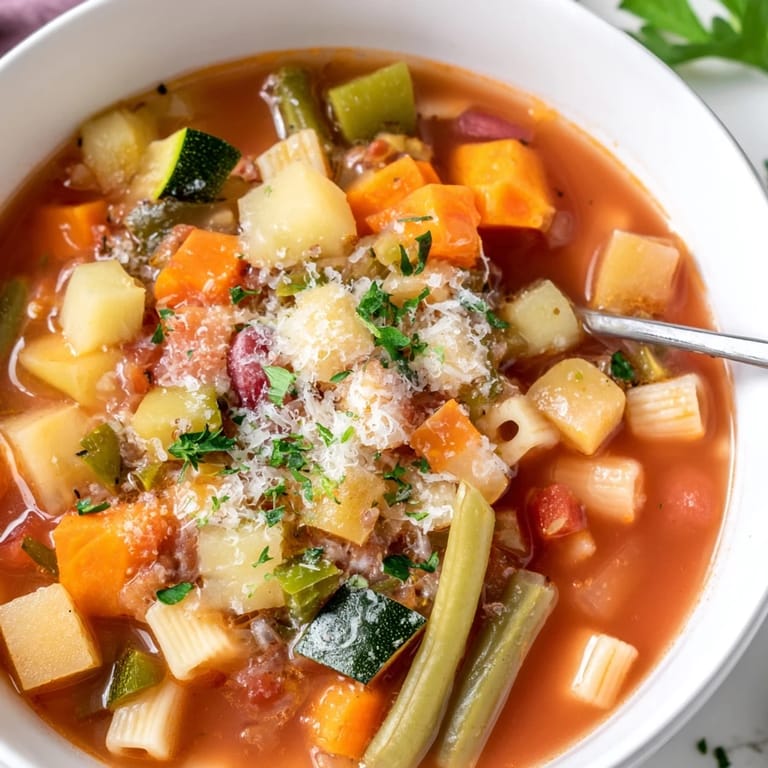 Save
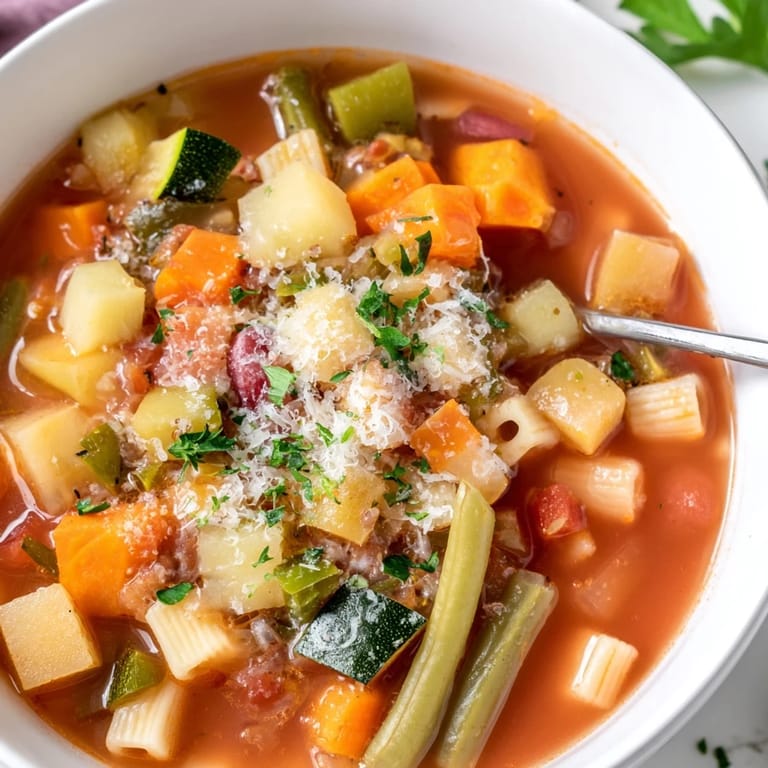
Save There is something deeply satisfying about a pot of soup that can feed a crowd or just you for days. It is simple food that never fails to make the kitchen feel like home.
Recipe Questions & Answers
- → What pasta works best in minestrone?
Small pasta shapes like ditalini, elbow macaroni, or small shells work beautifully. They cook evenly and fit perfectly on a spoon. You can also break spaghetti into smaller pieces if that's what you have available.
- → Can I make minestrone vegan?
Absolutely. Simply omit the Parmesan cheese garnish or use a plant-based alternative. The vegetable broth base already makes this soup naturally vegan-friendly and full of flavor from the herbs and vegetables.
- → How long does minestrone keep in the refrigerator?
Stored in an airtight container, minestrone keeps well for 4-5 days. The pasta may absorb some liquid, so add a splash of water or broth when reheating. The flavors actually deepen and improve after a day or two.
- → Can I freeze minestrone soup?
Yes, though it's best to freeze without the pasta. The pasta can become mushy when frozen and reheated. Cook pasta separately and add it when reheating, or use tiny pasta like orzo which freezes better than larger shapes.
- → What vegetables can I substitute?
Minestrone is incredibly flexible. Swap in spinach, kale, cabbage, or Swiss chard for greens. Add bell peppers, fennel, or butternut squash based on season. The key is using about 6-7 cups of mixed vegetables total.
- → Is minestrone gluten-free?
The traditional version contains pasta with gluten, but you can easily make it gluten-free by using gluten-free pasta or adding extra beans and rice instead. Always check that your vegetable broth is certified gluten-free as well.