 Save
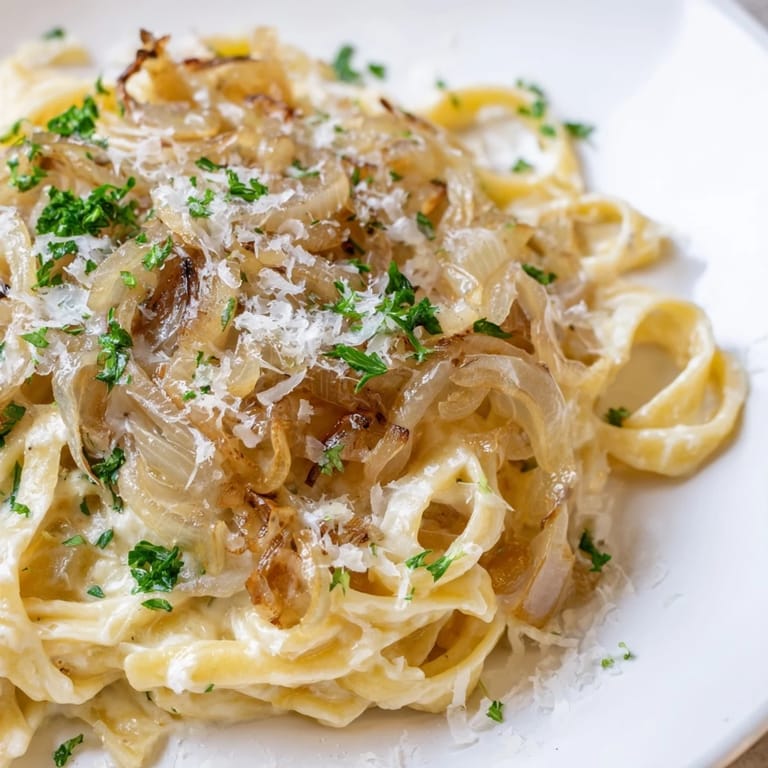
Save There's something almost meditative about slicing onions for this dish—those thin, translucent rounds catch the light in your pan like tiny golden coins, and before you know it, forty-five minutes have passed and you're standing in front of something that smells like autumn and butter and pure comfort. I discovered this recipe on a rainy Wednesday when I wanted French onion soup but had a craving for pasta instead, and what emerged was this one-pot wonder that tastes like both and somehow feels like neither, but better. The first time I made it for friends, they kept asking what was in it because the caramelized onions had created this deep, almost mysterious base that no single ingredient could take credit for.
I made this for my neighbor last winter when she was recovering from surgery, and she told me months later that she still thought about how the cheese had melted into every strand of pasta, creating little pockets of richness. There's something about offering someone a bowl of this—steaming, golden, fragrant—that feels like you're wrapping them in something warm and familiar, even if they've never tasted it before.
Ingredients
- 3 large yellow onions, thinly sliced: These are your foundation; yellow onions have enough natural sweetness to caramelize beautifully, and the thinner you slice them, the faster they soften and develop that deep golden color.
- 2 cloves garlic, minced: Just enough to add a whisper of savory depth without overpowering the delicate onion flavor.
- 350 g dry fettuccine or linguine: The wider, flatter noodles catch the creamy broth better than thin spaghetti would, and they have enough surface area to hold onto the melted cheese.
- 60 ml dry white wine: This cuts through the richness and adds brightness; don't skip it, but choose a wine you'd actually drink.
- 1 L vegetable or beef broth: Beef broth gives deeper, more savory results, but vegetable broth keeps the dish lighter if that's your preference.
- 2 tbsp unsalted butter and 2 tbsp olive oil: The combination is essential—butter for flavor and browning, olive oil to prevent burning during the long caramelization.
- 120 g Gruyère cheese and 60 g Parmesan: Gruyère melts into this creamy, nutty richness, while Parmesan adds a sharp, salty finish that balances everything.
- 1 tsp sugar, 1/2 tsp dried thyme, 1 bay leaf: The sugar jumpstarts the caramelization process, thyme brings earthiness, and the bay leaf adds subtle complexity that you won't quite identify but will definitely taste.
- Salt and freshly ground black pepper: Add these at the end so you can taste as you go; the cheese will add saltiness, so go easier than you think you should.
Tired of Takeout? 🥡
Get 10 meals you can make faster than delivery arrives. Seriously.
One email. No spam. Unsubscribe anytime.
Instructions
- Build your base with butter and oil:
- Heat both in your largest, deepest skillet over medium heat, watching until the butter foams and the whole pan smells nutty and inviting. This takes about a minute, and it's the moment when you know something good is about to happen.
- Caramelize the onions with patience:
- Add your sliced onions and that small spoonful of sugar, stirring occasionally over the next 20–25 minutes until they transform from pale and crisp to deep golden and completely soft. Don't rush this—when they've finished, they should be almost jammy, and your kitchen should smell like toasted honey and butter.
- Wake up the pan with garlic:
- Stir in your minced garlic and cook for just one minute until the raw edge disappears and you catch those first hints of fragrance rising from the pan.
- Deglaze with white wine:
- Pour in your wine and scrape the bottom of the pan with a wooden spoon, lifting all those browned, caramelized bits that are clinging to the surface—these are liquid gold and they'll dissolve into the wine. Let it simmer for about two minutes until the sharp alcohol scent fades and the wine reduces by half.
- Build the broth base:
- Add your thyme, bay leaf, and broth, then bring everything to a rolling boil. You'll see the liquid bubble and steam, and the whole mixture will come alive with aromatic heat.
- Cook the pasta directly in the broth:
- Add your uncooked pasta and stir well so nothing sticks to the bottom, then reduce the heat to medium-low and let it simmer uncovered for 10–12 minutes, stirring frequently. The pasta will gradually soften while absorbing the broth and developing this creamy, luxurious texture as the starch releases into the liquid.
- Finish with cheese and seasoning:
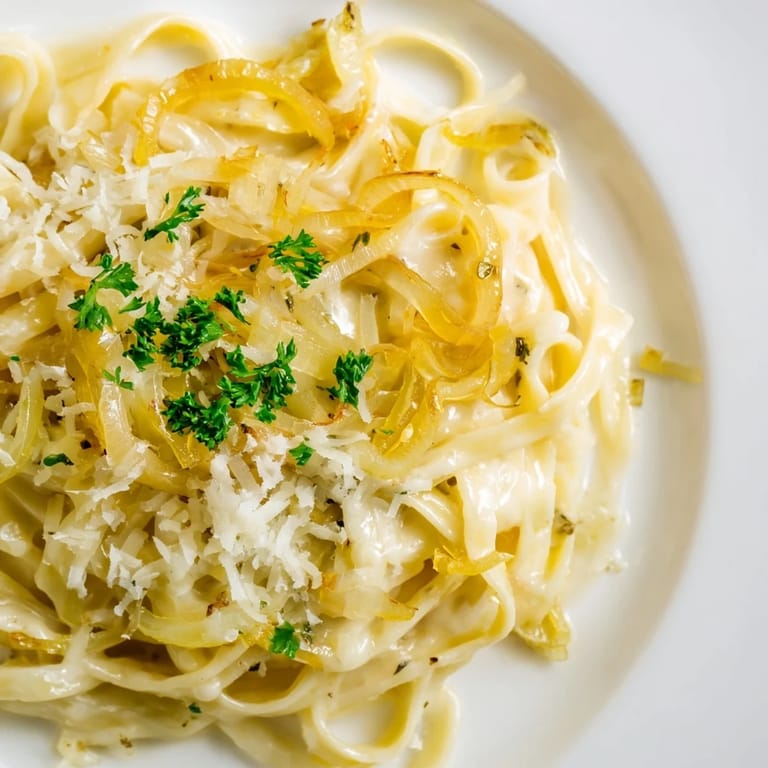
- Fish out that bay leaf, then lower the heat to medium-low and stir in your Gruyère and Parmesan, letting them melt slowly into the pasta until everything is silky and golden. Taste as you go and add salt and pepper—the cheese brings plenty of salt, so you'll likely need less than you'd expect.
 Save
Save My sister made this once when I was visiting, and we ate it standing at the kitchen counter at nine o'clock at night, still in our coats because we hadn't bothered to take them off when I arrived. We didn't talk much, just ate and listened to the rain, and that quiet moment together felt like exactly what we both needed.
Why This Tastes Like More Than Pasta
The magic in this dish comes from the marriage of two cooking techniques that normally stay separate—the deep, slow caramelization of onions from French onion soup, and the creamy absorption of pasta cooked directly in broth like risotto. When these come together, the pasta doesn't just get coated in sauce; it becomes infused with every layer of flavor the onions have developed, and the starch that releases during cooking creates a natural creaminess that the cheese only amplifies. It's this unexpected combination that makes people lean back after the first bite and ask what you did differently.
Customizing Without Losing the Soul
You can absolutely shift this dish in different directions without losing what makes it work. Beef broth instead of vegetable gives you a deeper, more restaurant-quality richness that feels heavier and more winter-like, while vegetable broth keeps things lighter and lets the onions stay the clear star. If you want to add depth, sautéed mushrooms are the obvious choice, but I've also stirred in a handful of fresh thyme (not dried) at the very end, and once I added a dash of balsamic vinegar that nobody could identify but everyone could taste as something special.
The Small Details That Change Everything
This is one of those dishes where tiny choices matter more than you'd expect. The quality of your cheese, for instance—cheap pre-shredded Gruyère coated in anti-caking powder won't melt as smoothly as freshly grated cheese will, and you'll taste the difference. The size of your onion slices affects how long they take to caramelize and how soft they become, so go thinner than feels comfortable; they shrink dramatically as they cook. And the timing of when you add salt and pepper is worth paying attention to, because adding it too early can make the cheese seize up.
- Taste the broth before you add the pasta—if it's underseasoned, season it then, not after the pasta has absorbed it all.
- Break your pasta in half if you don't have linguine or fettuccine on hand; straight spaghetti gets tangled and feels less luxurious to eat.
- Finish with a small handful of fresh parsley and an extra grating of Parmesan over each bowl, because that brightness and extra cheese make the dish feel complete.
 Save
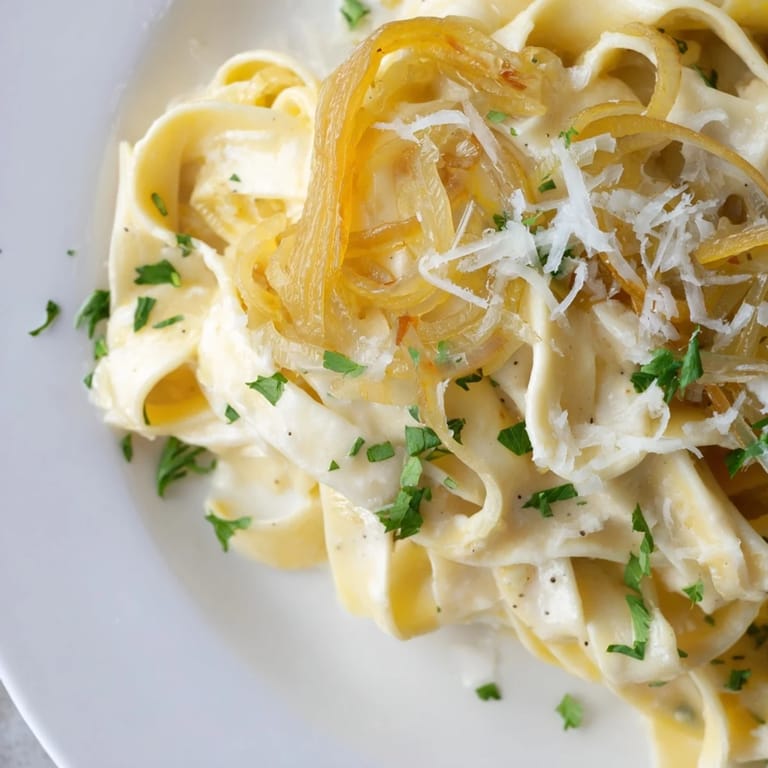
Save This is the kind of meal that tastes like you spent hours in the kitchen, but you're done in less than an hour, and that gap between effort and reward is what makes it so satisfying. Serve it hot in shallow bowls, with that steam rising up to warm your face, and you'll understand why this worked so well as both French onion soup and pasta at the same time.
Recipe Questions & Answers
- → How do you achieve deeply caramelized onions?
Cook the sliced onions slowly over medium heat with butter and olive oil, stirring occasionally for 20-25 minutes until golden brown and sweet.
- → Can I use beef broth instead of vegetable broth?
Yes, substituting beef broth intensifies the savory depth and richness of the dish.
- → What pasta types work best for this dish?
Dry fettuccine or linguine noodles hold up well and cook evenly in the broth.
- → How is the cheese incorporated for a creamy texture?
Melt grated Gruyère and Parmesan cheeses into the hot pasta off heat for a smooth, creamy finish.
- → Is it possible to add other vegetables?
Sautéed mushrooms can be added for extra earthiness without overpowering the base flavors.
- → What wine pairs well with this dish?
A crisp white wine like Sauvignon Blanc complements the savory, cheesy notes perfectly.