 Save
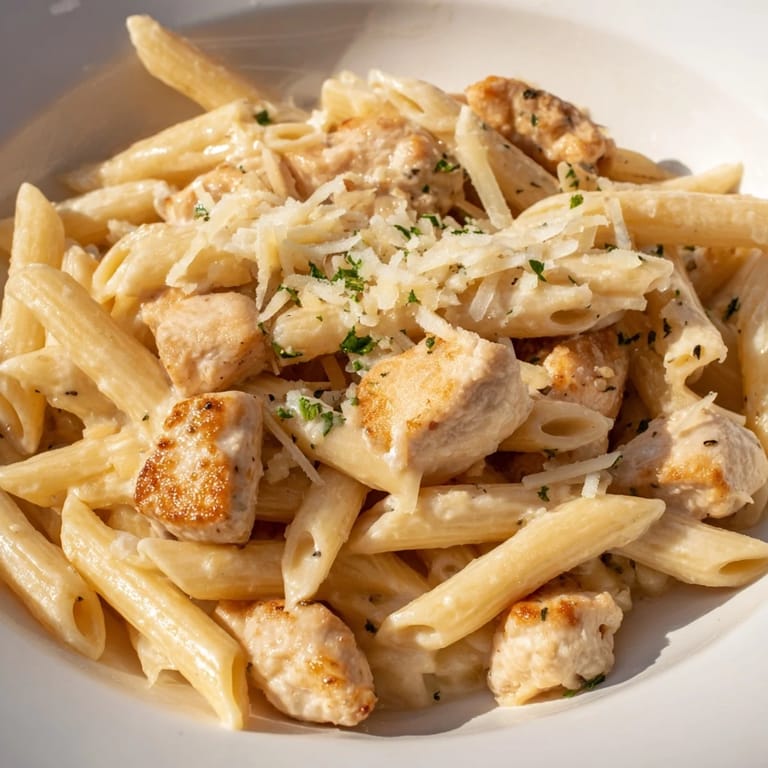
Save There's something about the smell of garlic hitting hot butter that makes everything feel manageable, even on nights when the kitchen timer feels like the only thing keeping my life on schedule. This Garlic Parmesan Chicken Pasta came together during one of those rushed evenings when I'd promised dinner at a decent hour and had nothing but pantry staples and a vague memory of a restaurant dish to work with. The beauty of it is that it asks for so little fuss—everything cooks in one pan, the pasta absorbs the broth like it was meant for this exact moment, and somehow the simplest ingredients transform into something that tastes like you've been stirring it for hours.
My neighbor once asked why she could smell my cooking from three doors down, and I realized it was the moment when the garlic hits the pan—that specific fragrance that fills a whole apartment. I made this for her family on a night when she was overwhelmed with work, and watching her kids dig into it without hesitation, asking for seconds without being asked, made me understand that sometimes the most meaningful meals are the ones you can pull together without losing your mind.
Ingredients
- Chicken breasts: Cut into bite-sized pieces so they cook through quickly and distribute evenly—no awkward waiting for the thicker parts to catch up.
- Penne or rotini: These shapes catch the sauce in their curves, which makes every bite feel intentional instead of slippery.
- Freshly grated Parmesan: The pre-grated stuff often has anti-caking agents that keep it from melting smoothly, so this one small choice matters.
- Heavy cream: This is what turns a broth-based pasta into something luxurious without needing to fuss with a traditional cream sauce.
- Unsalted butter: It's your base, your flavor-builder, and pairs with garlic in a way that tastes effortless.
- Garlic, minced fine: The smaller it is, the faster it releases its flavor and distributes throughout the pan.
- Onion, finely chopped: It dissolves into the background and adds sweetness that balances the garlic's punch.
- Fresh parsley: Adds brightness at the end so it doesn't taste like you cooked it to death.
- Low-sodium chicken broth: The liquid scaffold that becomes your sauce—low sodium lets you control the final seasoning.
- Italian seasoning: A reliable shorthand for dried herbs that bloom in warm liquid.
- Red pepper flakes: Optional, but they add a whisper of heat that reminds your palate this is food, not background.
Tired of Takeout? 🥡
Get 10 meals you can make faster than delivery arrives. Seriously.
One email. No spam. Unsubscribe anytime.
Instructions
- Warm your foundation:
- Heat the olive oil and butter together over medium-high heat until the butter melts and the whole pan smells nutty. You're not looking for brown butter yet—just that moment when it stops foaming.
- Sear the chicken:
- Season those pieces generously, then let them hit the pan without moving them around for the first minute. They'll develop a golden edge that tastes far better than if you kept stirring. Four to five minutes gets them mostly cooked through, and they'll finish later without drying out.
- Build the flavor base:
- Once the chicken's out, the residual heat is your friend. Add the onion and let it soften for a couple minutes, then add that minced garlic and wait just long enough to smell it properly fragrant—about a minute.
- Let the broth come alive:
- Pour in the chicken broth and let it actually boil, then stir in the pasta. This is where the magic lives—the pasta cooks directly in the broth and absorbs all that seasoning while releasing its starch, which naturally thickens everything into a sauce.
- Stay with it:
- Stir occasionally, usually every two or three minutes, so nothing sticks to the bottom. You'll see the liquid gradually reduce and the pasta get tender, which usually takes ten to twelve minutes.
- Make it creamy:
- When the pasta is nearly done and most of the liquid is gone, lower the heat to low and stir in the cream. Add the Parmesan slowly, stirring constantly, and watch it transform into something velvety and rich.
- Bring everyone home:
- Return the chicken to the pan and let it warm through with everything else for just a minute. Finish with fresh parsley and taste before seasoning, since the broth and cheese have already contributed salt.
 Save
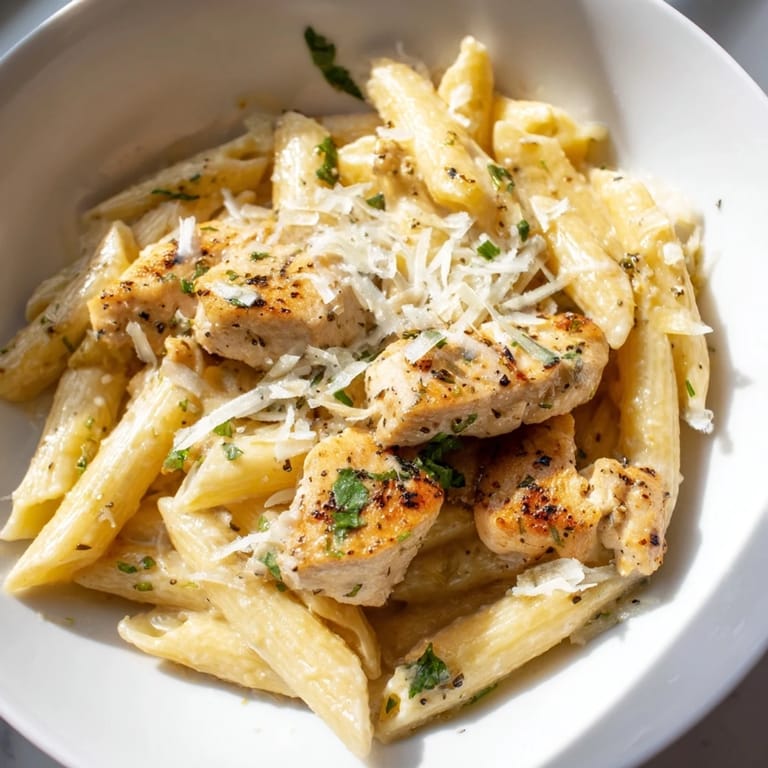
Save There was this quiet moment when my son, who usually pushes food around his plate, looked up and asked if this was what fancy restaurants served. It wasn't fancy—it was just butter, garlic, and cream doing what they've always done together—but I realized that the best meals aren't about complexity, they're about intention and presence.
Timing Without Stress
The reason this works for busy nights is that there's almost no actual hands-on time once the pasta goes in. You stir occasionally, but you're not monitoring a double boiler or managing multiple pans. I've learned to use those ten minutes to pour a drink, set the table, or actually listen to someone talk about their day instead of being glued to the stove. The whole thing comes together in real time, which means you eat while the food is still actually hot.
Variations and Gentle Swaps
The structure of this dish is forgiving enough that it welcomes additions without falling apart. I've added everything from spinach to mushrooms to sun-dried tomatoes, always tossing them in with the onion so they soften as the base builds. The cream-and-cheese finish is what makes it work regardless, so you're free to experiment with the middle without losing the dish's essential comfort.
Serving and Pairing
Serve this while it's hot, with extra Parmesan on the side because everyone has a different idea of how much cheese is enough. A simple green salad next to it cuts through the richness without making you feel like you're eating something virtuous. If you're inclined, a crisp white wine—Pinot Grigio or even a Sauvignon Blanc—sits quietly alongside it, letting the garlic shine.
- Grate the Parmesan fresh while the pasta cooks so it's ready to go, because cold cheese won't melt smoothly into warm cream.
- Have everything prepped before you start cooking, because once the chicken hits the pan there's a real momentum to the process.
- This reheats beautifully with a splash of broth and some gentle heat, so any leftovers are actually better the next day when the flavors have settled.
 Save
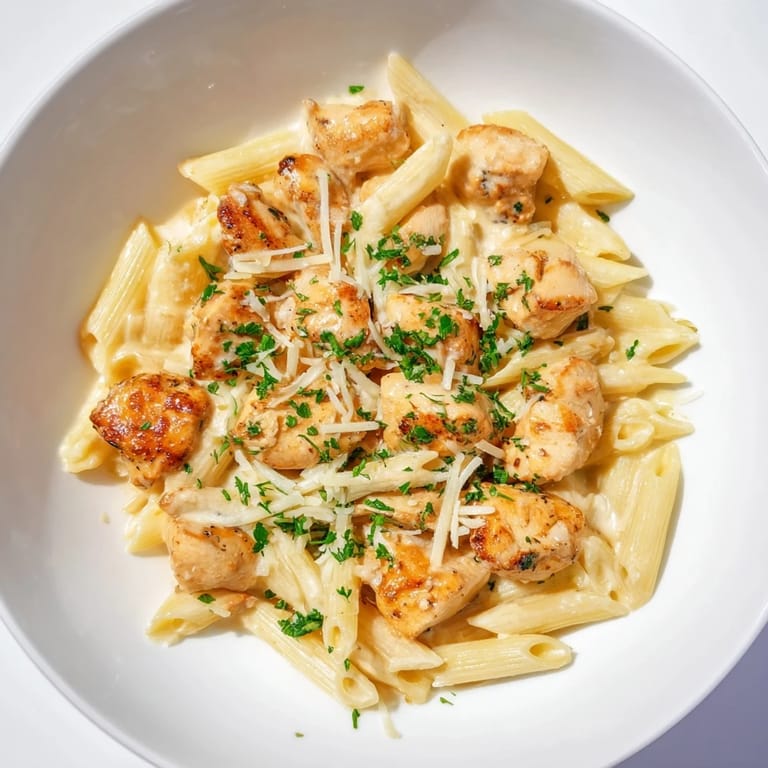
Save There's something deeply satisfying about a recipe that asks for honesty instead of technique. This one has fed me through tired weeks and impressed people I was trying to impress, which is probably the highest compliment any dinner can receive.
Recipe Questions & Answers
- → How do I prevent the chicken from drying out?
Sauté chicken pieces over medium-high heat until golden and cooked through, about 4–5 minutes, then remove from heat while preparing the sauce to keep them tender.
- → Can I use a different pasta shape?
Penne or rotini work best to hold the creamy sauce, but other short pasta shapes like fusilli or farfalle can be substituted.
- → Is it necessary to stir the pasta while simmering?
Occasional stirring helps prevent sticking and ensures even cooking, so stir the pasta gently while simmering in the broth.
- → Can I add vegetables to this dish?
Yes, adding baby spinach or sliced mushrooms during the onion sauté step can boost flavor and nutrition.
- → What can I use instead of heavy cream?
Half-and-half can lighten the sauce with a similar creamy texture but less richness.
- → How do I adjust the spice level?
Crushed red pepper flakes are optional; add more or less according to your preference for heat.