 Save
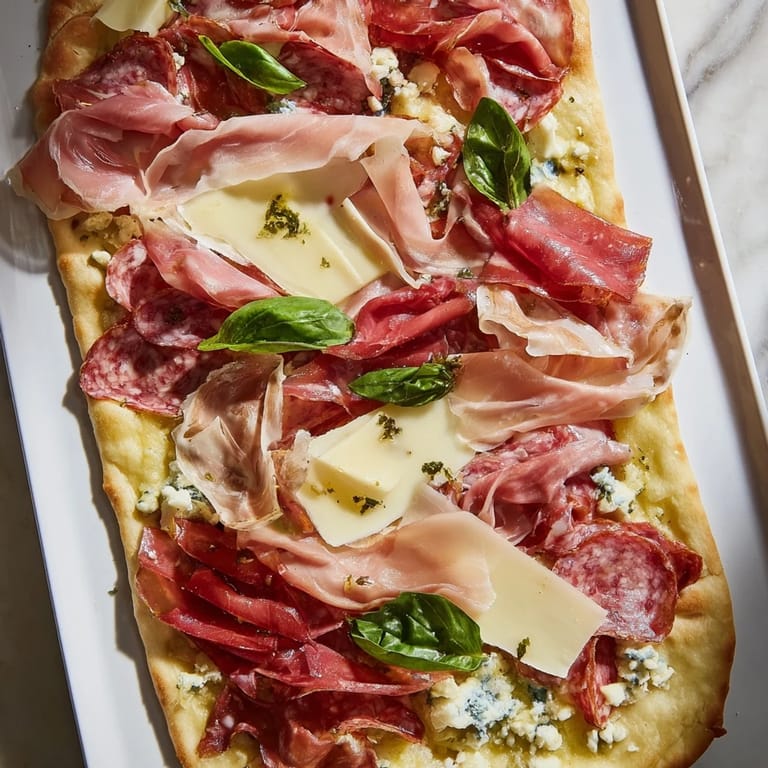
Save My friend walked in carrying a wooden board loaded with sliced meats, cheeses, and crackers, and I watched everyone at the party gravitate toward it like it was the only thing in the room that mattered. That moment stuck with me—not because of the food itself, but because of how it transformed the gathering into something less formal, more alive. Years later, I realized I could do the same thing with flatbreads as the base, turning them into edible vessels that felt both impressive and impossibly easy to pull together. The Rustic Raft became my answer to those dinners where I want to impress without spending hours in the kitchen.
I made this for my book club once, and instead of diving into discussion, we all just stood around the board in silence for the first five minutes, loading up plates and tasting combinations. Someone paired the blue cheese with grapes and honey, and I heard her actually gasp. That's when I knew this arrangement had something special—it wasn't about any single ingredient, but about how they all danced together on warm flatbread.
Ingredients
- Flatbreads (lavash, naan, or ciabatta): Choose something sturdy enough to hold toppings but thin enough to tear easily; the texture contrast between crispy and the soft toppings underneath is essential.
- Olive oil: Good quality here makes a difference since it's one of the few things you're actually cooking with.
- Garlic clove: Just one, minced fine, so it toasts into the bread without overpowering.
- Prosciutto: The salty, delicate foundation that makes everything else taste better.
- Salami: Pick one with some personality; this is where you can experiment with spiced or specialty varieties.
- Smoked turkey breast: Adds a different texture and smoke note that rounds out the meat selection.
- Soppressata or chorizo: One spicy-forward option keeps things from feeling too safe.
- Brie: The creamy anchor that melts slightly when it hits the warm bread.
- Aged cheddar: Sharp and sturdy, it doesn't disappear under the other flavors.
- Manchego: A little nutty, a little firm, adds complexity without demanding attention.
- Blue cheese: Crumbled throughout, it's the salty-funky surprise that makes people pause and ask what they're tasting.
- Grapes: Halved so they nestle into crevices and burst with sweetness against the savory elements.
- Cherry tomatoes: Halved to release just enough juice, they add brightness and prevent the board from feeling too heavy.
- Olives: Marinated ones carry their own flavor without needing anything else.
- Roasted red peppers: Sliced, they add sweetness and visual warmth that ties the whole thing together.
- Fresh basil: Torn at the last second so it stays vibrant, a reminder that this is fresh, not precious.
- Honey or fig jam: For drizzling, it bridges the gap between sweet and savory in ways that feel almost accidental.
Tired of Takeout? 🥡
Get 10 meals you can make faster than delivery arrives. Seriously.
One email. No spam. Unsubscribe anytime.
Instructions
- Get your oven ready:
- Heat your oven to 200°C (400°F) so the flatbreads will crisp up and warm through.
- Toast the flatbread:
- Brush your flatbreads lightly with olive oil and scatter that minced garlic across the surface. Pop them in the oven for 5–7 minutes until they're just starting to turn golden and crispy at the edges—you want them warm and a little firm, not crackers.
- Build your board:
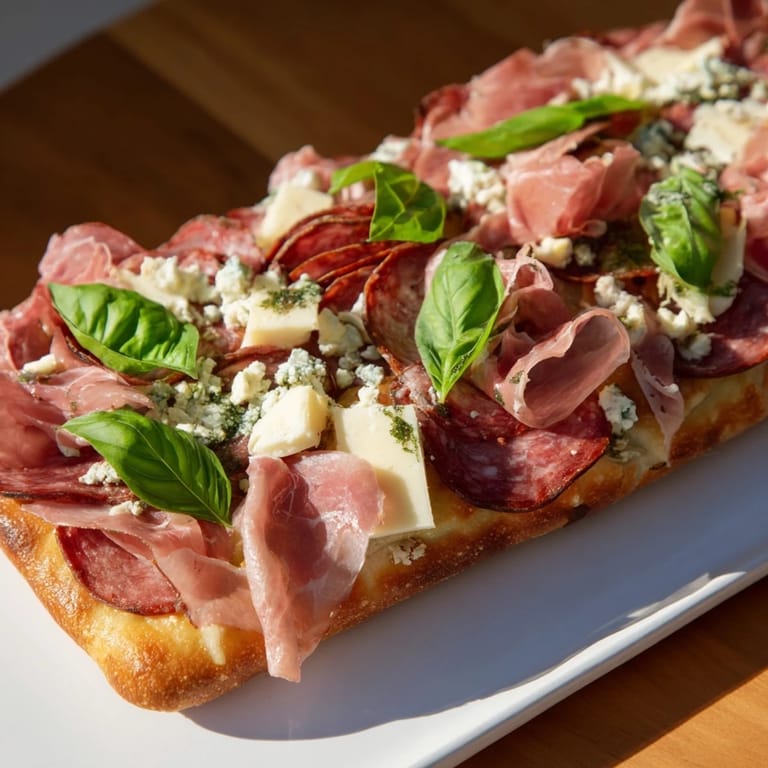
- Lay the warm flatbreads out on a large wooden board or platter, leaving space between them like they're actual rafts floating on a sea of plate. This breathing room is where the color and magic happen.
- Layer the meats and cheeses:
- This is where you can play; start arranging your meats and cheeses across each flatbread in alternating patterns. The visual variety matters because everyone eats with their eyes first.
- Fill the spaces:
- In the gaps between your flatbread rafts, scatter the halved grapes, tomatoes, olives, and red peppers. Let them pool naturally rather than forcing them into neat rows.
- Finish with fresh herbs:
- Tear basil leaves and scatter them across the whole board just before serving. The green matters as much as the flavor—it signals that something alive just happened in your kitchen.
- Serve and share:
- Put small bowls of honey or fig jam nearby for drizzling, and let everyone tear off their own combinations. The best part of this dish is watching people discover their favorite pairing.
 Save
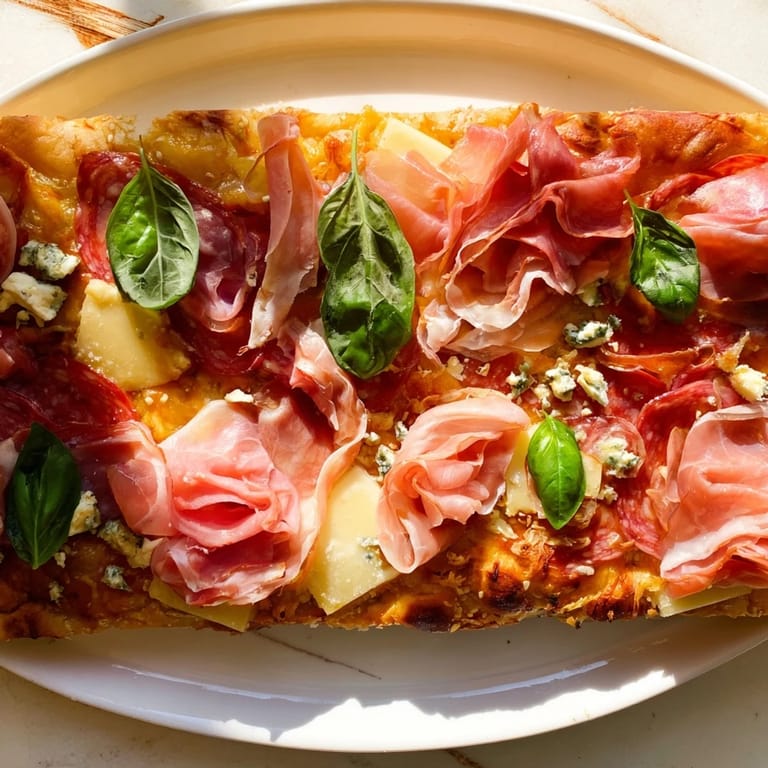
Save There's a moment when you step back and look at what you've created—all that color, all those flavors arranged just so—and you realize you've made something that people want to linger over. That's the real magic of this dish, not the ingredients themselves but the permission it gives everyone to slow down and taste carefully.
The Art of the Arrangement
I used to think boards like this needed to be perfectly symmetrical, but I learned the hard way that imperfection is what makes them interesting. Random clusters of grapes, an uneven distribution of cheese, a splash of basil here and there—these aren't mistakes, they're what make someone want to reach for that exact corner of the board. Think of it like you're creating pockets of different experiences rather than a balanced meal.
Timing and Temperature
The warm flatbread makes all the difference; it softens slightly under the toppings and creates this moment where everything feels connected instead of just stacked on top. If you're making this for a longer gathering, you can prep your board earlier and just warm the bread right before people arrive, then add the fresh basil at the last second. The board will stay beautiful for at least an hour, though honestly, it rarely lasts that long.
Making It Your Own
The beauty of this format is that you can build around what you actually have and love. Substitute any of the cheeses or meats based on what's at your market or what you're craving. Some people add Marcona almonds for crunch, others throw in marinated artichokes or pickled onions. The framework stays the same; you just fill in the details.
- Don't feel locked into my cheese selection—use whatever aged or interesting cheeses are calling to you.
- If you can't find one of the meats, just double up on another; this isn't a precision recipe, it's a celebration of good ingredients.
- Add texture with nuts, seeds, or even crispy chickpeas if that speaks to you.
 Save
Save This is the kind of dish that reminds you why you cook in the first place. It's not about complexity or technique; it's about bringing beautiful things together and letting people experience them however they want.
Recipe Questions & Answers
- → What type of flatbreads work best?
Rectangular flatbreads like lavash, naan, or ciabatta are ideal for holding the toppings and developing a crisp base when warmed.
- → Can I substitute the meats and cheeses?
Yes, feel free to swap or add your preferred cured meats and cheese varieties to suit your taste or availability.
- → How should the flatbreads be prepared before adding toppings?
Brush them lightly with olive oil and minced garlic, then warm in the oven until slightly crisp to add flavor and structure.
- → What accompaniments complement the meats and cheeses?
Fresh grapes, cherry tomatoes, marinated olives, roasted red peppers, and basil add freshness and variety in texture and taste.
- → Are there serving suggestions for this dish?
Serve on a large board allowing guests to break pieces with toppings; pair with crisp white or light red wine for balance.
- → Can I add other textures to the platter?
Yes, including nuts like Marcona almonds or pickled vegetables enhances crunch and flavor complexity.