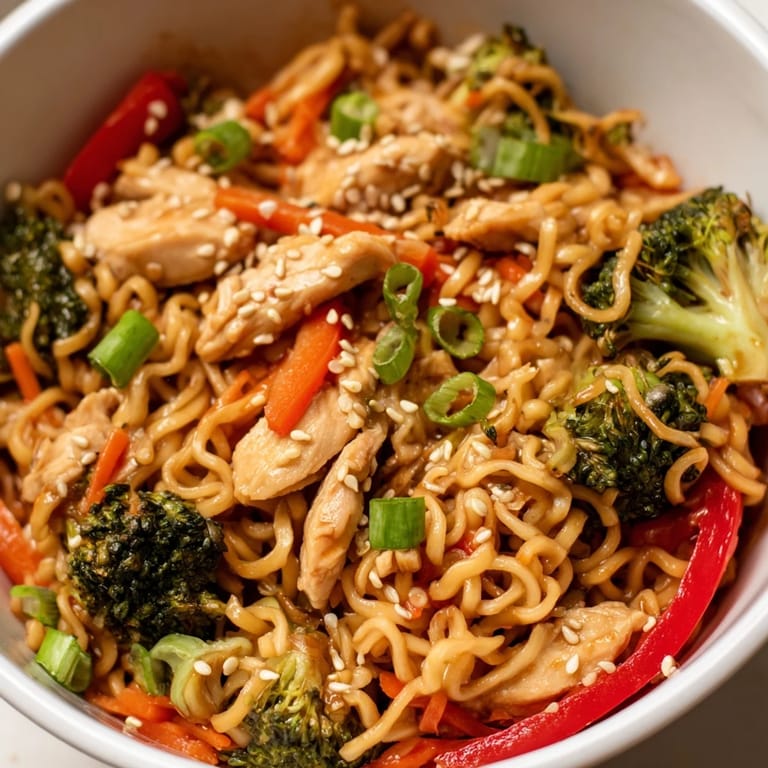
 Save
Save There was this Tuesday night when the fridge was nearly empty and I was craving something bold. I had chicken thawing, a couple packs of ramen tucked in the pantry, and a half-full bottle of sriracha staring at me. Twenty minutes later, I was twirling noodles coated in this glossy, fiery sauce that made my kitchen smell like a late-night noodle bar. That was the night this stir-fry became my go-to when I need fast, loud flavor without a trip to the store.
I made this for my neighbor once after she mentioned missing the stir-fry place that closed down the street. She stood in my kitchen, chopsticks in hand, and said it tasted even better because the noodles had that perfect chew. We ended up eating straight from the wok, laughing about how sometimes the best meals happen when you stop overthinking. She still texts me when she makes it now, usually with a photo of her own tweaked version.
Ingredients
- Boneless, skinless chicken breasts: Slice them thin so they cook fast and soak up the sauce, and always cut against the grain for tenderness.
- Instant ramen noodles: Toss the seasoning packets and use the noodles as your base, they have the perfect springy texture for stir-frying.
- Red bell pepper: Adds sweetness and a pop of color that balances the heat, plus it stays crisp if you don't overcook it.
- Broccoli florets: They char slightly in the hot pan and give you those little crispy edges that make every bite interesting.
- Carrot: Julienne it thin so it cooks at the same rate as everything else and adds a touch of natural sweetness.
- Green onions: Stir them in at the end for a fresh, sharp bite that cuts through the richness of the sauce.
- Garlic and ginger: The aromatics that make your kitchen smell like magic, just don't let them burn or they'll turn bitter.
- Soy sauce: The salty backbone of the sauce, use low sodium if you want more control over the final taste.
- Sriracha or chili garlic sauce: This is where the fire comes from, start with less and build up if you're heat-sensitive.
- Oyster sauce: Adds a deep, savory umami that rounds out the spice and sweetness beautifully.
- Sesame oil: A little goes a long way, it adds that nutty, toasted aroma that makes everything taste more complete.
- Brown sugar: Balances the heat and salt with just enough sweetness to keep the sauce from being one-dimensional.
- Toasted sesame seeds: Optional but worth it, they add a subtle crunch and a hint of nuttiness to each bite.
Tired of Takeout? 🥡
Get 10 meals you can make faster than delivery arrives. Seriously.
One email. No spam. Unsubscribe anytime.
Instructions
- Boil the noodles:
- Cook the ramen according to package directions, then drain and rinse them under cold water to stop the cooking. This keeps them from turning mushy when you toss them in the hot pan later.
- Mix the sauce:
- Whisk together soy sauce, sriracha, oyster sauce, sesame oil, brown sugar, and water in a small bowl until the sugar dissolves. Set it within arm's reach because once the stir-frying starts, things move fast.
- Cook the chicken:
- Heat a tablespoon of vegetable oil in a large wok or skillet over medium-high heat, then add the sliced chicken in a single layer. Stir-fry for four to five minutes until just cooked through, then remove it to a plate so it doesn't dry out.
- Toast the aromatics:
- In the same pan, toss in the minced garlic and grated ginger, stirring constantly for about thirty seconds until they smell incredible. Don't walk away or they'll scorch and ruin the whole thing.
- Stir-fry the vegetables:
- Add the bell pepper, broccoli, and carrot to the pan, tossing them every few seconds so they char slightly but stay crisp. This should take about three to four minutes, and you want them tender but still with some bite.
- Bring it all together:
- Return the chicken to the pan, add the cooked noodles, and pour the sauce over everything. Toss it all together with tongs or a spatula, making sure every strand of noodle gets coated, and let it heat through for two to three minutes.
- Finish and serve:
- Stir in the sliced green onions, taste for heat and salt, and adjust with more sriracha or soy sauce if needed. Serve it hot, topped with toasted sesame seeds and fresh cilantro if you have it.
 Save
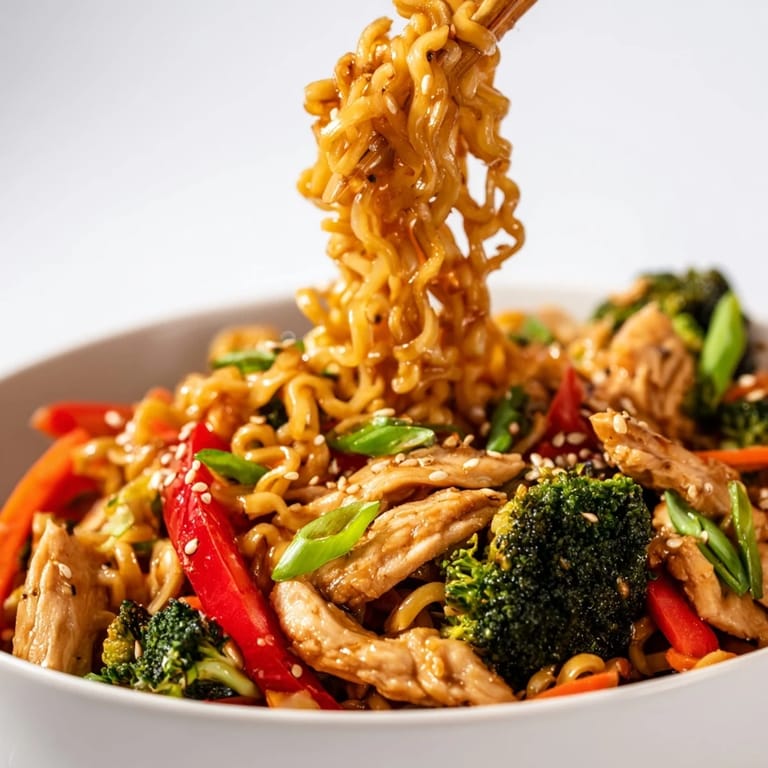
Save One evening, I made this for a friend who claimed she didn't like spicy food. I went easy on the sriracha, and halfway through her bowl, she looked up and asked if I could make it hotter next time. We laughed, and I realized this dish has a way of converting people, one slurp at a time. It's not just the heat, it's the balance of sweet, salty, and savory that makes you forget you ever had a limit.
How to Make It Your Own
Swap the chicken for firm tofu or shrimp if you want a different protein, or leave it out entirely and load up on extra vegetables for a lighter version. I've added snap peas, mushrooms, baby corn, and even edamame depending on what's in the crisper drawer. You can also play with the noodles, using fresh ramen, rice noodles, or even soba if you want a nuttier flavor. The sauce is forgiving, so feel free to tweak the spice level, add a squeeze of lime, or toss in a handful of fresh basil at the end for a surprising twist.
Serving Suggestions
This stir-fry is a complete meal on its own, but it pairs beautifully with a cold lager, a glass of off-dry Riesling, or a pot of jasmine tea if you want something soothing alongside the heat. I like to serve it straight from the wok with extra sriracha and lime wedges on the side so everyone can adjust their own bowl. If you're feeding a crowd, double the recipe and set out small bowls of crushed peanuts, cilantro, and chili flakes so people can build their own toppings. It also reheats surprisingly well, though the noodles soften a bit, so I sometimes add a splash of water and a quick toss in a hot pan to bring it back to life.
Storage and Reheating
Store leftovers in an airtight container in the fridge for up to three days, though the noodles will absorb some of the sauce as they sit. When you reheat, add a tablespoon or two of water or broth to loosen everything up, then toss it in a hot skillet or microwave it in short bursts, stirring in between. I don't recommend freezing this because the noodles lose their texture, but the sauce alone freezes beautifully if you want to prep it ahead.
- Let the stir-fry cool completely before storing to prevent condensation and sogginess.
- If you're meal-prepping, store the noodles and sauce separately and combine them when you're ready to eat.
- Reheat gently over medium heat rather than high to avoid drying out the chicken or overcooking the vegetables.
 Save
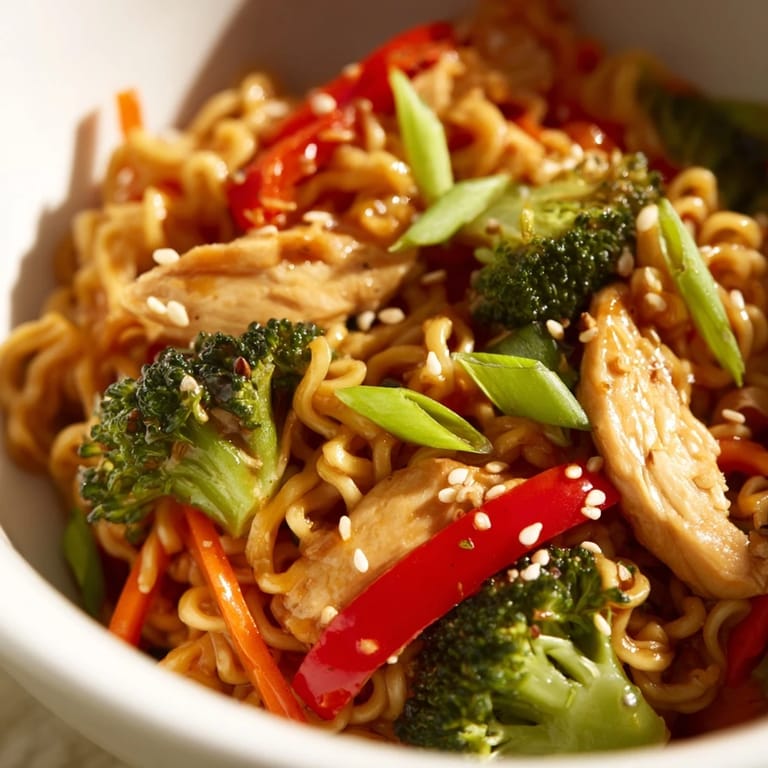
Save This stir-fry has saved more weeknights than I can count, and it never gets old because it bends to whatever mood or craving I'm in. I hope it becomes that kind of recipe for you too, the one you make without thinking, the one that always delivers.
Recipe Questions & Answers
- → Can I make this with a different protein?
Absolutely. Tofu is an excellent vegetarian substitute that absorbs the spicy sauce beautifully. Shrimp, beef, or pork work wonderfully too. Adjust cooking times based on your protein choice.
- → How spicy is this dish?
The heat level is moderately spicy from 1 tablespoon of sriracha. Start with less and adjust to your taste preference. You can also add red pepper flakes or extra sriracha for increased heat.
- → What vegetables can I substitute?
Feel free to use snap peas, mushrooms, baby corn, bok choy, or asparagus. Keep vegetables roughly uniform in size for even cooking and maintain that satisfying crisp-tender texture.
- → Is this gluten-free?
Traditional ramen noodles contain wheat. Use gluten-free noodles as a substitute. Also check your soy sauce and oyster sauce labels, as some contain gluten. Tamari is a naturally gluten-free soy sauce alternative.
- → Can I prepare components ahead of time?
Yes, prep all vegetables and mince garlic-ginger the morning before. Store in separate containers. Whisk the sauce together up to 2 hours ahead. Cook noodles and proteins just before stir-frying for best results.
- → What should I serve this with?
Pair with a crisp cold lager beer or jasmine tea to complement the bold, spicy flavors. A simple cucumber salad or pickled vegetables provide refreshing contrast.