 Save
Save There's something about arranging a salad that feels less like cooking and more like painting. I was standing in my kitchen one afternoon, sunlight streaming through the window, when I grabbed whatever yellow fruits I had on hand and started layering them with handfuls of fresh greens. The bowl transformed into something I hadn't planned—a landscape of brightness surrounded by emerald herbs. That's when I understood: this salad isn't just food, it's a moment of joy on a plate.
I made this for a friend who'd been overwhelmed lately, and watching her face light up when she saw it was worth every slice of mango. She said it tasted like what she needed—something bright and clean and honest. We ate it outside, barely talking, just present with good food and better company.
Ingredients
- Ripe mango, diced (1 cup): Choose one that yields slightly to pressure—too firm and it feels raw, too soft and it's mushy. The sweetness and buttery texture are the soul of this salad.
- Pineapple, diced (1 cup): Fresh pineapple brings a bright acidity that keeps the salad from feeling heavy. If it smells like nothing, it'll taste like nothing, so trust your nose.
- Golden apple, diced (1): Honeycrisp or Golden Delicious work beautifully—they add snap and prevent the fruit from turning into mush with the dressing.
- Yellow peach, sliced (1): Peaches are delicate, so slice them just before serving to keep them from browning and getting sad.
- Kale, stems removed and finely shredded (4 cups): The key is removing those tough stems and really shredding it thin so it softens under the dressing without becoming a chore to chew.
- Baby spinach leaves (1 cup): These are tender enough to play well with the kale and add a subtle earthiness beneath all that sunshine.
- Fresh parsley, chopped (½ cup): Flat-leaf parsley has more flavor than the curly stuff—it tastes like green without being grassy.
- Fresh mint, torn (¼ cup): Mint wakes everything up. Tear it by hand instead of cutting to keep it from bruising and turning dark.
- Fresh basil, torn (¼ cup): Just a whisper of basil keeps it from becoming too herbaceous, adding complexity without noise.
- Extra-virgin olive oil (3 tablespoons): This is where quality matters—a fruity, grassy oil will make the entire salad taste better.
- Fresh lemon juice (2 tablespoons): Use real lemons, not the bottled version. Fresh juice brings the acidity that brings everything into focus.
- Maple syrup (1 tablespoon): Just enough sweetness to balance the brightness, without making it feel like dessert.
- Dijon mustard (1 teaspoon): This emulsifies the dressing and adds a subtle depth that keeps it from tasting one-note.
- Sea salt and freshly ground black pepper: These are non-negotiable—taste as you go, because seasoning is where most home cooks lose the plot.
- Toasted pumpkin seeds, optional (2 tablespoons): If you use them, the crunch is essential—it gives the salad texture and makes it feel complete.
- Lemon zest, optional: A light shower of zest adds brightness and a visual pop that makes people notice the salad before they taste it.
Tired of Takeout? 🥡
Get 10 meals you can make faster than delivery arrives. Seriously.
One email. No spam. Unsubscribe anytime.
Instructions
- Make the dressing:
- Whisk olive oil, lemon juice, maple syrup, Dijon mustard, salt, and pepper in a small bowl until the oil and lemon juice stop fighting each other and turn glossy. You'll know it's ready when it coats the whisk evenly.
- Soften the kale:
- Pour half the dressing over your shredded kale and massage it for a minute or two with your hands—this breaks down the fibers and makes it tender without cooking. It's almost meditative if you let it be.
- Combine the greens:
- Add spinach, parsley, mint, and basil to the kale and toss everything together gently. You want the herbs distributed throughout, not crushed into submission.
- Build the presentation:
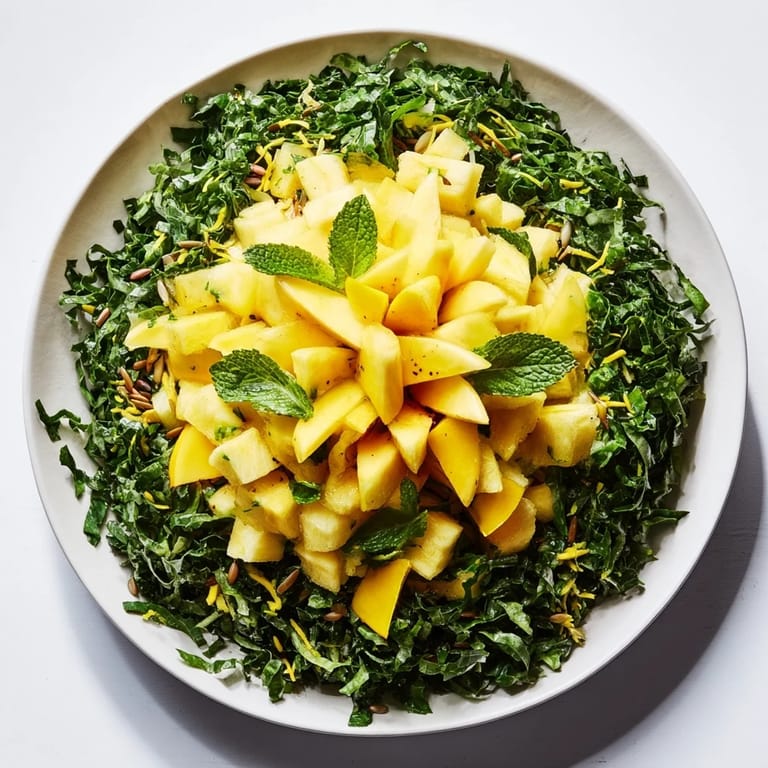
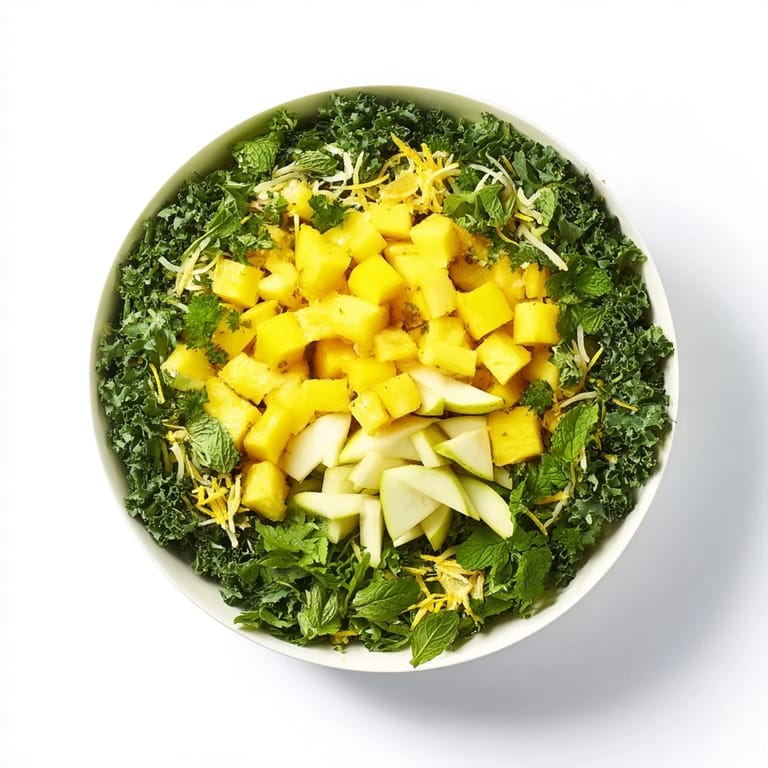
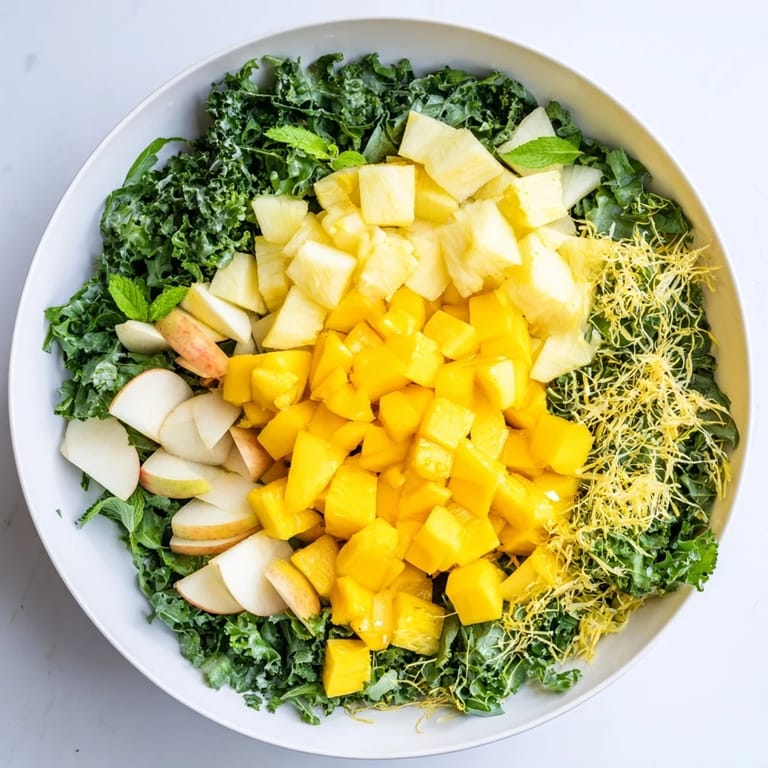
- Spread the dressed greens in a shallow bowl, creating a ring around the edge. Pile the fruit in the center—let it be generous and unafraid to take up space.
- Finish and serve:
- Drizzle the remaining dressing over everything and scatter pumpkin seeds and lemon zest if you're using them. Serve right away while the greens are still crisp and the fruit is still firm.
 Save
Save This salad taught me that sometimes the best meals are the ones where you're not trying too hard, where you're just responding to what's good and what's in front of you. There's freedom in that.
Why This Salad Works
The magic here is contrast—soft meets crisp, sweet meets bright, green meets gold. Every element has a reason to be there. The kale provides structure and substance, the herbs bring complexity, and the fruit brings joy. It's not complicated, but it's intentional. That's what separates a salad you tolerate from one you actually want to eat.
How to Make It Your Own
This recipe is flexible in the way that only truly good recipes are. If mango isn't available, yellow kiwi or papaya works beautifully and brings their own personality. Some people add avocado slices for creaminess—that's not wrong, it's just different. The real secret is trusting the principle: bright fruit, plenty of green, a balanced dressing, and the confidence to serve it immediately.
Serving and Storage
This salad is best served fresh, when everything is at its peak. But here's the thing—if you're making it for a party or you're not quite ready to eat, keep the fruit and greens separate until the last moment. You can make the dressing hours ahead and store it in a jar. That way, when guests arrive or when hunger hits, you're just minutes away from something beautiful.
- Pair it with a crisp white wine if you're feeling celebratory—Sauvignon Blanc is perfect.
- Make extra dressing if people are generous with their plates; there's never enough once everyone tastes it.
- If you have leftovers, eat the fruit and greens separately the next day rather than hoping they stay fresh in the bowl.
 Save
Save This salad is a reminder that sometimes the best things we cook are the ones that feel effortless and look like art. Make it, serve it, and watch people light up.
Recipe Questions & Answers
- → Can I substitute any fruits in the dish?
Yes, you can swap yellow kiwi or papaya for the mango, pineapple, apple, or peach to vary flavors while maintaining the vibrant color palette.
- → What is the purpose of massaging the kale with dressing?
Massaging the kale softens its texture, making it more tender and easier to enjoy while allowing the dressing to fully infuse the greens.
- → Can I prepare this dish ahead of time?
Yes, keep the fruits and greens separate until ready to serve to maintain freshness and texture.
- → What garnishes complement the main ingredients?
Toasted pumpkin seeds add a crunchy contrast, while lemon zest brings a bright aromatic note that enhances the dish’s freshness.
- → Is this suitable for specific dietary needs?
This dish is vegan and gluten-free, featuring wholesome fruits, leafy greens, and natural ingredients without animal products or gluten.