 Save
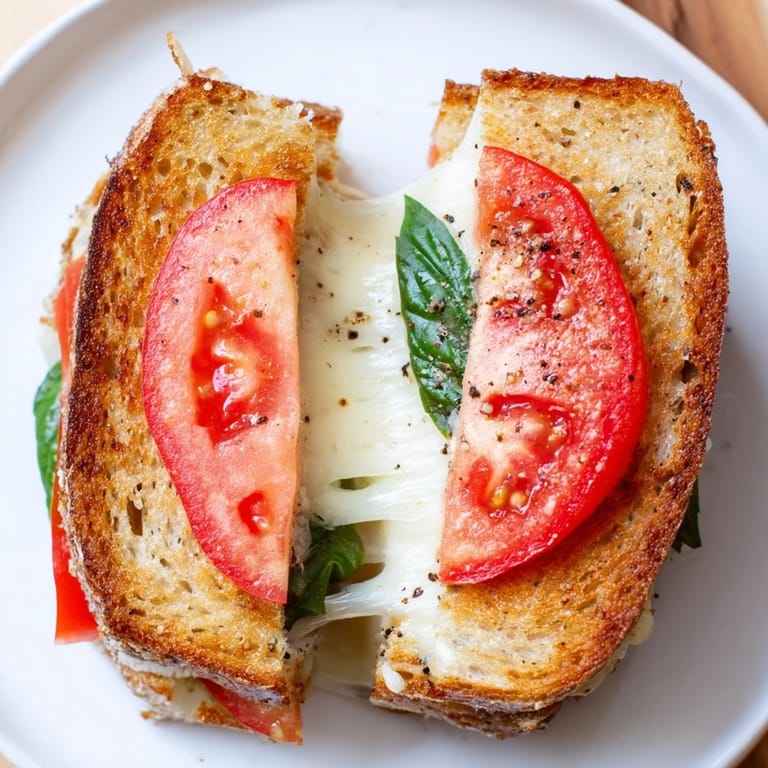
Save There's something about the smell of butter hitting a hot skillet that makes me stop whatever I'm doing. One Tuesday afternoon, I stood over my griddle watching the edges of sourdough turn golden, and I realized this wasn't just lunch—it was the kind of simple meal that somehow feels like a small victory. Tomato, basil, and melted cheese between two perfect slices of bread. That's it. That's the whole story, and somehow it's enough.
My sister came over once when I was making these, and the moment she bit into one, she closed her eyes for a full three seconds. No words. Just appreciation. That's when I knew this sandwich had something special—the kind of flavor that doesn't need explaining, just experiencing.
Ingredients
- Sourdough or country-style bread, 4 slices: The bread is your foundation—it needs to be sturdy enough to hold everything without falling apart, but with enough character to stand up to the butter and cheese.
- Mozzarella cheese, 4 oz (115 g) sliced or shredded: Fresh mozzarella melts faster and more evenly than aged cheese, which is exactly what you want here, though provolone or cheddar work beautifully too.
- Unsalted butter, 2 tbsp softened: Softened butter spreads like a dream and toasts the bread to that golden-brown perfection without any burnt edges.
- Ripe tomato, 1 large, thinly sliced: A ripe tomato is non-negotiable—watery ones will make your sandwich soggy, so choose one that feels heavy and smells slightly sweet.
- Fresh basil leaves, 8–10: Tear them by hand instead of cutting with a knife; the difference in flavor is real, not imaginary.
- Salt and freshly ground black pepper, to taste: These small seasonings brighten everything and remind you that good food doesn't need complexity.
Tired of Takeout? 🥡
Get 10 meals you can make faster than delivery arrives. Seriously.
One email. No spam. Unsubscribe anytime.
Instructions
- Prepare your bread:
- Spread the softened butter evenly on one side of each of the four bread slices—not thick, just enough to coat. This thin layer is what gives you that crispy, golden crust.
- Build the sandwich:
- Place two bread slices buttered side down on your board. On each slice, layer half the mozzarella, then scatter the tomato slices across it. Arrange your basil leaves on top—this is where you taste every herb—and give it all a tiny pinch of salt and pepper. Crown each with a second bread slice, buttered side up.
- Heat your pan:
- Set a large skillet or griddle over medium heat and let it warm for about a minute. You want it hot enough to sizzle when the butter hits it, but not so hot that the outside burns before the inside melts.
- Cook with patience:
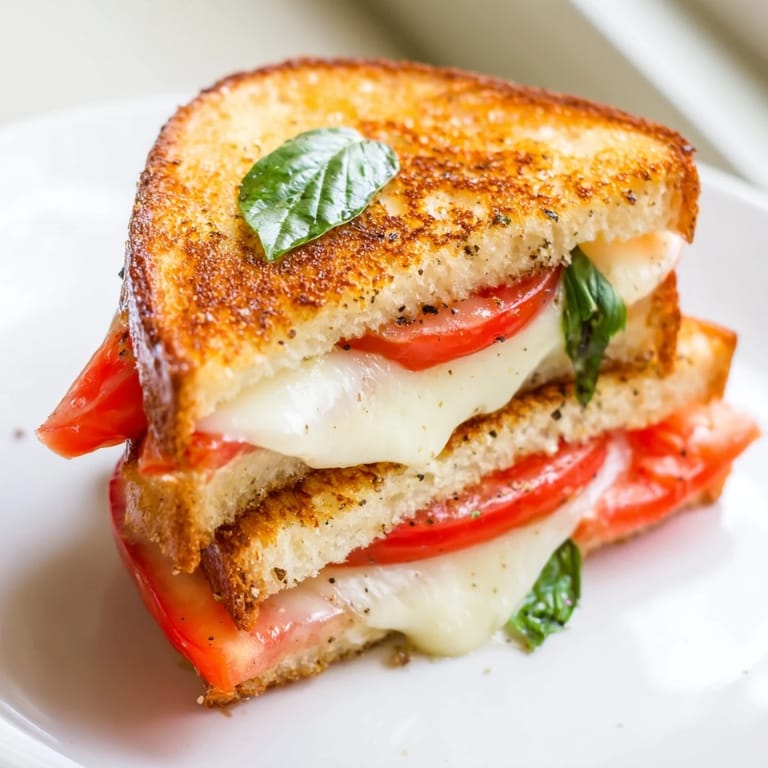
- Place your sandwiches on the hot pan and listen for that gentle sizzle. Cook for three to four minutes without moving them—let the butter do its work—until the bread turns golden brown and sounds crispy when you press it with your spatula. Flip gently, press once more, and cook the other side for three to four minutes until it matches the first side.
- Rest and serve:
- Slide your sandwich onto a cutting board and let it sit for one minute while the cheese sets. This pause makes it easier to handle and lets the flavors settle.
 Save
Save I've watched people take their first bite, and something shifts in their face. It's not dramatic, just honest. The warmth, the contrast between the crispy crust and the soft melted middle, the way basil tastes different when it's heated through—it stops you for a moment and makes you present.
Why This Sandwich Works
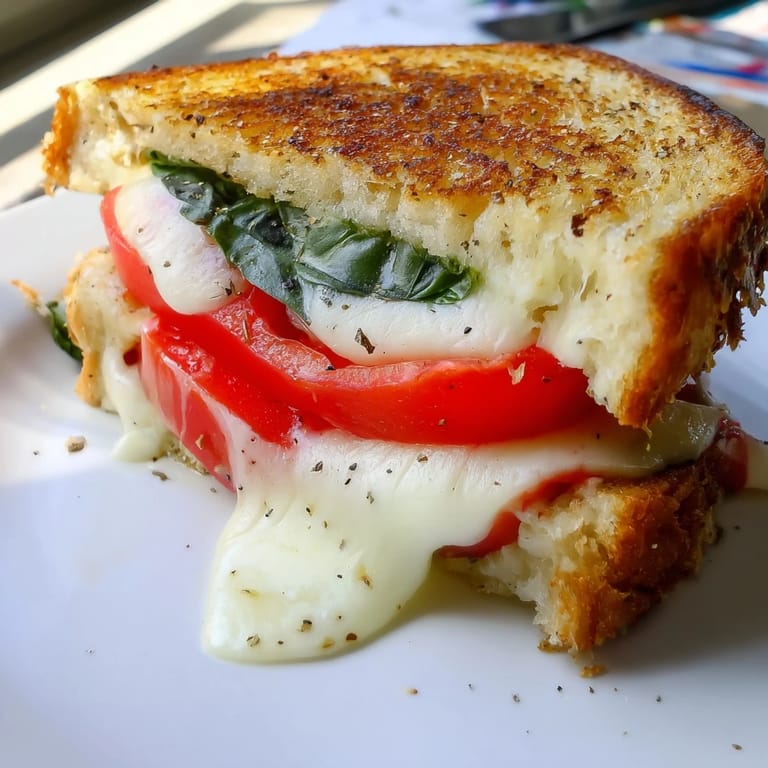
There's a reason grilled cheese has survived centuries of food trends. It's built on contrast: crispy and soft, warm and cool (when the basil hits your tongue), rich and fresh all at once. The tomato brings brightness that keeps the cheese from feeling heavy, and the basil—the basil is what transforms this from a simple lunch into something you remember.
Making It Your Own
This sandwich is forgiving, which is part of its charm. One evening I added a thin drizzle of balsamic glaze before serving, and it opened up an entirely different flavor profile—slightly tangy, almost sophisticated. Other times I've layered in a few leaves of peppery arugula for crunch, or even a whisper of fresh spinach. The core stays the same; you're just adjusting the mood.
The Little Details That Matter
The difference between a good grilled cheese and a great one lives in the small moments: the way you spread the butter, how thinly you slice the tomato, whether you taste the salt before adding it. I learned early on that rushing through these details costs you later. Take your time, and the sandwich will taste like you spent hours on it.
- Always use medium heat—it gives you control and prevents burnt edges.
- Softened butter spreads better than cold butter and browns more evenly.
- Tear basil by hand and add it fresh; it's delicate and deserves to be treated that way.
 Save
Save This sandwich taught me that sometimes the best meals are the ones that don't pretend to be anything more than they are. Butter, bread, cheese, tomato, basil. That's all it takes.
Recipe Questions & Answers
- → What type of bread works best?
Sourdough or country-style bread holds up well and crisps perfectly when toasted, enhancing texture and flavor.
- → Can I substitute mozzarella cheese?
Yes, provolone or cheddar are excellent alternatives that bring different flavors to the melt.
- → How do I prevent the sandwich from burning?
Cook on medium heat and press gently, flipping after 3–4 minutes to achieve an even golden crust without burning.
- → Is there a way to add extra flavor?
A drizzle of balsamic glaze before serving adds a tangy contrast that complements the fresh ingredients.
- → Can I add extra greens?
Yes, layering baby spinach or arugula inside provides additional crunch and freshness.