 Save
Save The first time I arranged a grazing board that actually made people gasp, I wasn't thinking about perfection—I was thinking about abundance. I'd pushed the board too close to the table edge by accident, and instead of fixing it, I leaned into the chaos. Cheese tumbled slightly over, fruit rolled forward, and suddenly there was this living, breathing centerpiece that looked more like a cornucopia than a carefully curated spread. That happy accident became the waterfall board, and now it's the one people ask for at every gathering.
I'll never forget watching my grandmother's face when she saw this board at her birthday dinner. She reached for a piece of prosciutto that was literally draped off the table's edge and laughed—actually laughed—in a way that made everyone else lean in. That's when I realized this isn't about feeding people; it's about creating a moment where abundance and a little bit of playful chaos feel like a celebration.
Ingredients
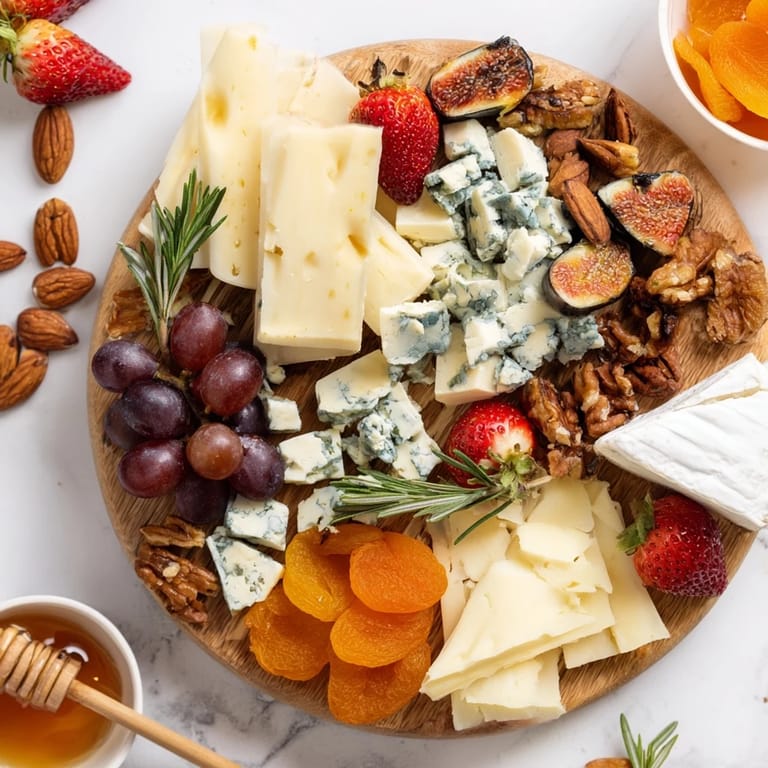
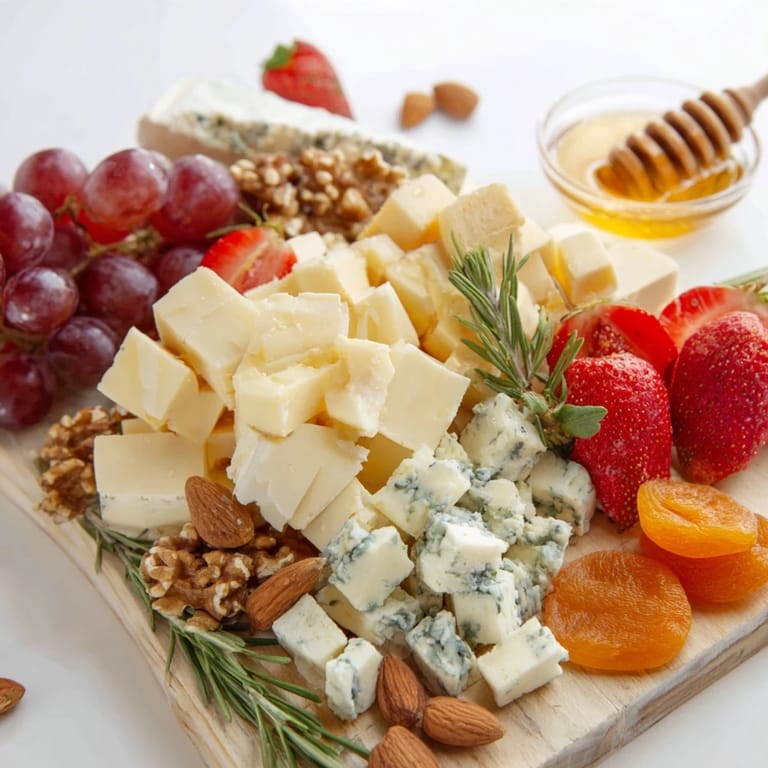
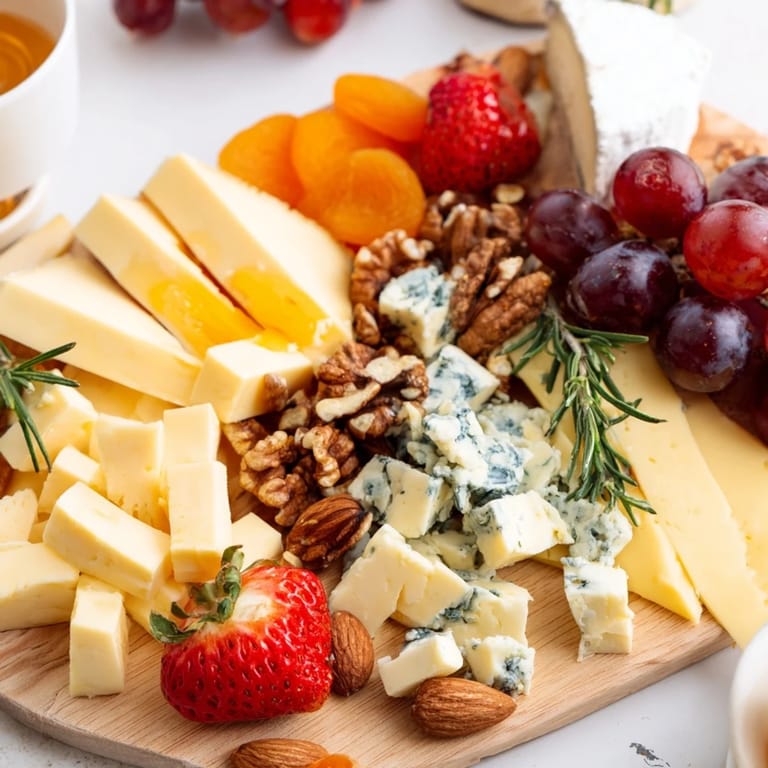
- Brie, sliced (150 g): Brie melts slightly at room temperature and creates soft, luxurious layers that drape beautifully over the edge.
- Aged Cheddar, cubed (150 g): The firmness holds its shape well when stacked, giving structure to your waterfall without crumbling.
- Blue cheese, crumbled (100 g): A little goes a long way for bold flavor, and crumbles scatter gorgeously down the cascade.
- Goat cheese, sliced (100 g): Tanginess cuts through rich foods, and thin slices catch the light beautifully.
- Prosciutto (100 g): Fold it gently so it drapes like fabric—it's the perfect bridge between cheese and fruit.
- Salami, sliced (100 g): Keeps its shape and adds color variation to the meat section of your board.
- Red grapes, small clusters (1 cup): Leave them in small bunches so they roll naturally and fill unexpected gaps.
- Strawberries, halved (1 cup): Halving them shows off the bright interior and makes them cascade easier than whole berries.
- Blueberries (1/2 cup): These tiny jewels roll and settle into crevices, creating visual depth.
- Pear, thinly sliced (1): Slice just before arranging so they don't oxidize, and the delicate slices drape like paper.
- Dried apricots (1/2 cup): Their chewy texture and golden color add warmth to the board.
- Dried figs, halved (1/2 cup): The deep color contrasts beautifully and their sweetness pairs with every cheese.
- Almonds (1/3 cup): Toast them lightly if you want extra crunch and aroma.
- Walnuts (1/3 cup): Their earthiness grounds the sweetness of fruits and honey.
- Baguette, sliced and toasted (1): Toasting prevents it from going stale and creates a slight curve that leans naturally.
- Assorted crackers (150 g): Mix shapes and textures so some stand upright, some lean, some stack.
- Honey (1/4 cup): Drizzle some directly onto the board and let it pool slightly at the edge.
- Fig jam (1/4 cup): The thick consistency holds in a small bowl without running, creating a focal point.
- Mixed olives (1/4 cup): Scatter a few down the cascade to add briny contrast and guide the eye downward.
- Fresh herbs, rosemary and thyme: Tuck sprigs between ingredients for fragrance and those pop-of-green moments.
Tired of Takeout? 🥡
Get 10 meals you can make faster than delivery arrives. Seriously.
One email. No spam. Unsubscribe anytime.
Instructions
- Set up your stage:
- Choose a large wooden or marble board and position it so one corner or edge hangs slightly over the table. Leave clear space on the table directly below where your cascade will flow. This intentional positioning is what makes the whole effect work.
- Build the cheese foundation:
- Arrange your cheeses in overlapping layers starting near the board's edge, letting a few slices and cubes intentionally extend past the boundary. Vary the angles—some pieces horizontal, some leaning—so the stack feels organic rather than placed.
- Drape the cured meats:
- Fold prosciutto and salami gently so they billow like fabric, positioning them beside and over the cheese. Let them drape naturally toward the table, creating soft transitions that guide the eye downward.
- Release the fresh fruit:
- Nestle grape clusters, strawberry halves, blueberries, and pear slices throughout, allowing some to cascade onto the table below. The contrast of colors and the way fruit catches light makes the waterfall effect truly come alive.
- Scatter dried elements:
- Tuck dried apricots, fig halves, almonds, and walnuts along the board and deliberately down onto the table. These smaller pieces create the sense of things spilling and finding their own resting place.
- Position crackers and bread:
- Lean toast slices and crackers at different angles—some vertical, some horizontal, some stacked slightly askew. A few pieces leaning off the edge complete the sense of abundance toppling over.
- Add your pools of flavor:
- Place small bowls of honey, fig jam, and olives on the board itself. Drizzle a little honey directly onto the surface and scatter a few olives so they lead from the board onto the table below.
- Garnish with life:
- Tuck fresh rosemary sprigs and thyme leaves between ingredients for color, fragrance, and those moments where guests lean in close and smell something wonderful.
- Invite the feast:
- Serve immediately and encourage guests to take from both the arranged board and the artfully scattered elements on the table. This permission to blur the line between organized and abundant is what makes the moment feel special.
 Save
Save There's a moment right when everyone arrives and they all stop talking—that second where their eyes land on the board and something shifts. It's not just about eating; it's about the abundance, the permission to be a little bit indulgent, the sense that someone thought about what would make them happy. That's what this board does.
The Waterfall Effect Explained
The magic isn't really in the ingredients; it's in the composition and positioning. A grazing board becomes a waterfall when you commit to the idea that some things are meant to tumble over the edge. Soft items like cheese and cured meats create elegant drapes, fruits roll and nestle naturally, and nuts scatter like they found their own path. The key is resisting the urge to straighten everything—imperfection is the entire point.
Pairing and Serving Ideas
I've learned that this board becomes something entirely different depending on what you pour alongside it. A crisp white wine like Sauvignon Blanc makes everything taste lighter and more elegant, while a sparkling rosé brings a celebratory energy that matches the board's abundance. I've also served it with a rich red wine and found that the tannins cut through the cheese in a way that makes people pause and appreciate each combination. The board essentially becomes a playground for discovering what tastes good together, which is honestly the best part of grazing.
Making It Your Own
The beauty of this board is that it's genuinely flexible without losing its impact. I've made vegan versions using plant-based cheeses and extra nuts, and they look just as stunning. I've added dark chocolate shards and candied almonds for a dessert twist that works surprisingly well. The waterfall concept works with whatever you love—it's about the arrangement and the confidence to let things cascade, not about following a rigid ingredient list.
- For a vegan version, use high-quality plant-based cheeses and add extra nuts, seeds, and dried fruits for richness.
- Swap any cheese you don't like for one you do; the composition matters more than the specific varieties.
- Add dark chocolate pieces, candied nuts, or crystallized ginger if you're building toward dessert rather than savory.
 Save
Save Every time I build this board now, I think about that moment at my grandmother's birthday when she laughed at the chaos of it all. That's the real recipe—creating something that invites abundance, embraces a little beautiful messiness, and makes people feel celebrated before they even taste a single bite.
Recipe Questions & Answers
- → How do I create the cascading effect?
Arrange ingredients in overlapping layers near the board’s edge, allowing some pieces to spill naturally onto the table for a waterfall look.
- → Can this board be made vegan-friendly?
Yes, substitute plant-based cheeses and omit cured meats to suit vegan preferences without compromising the display.
- → What accompaniments complement this grazing board?
Honey, fig jam, olives, and fresh herbs add contrasting flavors and complete the visual appeal of the spread.
- → What types of nuts work best here?
Almonds and walnuts provide crunch and a rich flavor that balances the soft cheeses and fresh fruits.
- → How should I serve the board for easy enjoyment?
Place the board near guest seating with serving tongs and encourage scooping from both the board and any fallen elements on the table.
- → What wines pair well with this arrangement?
Crisp white wines or sparkling rosé complement the variety of textures and flavors beautifully.