 Save
Save Last spring, I was tasked with bringing something "conversation-starting" to a dinner party, and I found myself staring at my fruit bowl like it held the secrets to the universe. A friend had just given me a blood orange, which seemed too beautiful to hide in a salad, and I remembered a game we used to play as kids—pretending our plates were clocks. That's when it clicked: what if I built an actual edible clock? The result was this Clockwork Orange, and watching guests lean in to figure out what time it was before they realized they could eat it felt like pure kitchen magic.
I made this for my sister's "time" themed birthday party, where everyone had to arrive in clothes from a different decade. When I set the clock down, she gasped—not because of the clever concept, but because I'd aligned the cheese hands to point at 2:15, the exact time she was born. Suddenly it wasn't just pretty food; it was personal.
Ingredients
- 1 large orange: The backbone of your clock's warm tones and the sweetest of the citrus family—slice it thin and it'll practically glow on the platter.
- 1 blood orange: This is your showstopper; its deep crimson color makes hearts skip, and the slight tartness keeps things interesting.
- 1 grapefruit: Adds a pale pink hue and brings a gentle bitterness that balances the honey and cheese beautifully.
- 2 clementines: Smaller, seedless, and sweet—they fit perfectly into the tight spacing around the clock.
- 1 lemon: Use this sparingly; a slice or two adds brightness without overpowering, and its pale yellow fills gaps perfectly.
- 1 lime: The green accent that ties everything together visually and adds a hint of tartness if guests want it.
- 150 g firm goat cheese or manchego: Goat cheese is creamy and tangible enough to shape into hands; manchego is nuttier and holds its form like a dream.
- 100 g aged cheddar or gouda: These harder cheeses are easier to cut into crisp, defined strips that actually look like clock hands.
- 2 tbsp honey: Drizzled over the center, it catches the light and adds a touch of luxury—splurge on good honey if you can.
- 2 tbsp chopped pistachios or walnuts (optional): The crunch breaks up the smoothness of the cheese, and pistachios add a sophisticated pop of color.
- Fresh mint leaves (optional): A whisper of mint lifts everything; tear them gently rather than chopping to keep them looking fresh.
- Crackers or crusty bread, to serve: Let your guests choose their own adventure—some will eat just the cheese and citrus, others will build little open-faced moments.
Tired of Takeout? 🥡
Get 10 meals you can make faster than delivery arrives. Seriously.
One email. No spam. Unsubscribe anytime.
Instructions
- Slice your citrus into thin, even rounds:
- Use a sharp knife and angle your cuts so each slice is about a quarter-inch thick—thin enough to be delicate but thick enough not to tear. Remove any seeds you spot; nobody wants that surprise crunch.
- Arrange your citrus in a perfect clock pattern:
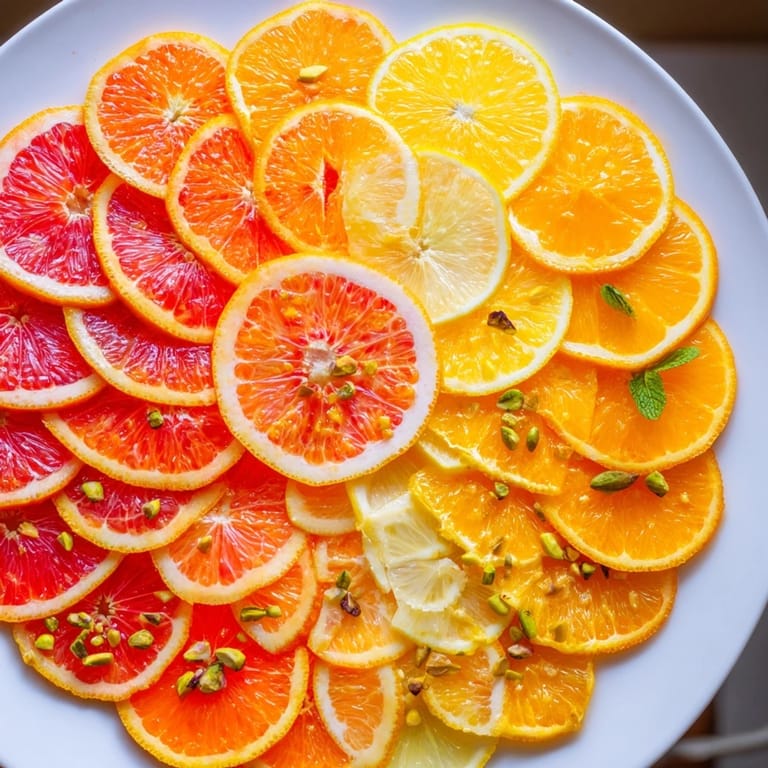
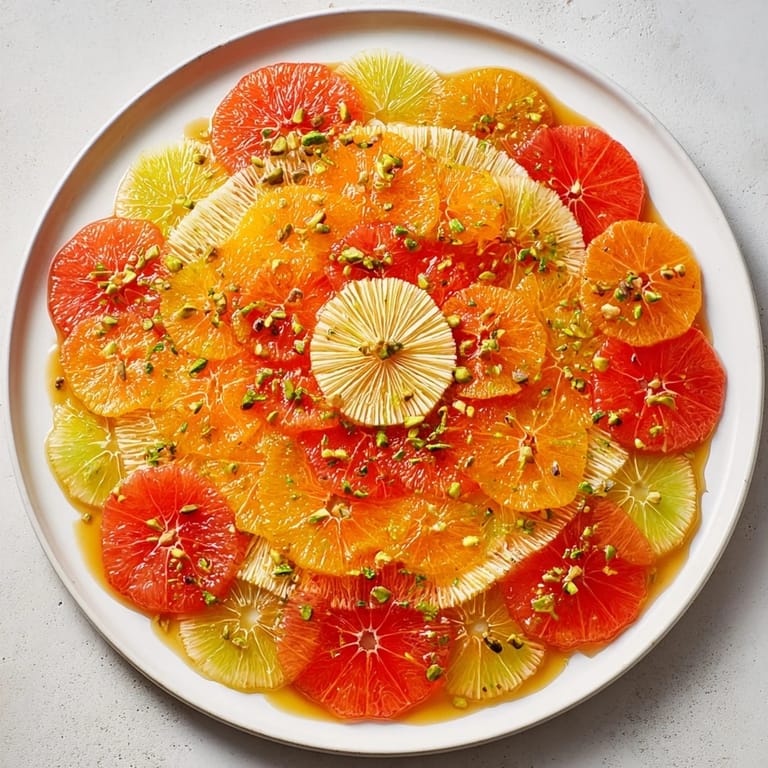
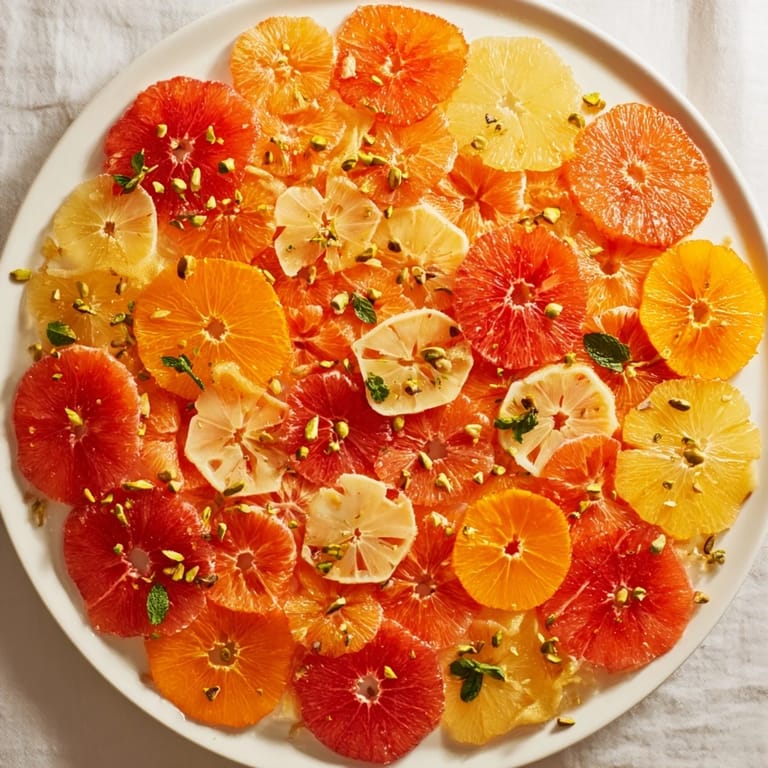
- Start at 12 o'clock and work your way around your largest round platter, placing one slice at each hour mark. Alternate colors as you go—it's like painting with fruit, and the mix of oranges, pinks, and yellows should make you smile.
- Shape and position your cheese hands:
- Cut your cheeses into two long, tapering strips that taper slightly as they move outward, like real clock hands. Angle them to point to your chosen time—I usually pick something sentimental like a birthday hour or the time dinner starts.
- Add the honey and crunch:
- Drizzle the honey in the very center where your cheese hands meet, letting it pool slightly and catch the light. Scatter pistachios or walnuts over the honey if you're using them.
- Finish with a whisper of mint:
- Tuck fresh mint leaves around the outer edge and in any gaps—this adds a final breath of freshness and visual softness.
- Serve immediately:
- Set it down with confidence and watch people lean in to figure out what they're looking at before they realize it's time to eat.
 Save
Save There's something magical about food that asks your guests to pause and really look at it. This clock did that—it made people slow down, take a breath, and remember that eating is as much about wonder as it is about flavor.
Choosing Your Citrus and Cheese Wisely
The beauty of this platter lives in its color contrast, so pick citrus fruits with distinctly different hues. If you can't find a blood orange, a ruby grapefruit works beautifully; if limes aren't available, a thin slice of lemon with a touch of the rind showing gives you the green you need. For cheese, think about texture first—soft cheeses blur together visually, while firm ones create sharp, defined clock hands that actually look like they're telling time. I've learned the hard way that a room-temperature goat cheese looks melty and sad, while cold manchego looks crisp and intentional.
Making It Your Own
Once you understand the concept, you can riff endlessly. Some nights I add paper-thin slices of prosciutto between the citrus slices for a salty-sweet moment; other times I swap the cheese completely for a creamy brie or tangy blue cheese depending on the crowd. I've even experimented with edible flowers tucked into the gaps, which sounds fancy but honestly just looks lovely and costs almost nothing extra. The framework is the clock; everything else is your creativity showing through.
The Ritual of Assembly
There's something almost meditative about arranging citrus slices in a circle, watching the pattern emerge like a mandala made of fruit. The whole process takes about twenty minutes, but I always give myself an extra five just to stand back and look, to adjust a color here or tighten the spacing there. It's the kind of dish that teaches you that presentation isn't about being fancy—it's about caring enough to arrange something thoughtfully.
- Set your platter on the table just before guests arrive so the colors stay vibrant and the honey stays glossy.
- If you're prepping ahead, keep the citrus slices and cheese separately in the fridge and assemble within an hour of serving.
- Don't overthink the "time" your hands point to—any time is the right time when it's time to eat.
 Save
Save This platter reminds me that the best food is the kind that makes people smile before they even taste it. Serve it with confidence and let it do what it was made to do—turn an ordinary appetizer moment into something people talk about long after dinner ends.
Recipe Questions & Answers
- → What types of citrus work best for this platter?
Use a variety of colorful citrus such as oranges, blood oranges, grapefruits, clementines, lemons, and limes to create a vibrant visual and diverse flavor profile.
- → Which cheeses suit this arrangement?
Firm goat cheese or manchego and aged cheddar or gouda work well, offering contrasting textures and flavors that complement the citrus.
- → How should the citrus be prepared?
Slice citrus into thin, even rounds, removing seeds carefully to maintain the clean circular appearance for the clock face.
- → Can I add other garnishes?
Yes, honey adds sweetness while chopped pistachios or walnuts contribute crunch. Fresh mint leaves bring a refreshing aroma and color contrast.
- → What beverages pair well with this platter?
This combination pairs beautifully with crisp beverages such as Prosecco or dry white wine, enhancing the bright and fresh flavors.
- → How to present the platter effectively?
Arrange the citrus slices in a circular pattern with each slice representing an hour on the clock. Shape cheeses into strips for clock hands placed centrally for a whimsical effect.