 Save
Save There's something about arranging food on a board that makes you slow down. I was standing in my kitchen on a quiet Sunday afternoon, staring at a farmers market haul of perfect vegetables, when I realized I didn't want to cook—I wanted to create. The idea of balance came to me as I held a perfectly round piece of goat cheese in one hand and a radish in the other, and I thought: what if presentation itself could be the whole point? What if the meal was about symmetry, negative space, and the kind of stillness you feel when you're looking at something genuinely beautiful?
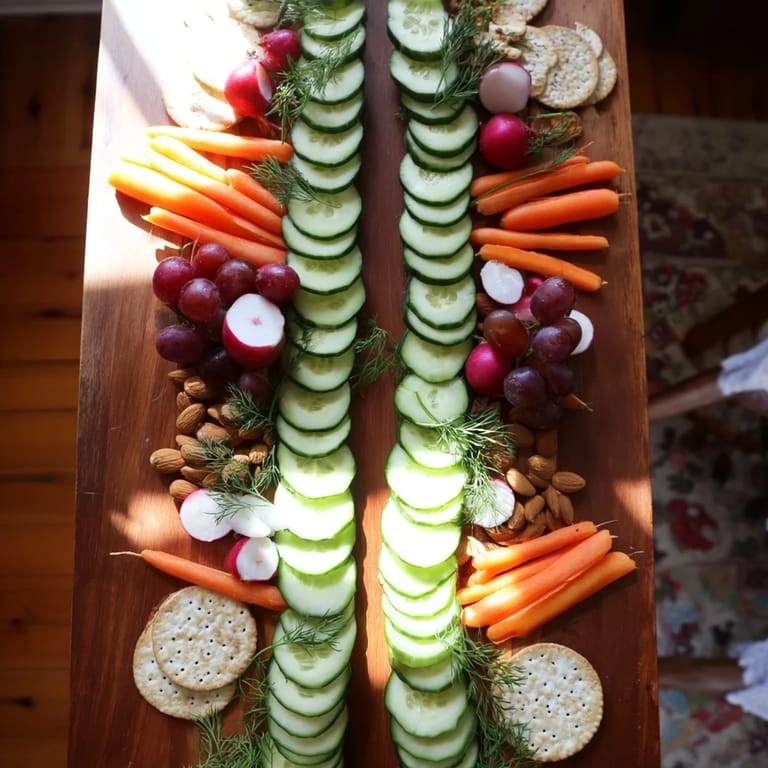
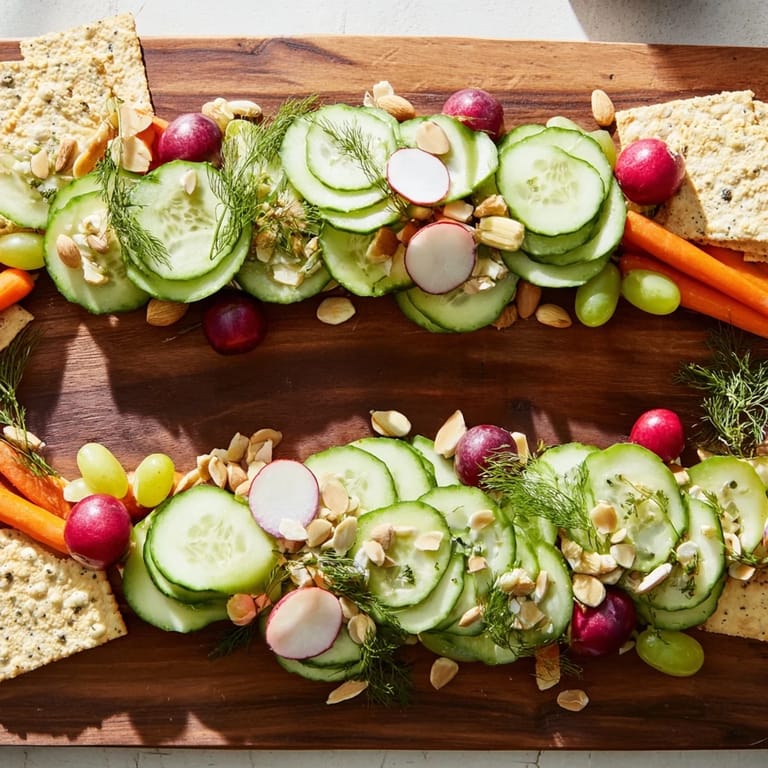
I made this for two friends who showed up exhausted from their week, and the first thing one of them said wasn't about taste—it was about how the board made her breathe differently. She sat down, looked at those two mirrored piles with the empty space between them, and just... exhaled. We ate slowly that night, not because the food required it, but because the arrangement demanded it. It turned out that beauty and sustenance weren't separate things after all.
Ingredients
- Fresh cucumber: Use unwaxed if you can find it, and slice them thin enough to see light through them—they're your visual anchor and they stay crisp longest.
- Baby carrots: The small ones matter; they're sweeter and their shape feels intentional on the board, not accidental.
- Radishes, halved: These are your color pop and your crunch—halving them instead of slicing gives them presence without taking up space.
- Goat cheese: Shaped into small rounds before you begin, they should feel soft but hold their shape; if it's too warm, chill it first.
- Gluten-free crackers: Look for ones with texture and subtle flavor so they complement rather than dominate; thickness matters for visual balance.
- Roasted almonds: Already roasted means they bring their own warmth and nuttiness; unsalted keeps the focus on other flavors.
- Seedless red grapes: They should be at room temperature for sweetness, and their round shape echoes the cheese rounds.
- Fresh herbs: Chives and dill bring brightness; use them as the final garnish so they stay vibrant and aromatic.
Tired of Takeout? 🥡
Get 10 meals you can make faster than delivery arrives. Seriously.
One email. No spam. Unsubscribe anytime.
Instructions
- Find your board and breathe:
- Place a long wooden or slate board in front of you—this isn't just a serving piece, it's your canvas. The emptiness you're about to create is as important as the food, so take a moment to feel the scale of it.
- Build the first pile:
- At one end, start laying down cucumber slices as a base, slightly overlapping like roof tiles. Layer your crackers, then arrange carrots, radishes, grapes, and goat cheese rounds in a way that feels intentional but not rigid—tight enough to suggest care, loose enough to feel alive.
- Mirror the other side:
- Move to the opposite end and recreate the arrangement exactly, using your first pile as a guide. This isn't about precision so much as commitment to the idea of balance—if it's close, that's the point.
- Garnish and pause:
- Scatter a few herb sprigs across both piles, letting them catch the light. Step back and look at the empty space between your two arrangements—that's where the magic lives.
- Serve with intention:
- Bring the board to the table and ask people to look before they eat, to notice the balance, to feel what it does to them. Then let them begin whenever they're ready.
 Save
Save This dish reminded me that a meal doesn't have to be complicated to be meaningful. Standing back and looking at what we'd created—two perfect mirrors facing each other across emptiness—felt like we'd made something that asked people to be present, to see their food, to recognize that how we eat shapes how we live.
The Philosophy of Empty Space
Minimalism in food is underrated because we're trained to think more is better—more flavor, more components, more abundance. But there's a different kind of satisfaction in restraint, in knowing that four colors and three textures can say more than a crowded plate. When I started thinking about food this way, suddenly my whole approach to entertaining changed. The board became less about showing off and more about offering something real: the chance to taste each ingredient without it screaming over the others, and to see how beautiful simple things can be when they're given space to breathe.
Playing With Symmetry
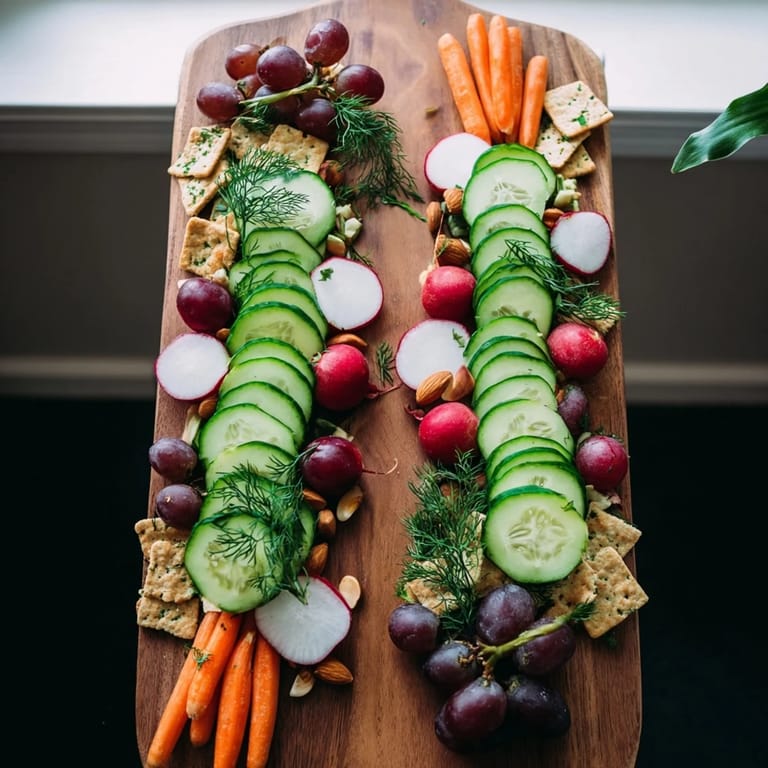
The mirrored arrangement does something strange to people's minds—it's soothing and slightly unsettling at the same time. I've watched guests study the two piles, almost trying to find where they differ, and in that moment of looking, they slow down. The symmetry isn't rigid geometry; it's more like a visual haiku, where repetition creates meaning rather than boredom. You can play with this by using seasonal vegetables, changing your color palette, or even rotating the herbs—the structure stays the same but the feeling shifts.
Pairing and Serving Ideas
This board is less a meal and more a gesture, so think about what drinks and moments suit it. A crisp white wine like Sauvignon Blanc does the obvious thing—it's clean and bright—but so does sparkling water with lemon, or a light tea if you want everything to stay gentle. The beauty of this presentation is that it creates space for conversation; people aren't racing through courses, they're sitting with what's in front of them. You could serve this as an opening to a larger meal, or as the whole thing if you're in the mood for something quiet.
- A cool Sauvignon Blanc or crisp Albariño mirrors the vegetable flavors.
- Sparkling water with fresh herbs keeps the mood light and intentional.
- Serve on a clean table where the board can be the focus—nothing competing for attention.
 Save
Save There's power in simplicity when simplicity is intentional. This board taught me that the best moments at a table aren't always the loudest or the most complex—sometimes they're the ones that ask us to pay attention.
Recipe Questions & Answers
- → What is the best board to use for this platter?
A clean wooden or slate board at least 60 cm long works best to showcase the symmetrical arrangement effectively.
- → Can this platter be adapted for vegans?
Yes, substitute the goat cheese with plant-based cheese alternatives to maintain a vegan-friendly version.
- → How should the ingredients be arranged?
Place half of each ingredient in neat piles at one end of the board, then mirror the exact arrangement at the opposite end for symmetry.
- → Are there recommended pairings for this dish?
A crisp white wine like Sauvignon Blanc complements the fresh and nutty flavors well.
- → What garnishes enhance the flavor and appearance?
Fresh herbs such as chives and dill add both color and aroma, elevating the overall sensory experience.